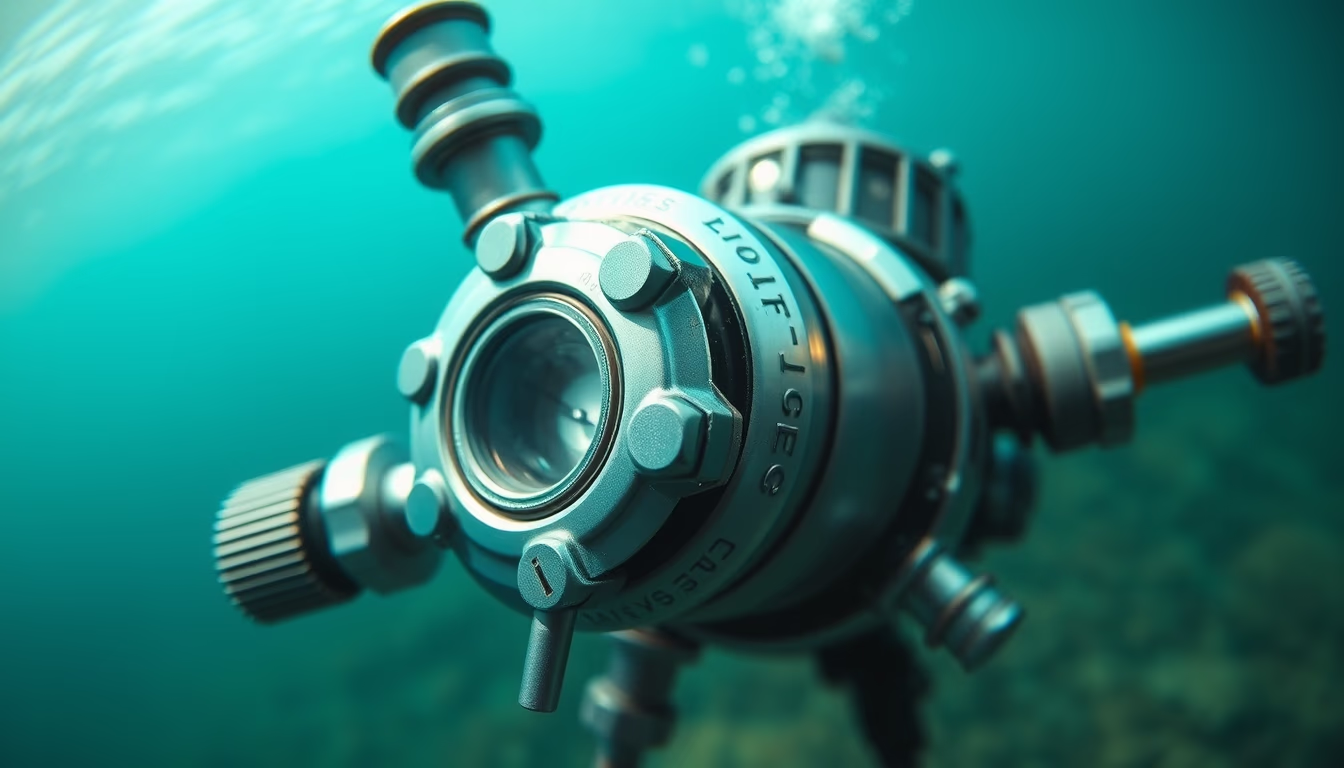
Diving regulator detail
1344×768 · AVIF · CC BY 4.0
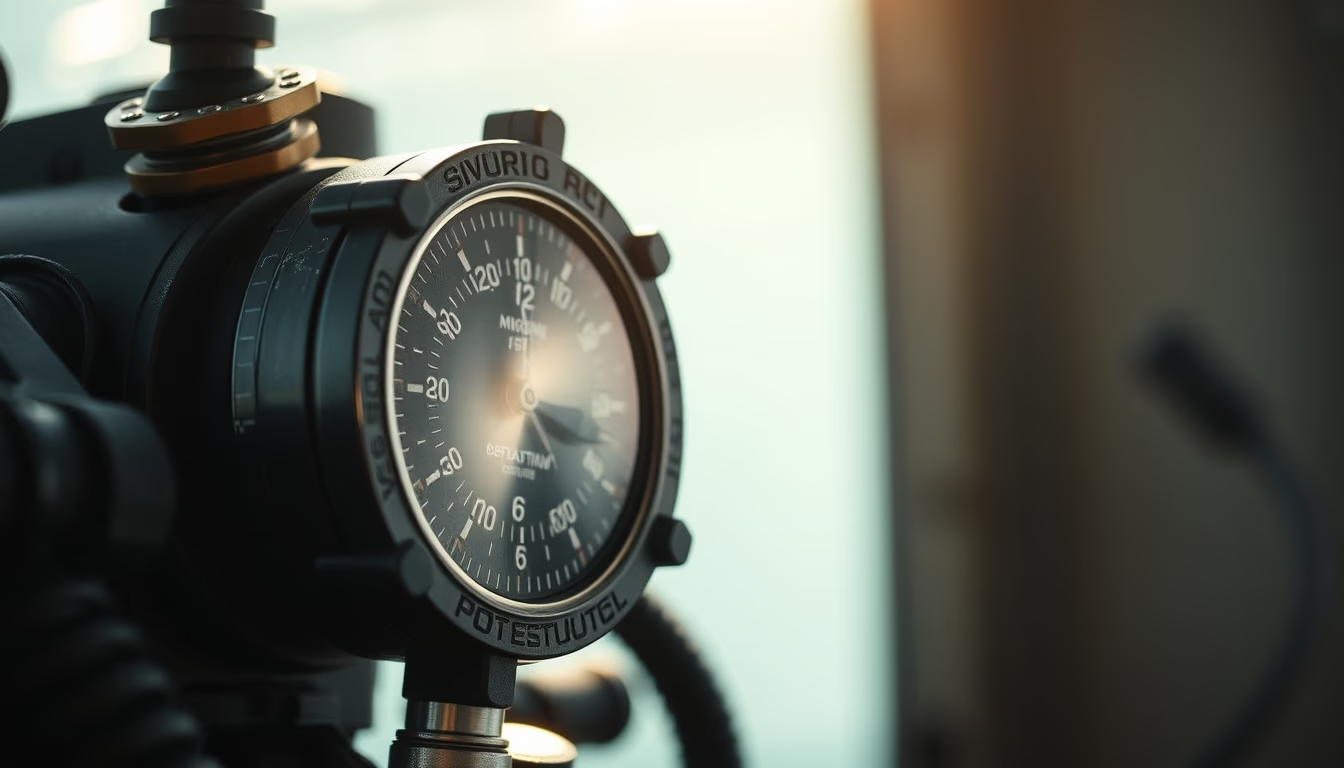
Close-up of a diving regulator, a vital device that reduces high-pressure tank air to breathable pressure underwater.
About this subject
A diving regulator is a key component of SCUBA (Self-Contained Underwater Breathing Apparatus) equipment. Its main function is to reduce the high pressure of air in a diving cylinder, which can exceed 200 atmospheres, to an ambient pressure safe for breathing. The regulator consists of two stages: the first stage attaches to the tank and reduces pressure to an intermediate level, usually between 8 and 10 atmospheres above ambient. The second stage, held in the diver's mouth, reduces that pressure further to match the surrounding water pressure, allowing natural breathing.
The modern diving regulator was invented by Jacques-Yves Cousteau and Émile Gagnan in 1943, leading to the Aqua-Lung. This innovation enabled divers to carry their own air supply, freeing them from surface-connected systems. The basic two-stage design remains standard, though materials and ergonomics have improved. Variations include piston and diaphragm regulators, each optimized for different conditions like cold water or deep dives.
Regular maintenance is vital for safety; a malfunction can cause air shortage or carbon dioxide buildup. Beyond recreational diving, regulators are used in technical, scientific, and military diving. Selection depends on factors such as water temperature, cold water requires freeze-resistant models. The second stage has a demand valve that releases air only upon inhalation, conserving gas. The delivered air pressure equals ambient water pressure, preventing pulmonary barotrauma. Modern regulators often feature additional ports for dive computers and buoyancy compensator inflators.
Frequently Asked Questions
What is the primary function of a diving regulator?
To reduce cylinder air pressure to a breathable level matching ambient water pressure.
Who invented the modern diving regulator?
Jacques Cousteau and Émile Gagnan in 1943, with the Aqua-Lung.
What are common types of regulators?
Piston and diaphragm regulators, each designed for specific conditions like cold water diving.
Direct URL
https://pub-c7d6a6ea828543ac903a74a341ccb2e1.r2.dev/imagens/diving-regulator-detail-documentary-photography-fresh1.avifHow to credit
Include a visible link back to UtilizAí. Copy one of the snippets below:
<a href="https://xn--utiliza-eza.com/en/midia/imagens/diving-regulator-detail-documentary-photography-fresh1">Diving regulator detail</a> by <a href="https://xn--utiliza-eza.com">UtilizAí</a>, licensed under <a href="https://creativecommons.org/licenses/by/4.0/">CC BY 4.0</a>.
[Diving regulator detail](https://xn--utiliza-eza.com/en/midia/imagens/diving-regulator-detail-documentary-photography-fresh1) by [UtilizAí](https://xn--utiliza-eza.com), CC BY 4.0
License: CC-BY-4.0