Diving regulator detail
1344×768 · AVIF · CC BY 4.0
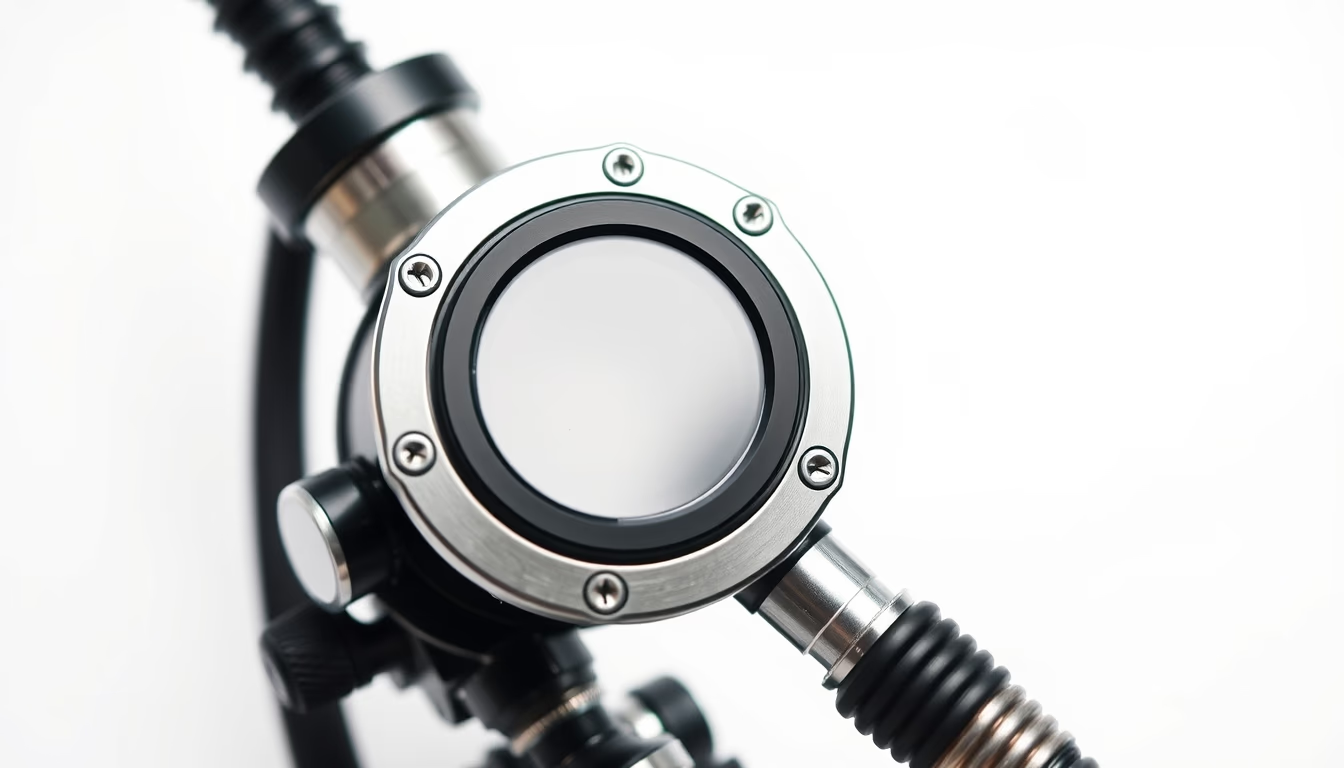
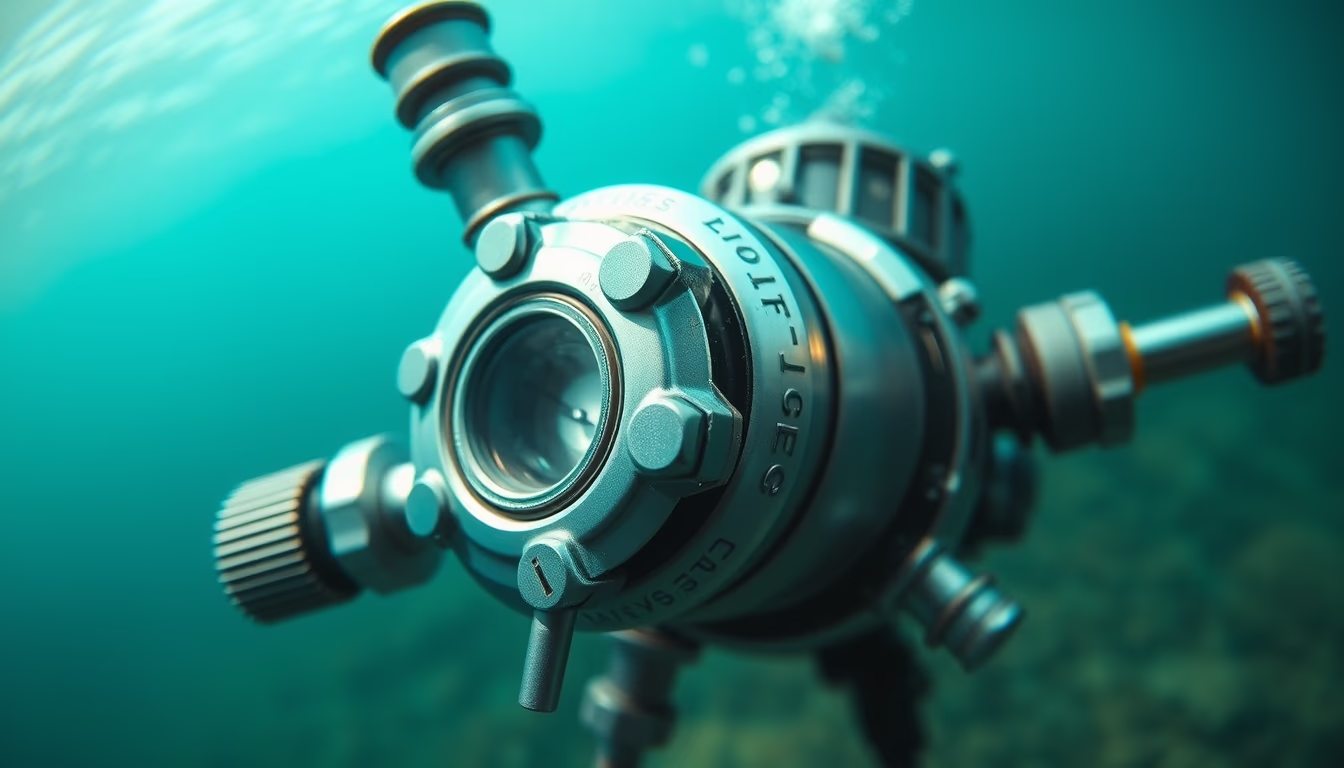
Technical detail of a scuba diving regulator, essential equipment that reduces high-pressure air from the tank to ambient pressure, enabling underwater breathing.
About this subject
The diving regulator is one of the most critical components of SCUBA equipment. Its primary function is to reduce the pressure of the air stored in the tank, which can exceed 200 bar, to ambient pressure, allowing the diver to breathe comfortably at any depth. There are two main stages: the first stage, connected to the tank, reduces pressure to an intermediate level (about 8 to 10 bar above ambient). The second stage, held in the diver's mouth, further reduces this to ambient pressure upon inhalation.
The regulator's design has evolved significantly since the first models developed by Jacques-Yves Cousteau and Émile Gagnan in 1943, known as the Aqua-Lung. Modern regulators use materials like titanium and advanced polymers to reduce weight and increase durability. The detail in the image shows components such as the diaphragm, springs, and valves that work in balance to provide continuous smooth airflow, even in extreme positions or cold water.
Proper maintenance is vital for safety. Annual servicing by a certified technician is recommended, especially after use in saltwater, which can cause corrosion. An adjustable pre-dive setting on the first stage compensates for pressure differences at depth, while the second stage has a purge button to clear water from the chamber. Technical divers often use regulators with specific configurations for mixed gases like trimix or nitrox, requiring materials compatible with high oxygen levels.
Interestingly, the 'wave-fresh-10k' tag associated with this photo indicates a product photography line, but regulators with similar design are widely used in recreational and professional diving worldwide, emphasizing the need for reliable equipment that ensures the diver's safety with every breath.
Frequently Asked Questions
What is the difference between the first and second stage of a regulator?
The first stage reduces the high pressure from the tank to an intermediate pressure, about 8 to 10 bar above ambient. The second stage, in the diver's mouth, reduces that intermediate pressure to ambient pressure, allowing natural inhalation.
How often should I service my scuba regulator?
Annual service by a certified technician is recommended. If used in saltwater or frequently, more frequent maintenance may be needed. Corrosion and seal wear are the main reasons for regular servicing.
What does it mean for a regulator to be nitrox-compatible?
Nitrox is an oxygen-enriched air mix that can have concentrations above 40%. Nitrox-compatible regulators use materials that resist accelerated oxidation from high oxygen levels, such as special O-rings and non-flammable lubricants. This is crucial to prevent internal fires or explosions.
Direct URL
https://pub-c7d6a6ea828543ac903a74a341ccb2e1.r2.dev/imagens/diving-regulator-detail-commercial-product-photography-fresh9.avifHow to credit
Include a visible link back to UtilizAí. Copy one of the snippets below:
<a href="https://xn--utiliza-eza.com/en/midia/imagens/diving-regulator-detail-commercial-product-photography-fresh9">Diving regulator detail</a> by <a href="https://xn--utiliza-eza.com">UtilizAí</a>, licensed under <a href="https://creativecommons.org/licenses/by/4.0/">CC BY 4.0</a>.
[Diving regulator detail](https://xn--utiliza-eza.com/en/midia/imagens/diving-regulator-detail-commercial-product-photography-fresh9) by [UtilizAí](https://xn--utiliza-eza.com), CC BY 4.0
License: CC-BY-4.0