Diving regulator detail
1344×768 · AVIF · CC BY 4.0
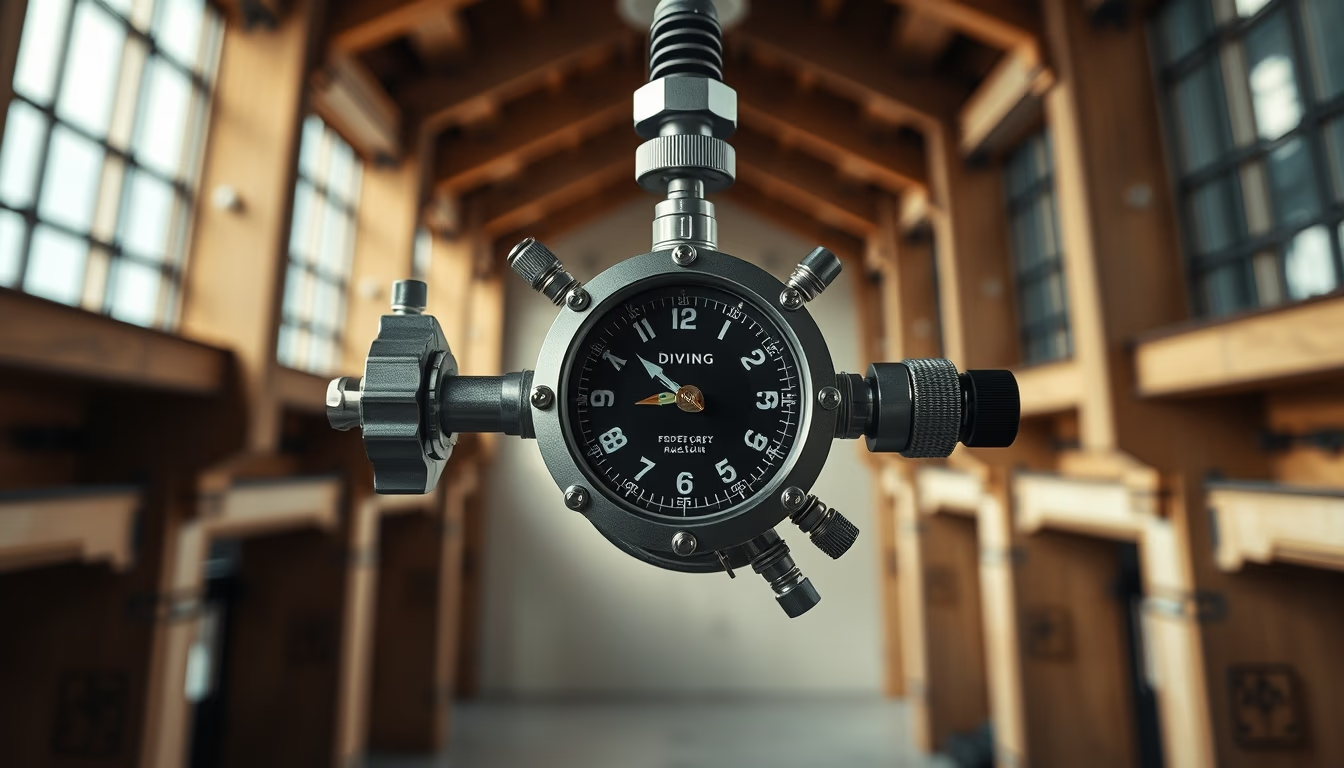
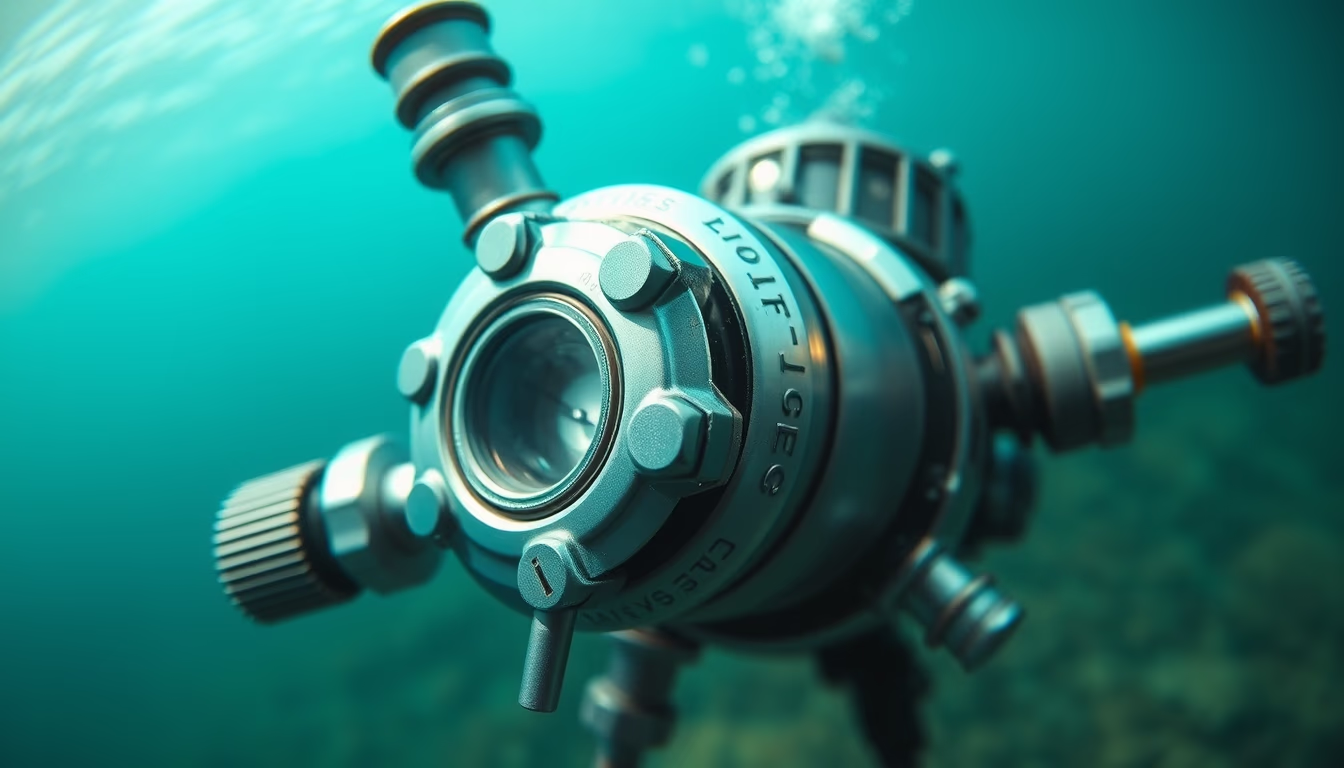
A diver relies on the regulator to breathe underwater, a device that reduces tank air pressure to ambient levels.
About this subject
The diving regulator is the most critical piece of equipment for a diver's safety and comfort. It reduces the high pressure of compressed air in the tank (up to 200, 300 bar) to ambient pressure, enabling natural breathing. There are two main stages: the first stage attaches to the cylinder and drops pressure to an intermediate level (about 10 bar above ambient), while the second stage, held in the mouth, delivers air on demand with each inhalation.
Jacques Cousteau and Émile Gagnan invented the first practical regulator in 1943, the Aqualung. This design revolutionized autonomous diving, letting explorers venture underwater without surface air hoses. Modern regulators use materials like titanium and advanced polymers to reduce weight and resist corrosion. High-end models feature balanced systems that ensure consistent airflow even at great depths.
Beyond recreational use, regulators are essential in technical, commercial, and military diving. Deep dives often require specialized gas mixtures like trimix, demanding regulators built to avoid nitrogen narcosis. Regular maintenance is crucial: seals, diaphragms, and springs must be serviced annually by certified technicians.
Interestingly, the design of many current regulators borrows from aerodynamics and precision engineering, making breathing effort nearly imperceptible. Reliability is tested in hyperbaric chambers and extreme conditions, ensuring performance even in icy water or high sediment environments.
Frequently Asked Questions
How does a diving regulator work?
The regulator reduces high-pressure air from the tank to ambient pressure in two stages. The first stage lowers it to an intermediate pressure, and the second stage delivers air when the diver inhales.
Why is regulator maintenance important?
Regular maintenance ensures proper sealing, airflow, and prevents failures. It should be done annually by certified technicians to keep the equipment safe.
Are there different types of regulators?
Yes, there are regulators for recreational, technical, and commercial diving. Balanced models perform better at depth, and some are designed for specific gas mixtures like trimix.
Direct URL
https://pub-c7d6a6ea828543ac903a74a341ccb2e1.r2.dev/imagens/diving-regulator-detail-architectural-photography-fresh12.avifHow to credit
Include a visible link back to UtilizAí. Copy one of the snippets below:
<a href="https://xn--utiliza-eza.com/en/midia/imagens/diving-regulator-detail-architectural-photography-fresh12">Diving regulator detail</a> by <a href="https://xn--utiliza-eza.com">UtilizAí</a>, licensed under <a href="https://creativecommons.org/licenses/by/4.0/">CC BY 4.0</a>.
[Diving regulator detail](https://xn--utiliza-eza.com/en/midia/imagens/diving-regulator-detail-architectural-photography-fresh12) by [UtilizAí](https://xn--utiliza-eza.com), CC BY 4.0
License: CC-BY-4.0