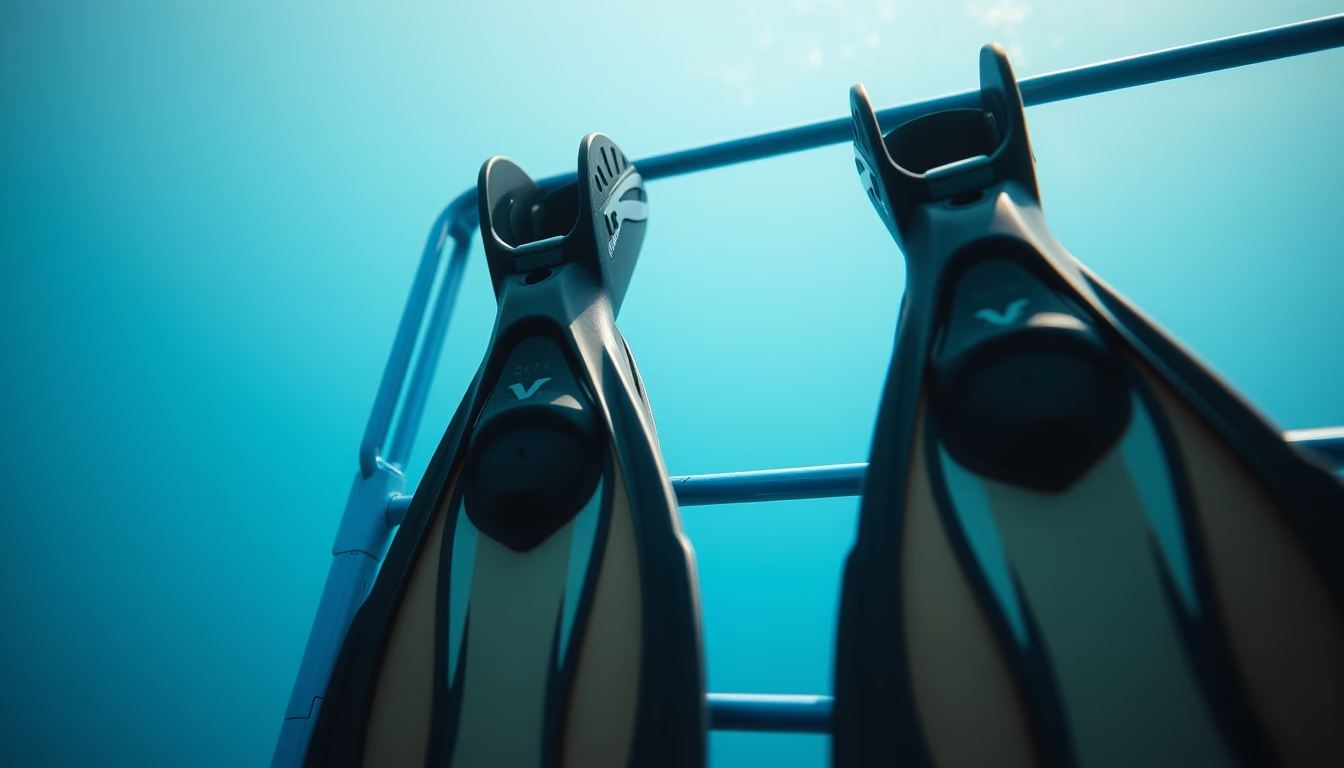
Diving fins blue rack
1344×768 · AVIF · CC BY 4.0
Learn about the different types of diving fins, their materials, and how to choose the ideal model for your aquatic activities.
About this subject
Diving fins are essential equipment for underwater propulsion, allowing divers to move efficiently and with low energy consumption. There are two main types: open heel fins, worn with boots and secured by straps, and full foot fins, which are worn like shoes. Open heel fins are preferred for scuba diving, while full foot fins are common for snorkeling and pool use.
Materials range from rigid and durable plastics to advanced composites like fiberglass and carbon fiber. Plastic blades are more affordable and resistant, suitable for beginners. Carbon fiber blades are lighter and more flexible, offering better energy return and used by technical and professional divers. Blade stiffness directly affects performance: stiffer blades generate more thrust but require more effort.
Historically, modern swim fins were developed in the 1930s, inspired by aquatic animal limbs. Since then, they have evolved with biomechanical designs that reduce muscle strain and improve hydrodynamics. Proper storage is crucial for longevity: avoid prolonged sun exposure, correctly fold straps, and store in a cool, dry place.
Frequently Asked Questions
What is the difference between open heel and full foot fins?
Open heel fins are worn with dive boots and secured by straps, providing better security and thermal insulation. Full foot fins are worn directly on the foot, simpler and ideal for snorkeling or warm waters.
How to properly store diving fins?
Rinse with fresh water after use, dry in the shade, avoid excessive bending of the blades, and keep straps loose. Store in a ventilated place away from heat sources or direct sunlight.
What is the lightest material for diving fins?
Carbon fiber is the lightest material with the best energy return. However, it is more expensive and fragile than plastic. Fiberglass offers a balance between weight, performance, and cost.
Direct URL
https://pub-c7d6a6ea828543ac903a74a341ccb2e1.r2.dev/imagens/diving-fins-blue-rack-documentary-photography-fresh3.avifHow to credit
Include a visible link back to UtilizAí. Copy one of the snippets below:
<a href="https://xn--utiliza-eza.com/en/midia/imagens/diving-fins-blue-rack-documentary-photography-fresh3">Diving fins blue rack</a> by <a href="https://xn--utiliza-eza.com">UtilizAí</a>, licensed under <a href="https://creativecommons.org/licenses/by/4.0/">CC BY 4.0</a>.
[Diving fins blue rack](https://xn--utiliza-eza.com/en/midia/imagens/diving-fins-blue-rack-documentary-photography-fresh3) by [UtilizAí](https://xn--utiliza-eza.com), CC BY 4.0
License: CC-BY-4.0