Diamond rough crystal
1344×768 · AVIF · CC BY 4.0
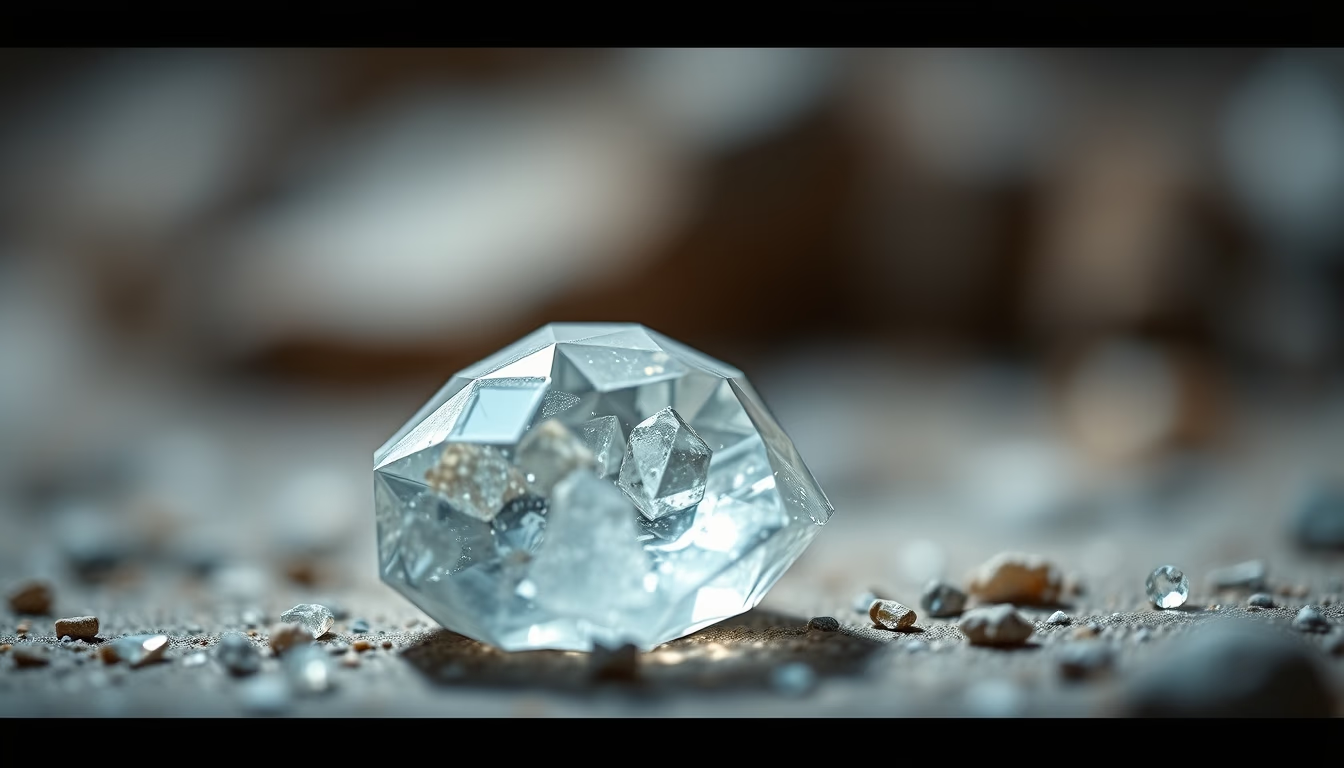
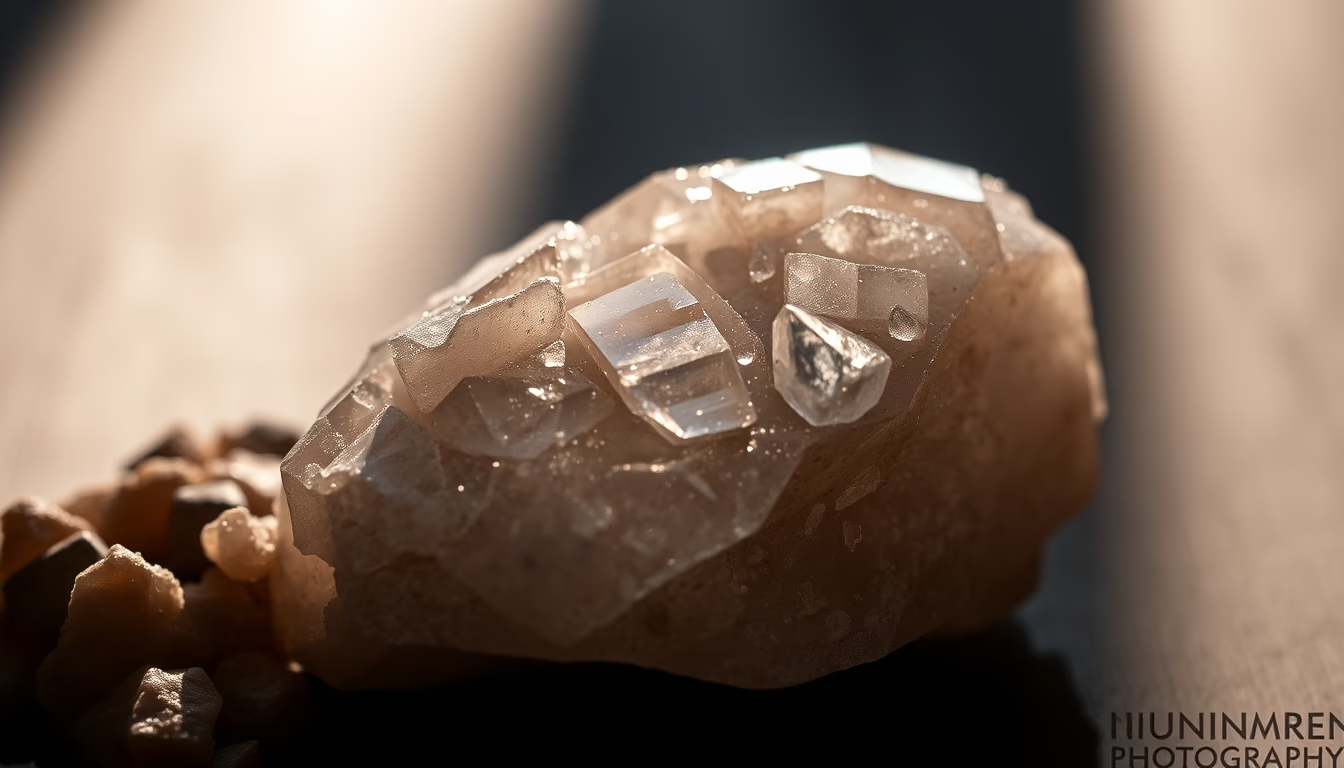
Rough diamond crystal is a pure carbon gem formed deep in Earth's mantle under high pressure and temperature. These natural crystals are mined from kimberlite pipes or alluvial deposits.
About this subject
Rough diamond crystal is the pure carbon mineral known for its exceptional hardness, ranking 10 on the Mohs scale. Its tetrahedral atomic structure gives it remarkable strength and unique optical properties, including high refractive index and light dispersion. Natural crystals are typically extracted from kimberlite pipes, volcanic rock formations that transport diamonds from the Earth's mantle, where they form under pressures exceeding 45 kilobars and temperatures between 900 and 1,300 °C over millions of years.
Alluvial deposits, created by the erosion of kimberlites, concentrate diamonds in riverbeds and coastal areas. Major diamond-producing countries include Botswana, Russia, Canada, and Angola. The largest rough diamond ever discovered is the Cullinan, weighing 3,106 carats, found in South Africa in 1905. Most rough diamonds have octahedral shapes, but cubic or dodecahedral forms also occur depending on crystallization conditions.
Beyond jewelry, industrial diamonds are crucial for cutting, drilling, and polishing tools due to their unmatched hardness. The value of a rough diamond as a gemstone is determined by its purity, color, and size. Inclusions and structural defects affect transparency and future cutting. Rough diamonds are graded using criteria such as the GIA system, which evaluates the four Cs: carat, color, clarity, and cut. However, for rough diamonds, the cut has not yet been applied, making the natural form the primary characteristic.
Frequently Asked Questions
How does a rough diamond form?
A rough diamond forms in the Earth's mantle at depths of 140 to 190 km, under extremely high pressure (over 45 kilobars) and temperatures between 900 and 1,300 °C. Pure carbon crystallizes over millions to billions of years, and kimberlite or lamproite rocks transport these crystals to the surface during explosive volcanic eruptions.
Where are rough diamonds found?
Rough diamonds are mined primarily from kimberlite pipes, such as the Jwaneng mine in Botswana and the Mir mine in Russia, or from alluvial deposits like riverbeds in the Congo and South Africa. The main producing countries are Botswana, Russia, Canada, Angola, and South Africa.
What is the difference between a rough diamond and a cut diamond?
A rough diamond is a natural gemstone as extracted from the earth, unaltered by human hands. A cut diamond has been shaped and polished to maximize its brilliance, fire, and aesthetic value. Cutting reveals the gem's optical properties, while the rough retains its original crystal form, often appearing opaque or with inclusions.
Direct URL
https://pub-c7d6a6ea828543ac903a74a341ccb2e1.r2.dev/imagens/diamond-rough-crystal-tilt-shift-miniature-p4.avifHow to credit
Include a visible link back to UtilizAí. Copy one of the snippets below:
<a href="https://xn--utiliza-eza.com/en/midia/imagens/diamond-rough-crystal-tilt-shift-miniature-p4">Diamond rough crystal</a> by <a href="https://xn--utiliza-eza.com">UtilizAí</a>, licensed under <a href="https://creativecommons.org/licenses/by/4.0/">CC BY 4.0</a>.
[Diamond rough crystal](https://xn--utiliza-eza.com/en/midia/imagens/diamond-rough-crystal-tilt-shift-miniature-p4) by [UtilizAí](https://xn--utiliza-eza.com), CC BY 4.0
License: CC-BY-4.0