Dia de los muertos altar
1344×768 · AVIF · CC BY 4.0
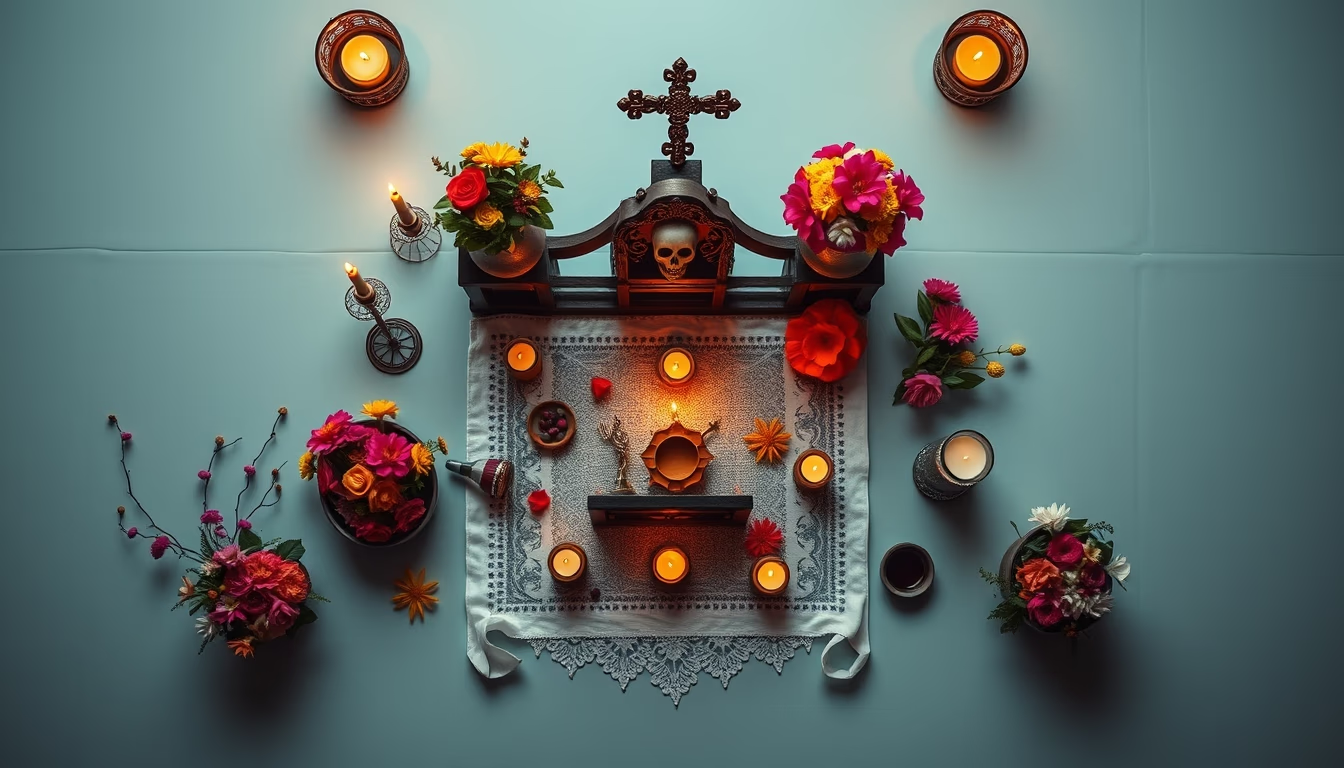
The Day of the Dead altar is a Mexican offering that honors the deceased, blending pre-Hispanic and Catholic elements in a colorful and symbolic celebration.
About this subject
The Day of the Dead altar, also known as ofrenda, is a central tradition of this Mexican celebration held on November 1 and 2. Its origins date back to pre-Columbian cultures, such as the Aztecs, who dedicated offerings to the dead over 3,000 years ago. With the arrival of the Spanish, the tradition syncretized with Catholicism, incorporating elements like candles, crosses, and saint images. The altar is set up in homes, cemeteries, and public spaces, inviting souls to return and visit the living.
The typical altar structure includes levels representing heaven, earth, and the underworld. On them, items such as photos of loved ones, candles (to light the way), cempasúchil flowers (marigolds, whose color and scent guide souls), papel picado (representing wind), water (to quench thirst), salt (for purification), and favorite foods of the deceased are placed, including tamales, pan de muerto, and fruits. Sugar skulls (calaveras) and decorated skulls symbolize death in a playful way, reminding us that death is part of life.
In 2008, UNESCO recognized the Day of the Dead as an Intangible Cultural Heritage of Humanity, highlighting its importance as a living expression of Mexican identity. Each altar element carries deep meaning: flowers represent the fragility of life, incense purifies the environment, and toys are placed for deceased children (angelitos). The tradition varies by region: in Michoacán, altars are more elaborate, while in Oaxaca they include colorful sawdust carpets.
Interestingly, the celebration is not a Mexican version of Halloween, though it occurs on nearby dates. Day of the Dead is a time of joy and remembrance, where it is believed that the dead return to share offerings and celebrate with the living. Films like "Coco" have globally popularized the image of altars, but the actual practice remains deeply rooted in indigenous and mestizo communities.
Frequently Asked Questions
What does each level of the Day of the Dead altar represent?
Traditionally, the levels represent heaven, earth, and the underworld. Some altars have two levels (heaven and earth) or even seven, symbolizing the steps to reach eternal rest.
Why are cempasuchil flowers used on the altar?
Cempasuchil (marigold) flowers are used for their bright yellow color and strong scent, which are believed to guide the souls of the dead back to the world of the living during the celebration.
What is the difference between Day of the Dead and Halloween?
Halloween has Celtic origins and focuses on scares and candy, while Day of the Dead is a Mexican tradition that honors the deceased with altars, offerings, and joyful celebration. The dates are close, but the meanings are distinct.
Direct URL
https://pub-c7d6a6ea828543ac903a74a341ccb2e1.r2.dev/imagens/dia-de-los-muertos-altar-isometric-flat-lay-fresh6.avifHow to credit
Include a visible link back to UtilizAí. Copy one of the snippets below:
<a href="https://xn--utiliza-eza.com/en/midia/imagens/dia-de-los-muertos-altar-isometric-flat-lay-fresh6">Dia de los muertos altar</a> by <a href="https://xn--utiliza-eza.com">UtilizAí</a>, licensed under <a href="https://creativecommons.org/licenses/by/4.0/">CC BY 4.0</a>.
[Dia de los muertos altar](https://xn--utiliza-eza.com/en/midia/imagens/dia-de-los-muertos-altar-isometric-flat-lay-fresh6) by [UtilizAí](https://xn--utiliza-eza.com), CC BY 4.0
License: CC-BY-4.0