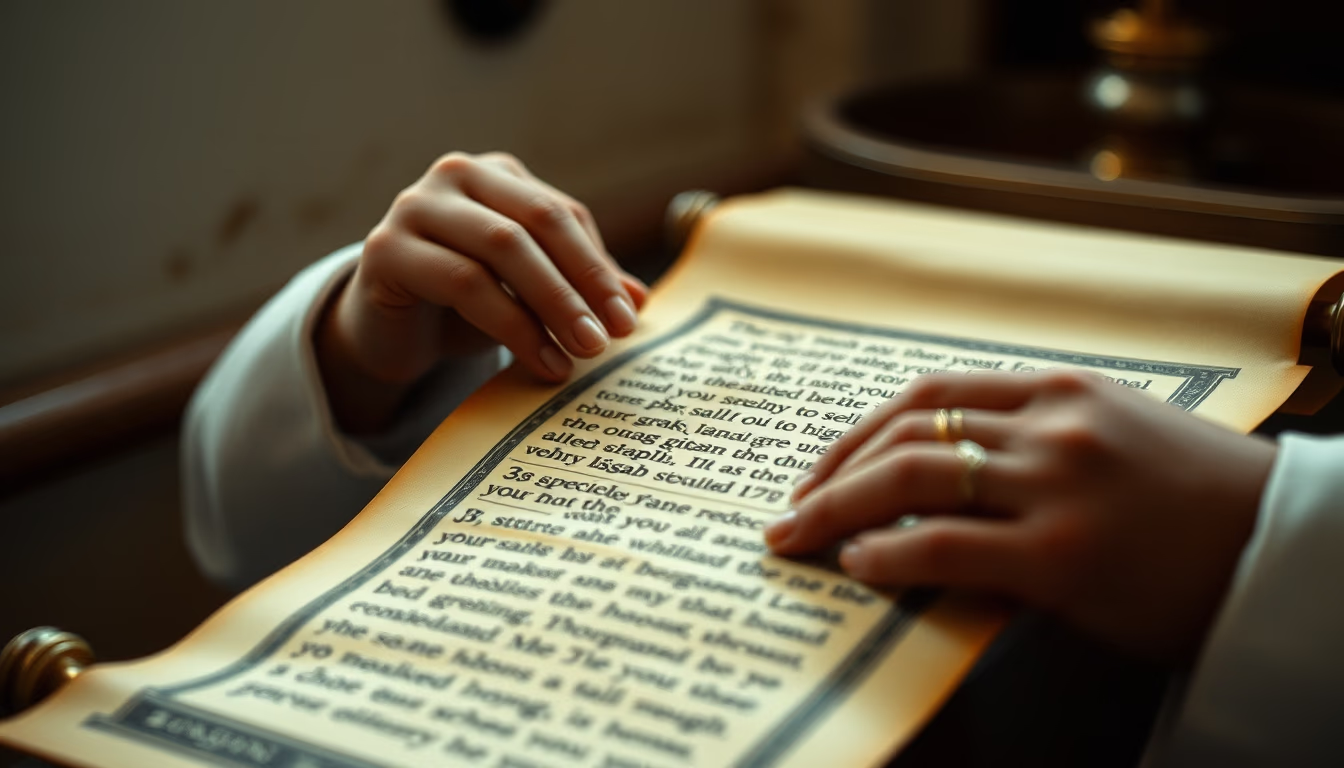
Dead sea scrolls fragment
1344×768 · AVIF · CC BY 4.0
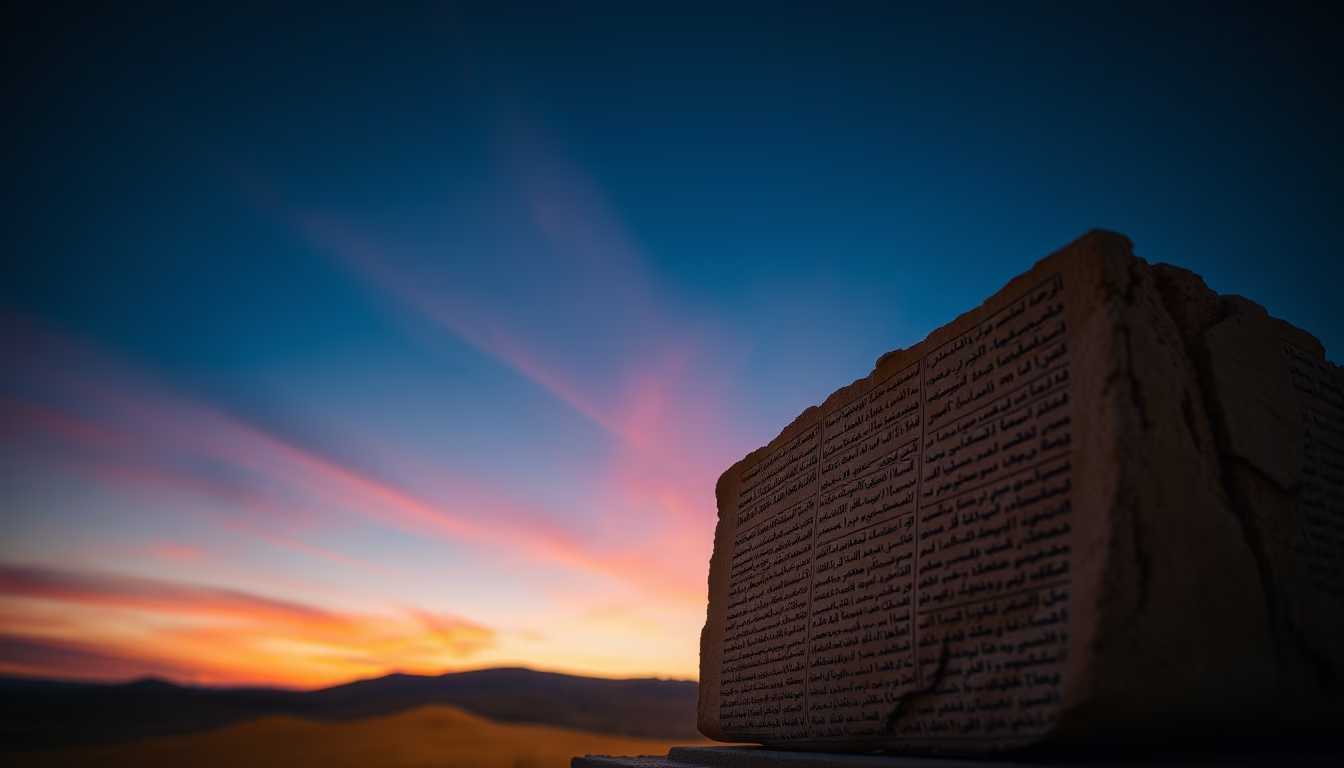
Fragment of the Dead Sea Scrolls, dated from circa 250 BCE to 68 CE, discovered in caves at Qumran, West Bank.
About this subject
The Dead Sea Scrolls are a collection of about 900 texts, mostly on parchment and papyrus, found between 1947 and 1956 in eleven caves near the archaeological site of Qumran on the northwest shore of the Dead Sea. Written in Hebrew, Aramaic, and Greek, these documents include copies of Old Testament books (such as Isaiah, Psalms, and Deuteronomy) as well as sectarian texts from the Jewish Essene community that lived there. The fragments, like the one depicted, are often small and damaged, but their significance is immense: they represent the oldest known copies of biblical texts, predating the medieval Hebrew manuscripts that served as the basis for modern translations by over a thousand years.
The discovery of the Dead Sea Scrolls revolutionized biblical and historical studies, providing direct evidence about the textual transmission of the Hebrew Bible and the diversity of Judaism during the Second Temple period. The fragment in the image likely belongs to one of these scrolls, preserved thanks to the dry climate of the caves. The handwriting and material (parchment or papyrus) help paleographers date it between the third century BCE and the first century CE. Many fragments are currently housed in Israeli museums, such as the Shrine of the Book in Jerusalem, but issues of provenance and ownership still generate academic and political debate.
Interestingly, not all fragments are biblical: they include calendars, community rules, hymns, and apocryphal works like the Book of Enoch and the Book of Jubilees. The fragment shown here might contain part of a verse or a non-canonical text. Preservation and curation of these materials are extremely delicate, requiring controlled temperature and humidity conditions to prevent degradation. Studies using multispectral imaging and carbon-14 dating continue to reveal new details, even from small fragments that seem insignificant at first glance.
Frequently Asked Questions
What are the Dead Sea Scrolls?
They are a collection of ancient texts, mostly in Hebrew, Aramaic, and Greek, discovered in caves near Qumran in the West Bank. They include copies of biblical books and writings from a Jewish community (likely the Essenes).
Why are the Dead Sea Scrolls fragments important?
They are the oldest known biblical manuscripts, predating medieval Hebrew texts by over a thousand years, and provide crucial evidence for the textual transmission of the Bible and the diversity of ancient Judaism.
Where can I see Dead Sea Scrolls fragments?
Most are housed at the Shrine of the Book, part of the Israel Museum in Jerusalem. Some fragments are also on display in other museums worldwide, but many remain in institutional collections in Israel.
Direct URL
https://pub-c7d6a6ea828543ac903a74a341ccb2e1.r2.dev/imagens/dead-sea-scrolls-fragment-cinematic-wide-shot-fresh4.avifHow to credit
Include a visible link back to UtilizAí. Copy one of the snippets below:
<a href="https://xn--utiliza-eza.com/en/midia/imagens/dead-sea-scrolls-fragment-cinematic-wide-shot-fresh4">Dead sea scrolls fragment</a> by <a href="https://xn--utiliza-eza.com">UtilizAí</a>, licensed under <a href="https://creativecommons.org/licenses/by/4.0/">CC BY 4.0</a>.
[Dead sea scrolls fragment](https://xn--utiliza-eza.com/en/midia/imagens/dead-sea-scrolls-fragment-cinematic-wide-shot-fresh4) by [UtilizAí](https://xn--utiliza-eza.com), CC BY 4.0
License: CC-BY-4.0