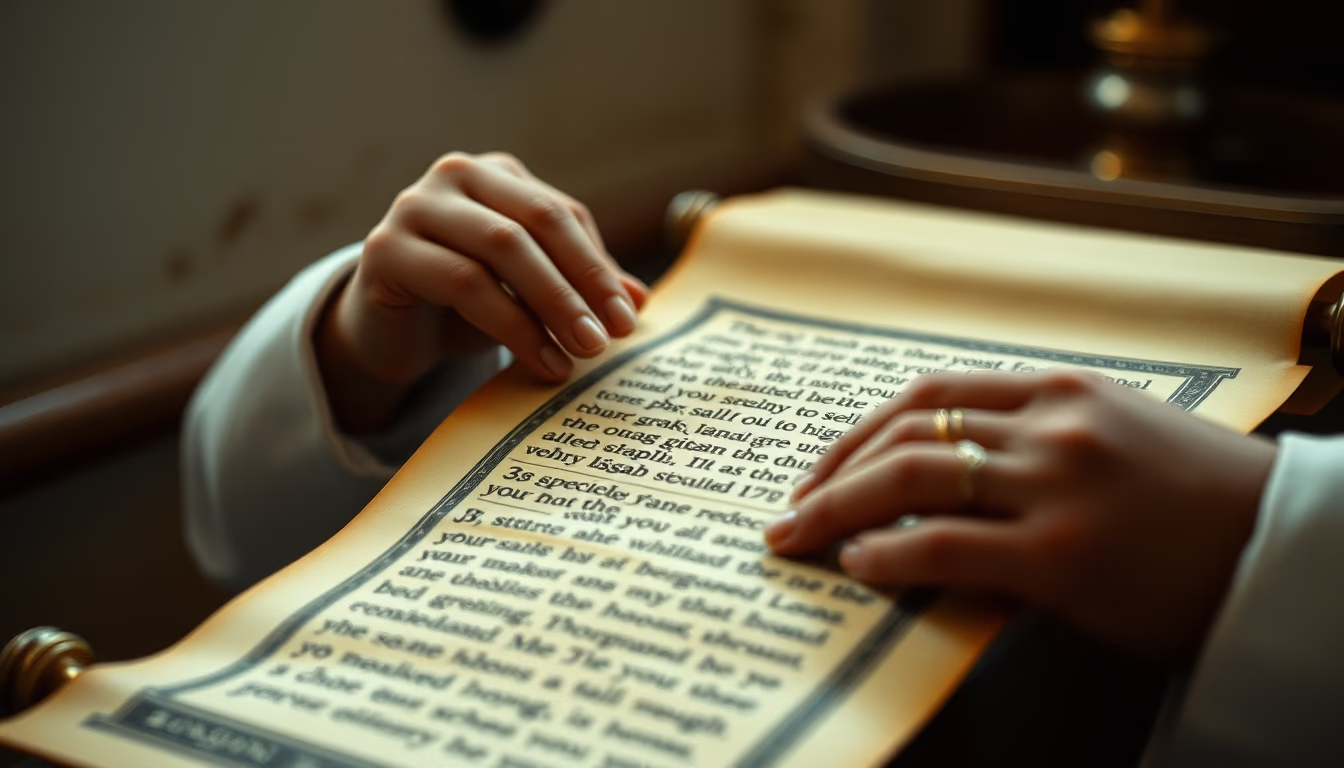
Dead sea scrolls fragment
1344×768 · AVIF · CC BY 4.0
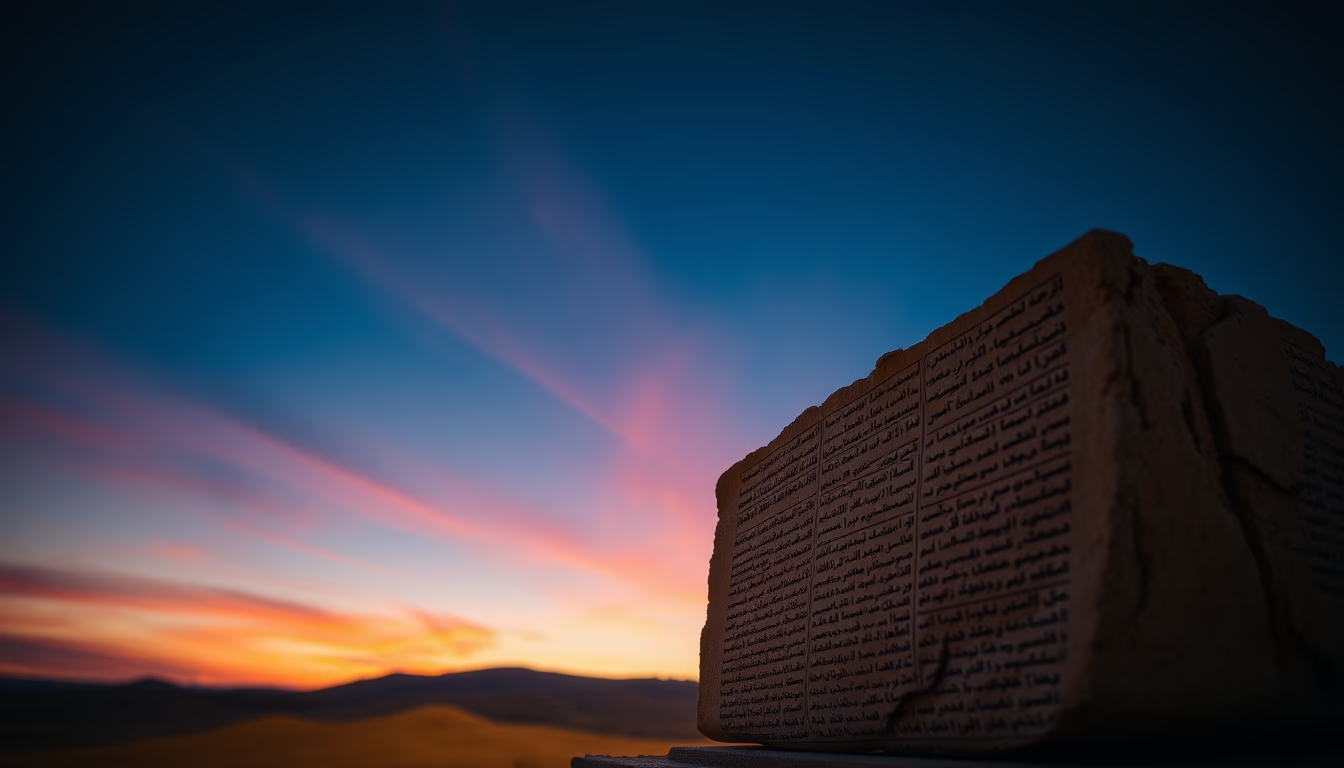
Fragment of the Dead Sea Scrolls, ancient documents that revolutionized biblical and historical studies, discovered in caves at Qumran between 1947 and 1956.
About this subject
The Dead Sea Scrolls are a collection of about 900 texts discovered between 1947 and 1956 in 11 caves near the site of Qumran, in the West Bank, on the shores of the Dead Sea. Dated from the 3rd century BCE to the 1st century CE, they include copies of Old Testament books such as Isaiah, Psalms, and Deuteronomy, as well as apocryphal texts, community rules, and sectarian documents from the Qumran community, possibly the Essenes. Their historical importance is immense: before their discovery, the oldest Hebrew manuscripts of the Old Testament dated from the 9th century CE; the Dead Sea Scrolls pushed that dating back over a thousand years, allowing scholars to compare textual fidelity across centuries. Fragments like this one are crucial for paleography and textual criticism, revealing variations and textual traditions that help understand the transmission of the Hebrew Bible and the context of Second Temple Judaism.
The discovery was accidental: a Bedouin shepherd, Muhammad edh-Dhib, found the first scrolls in a cave. Archaeological excavations, led by Roland de Vaux and others, uncovered tens of thousands of fragments of papyrus and leather written in Hebrew, Aramaic, and Greek. Exceptional preservation is due to the dry climate and low humidity of the region. The manuscripts are now largely housed in the Shrine of the Book at the Israel Museum in Jerusalem, though fragments are scattered among academic collections worldwide.
The exact authorship and purpose are still debated. The prevailing hypothesis links the texts to the Essene community, who allegedly lived in isolation at Qumran, practicing asceticism and awaiting the end of times. Archaeological evidence such as the cemetery and cisterns supports this view, but alternative models associate the scrolls with Jewish groups in Jerusalem or the Temple library. The debate enriches research and keeps the scrolls at the center of biblical and historical studies.
Frequently Asked Questions
What are the Dead Sea Scrolls?
They are a collection of ancient texts, mostly in Hebrew and Aramaic, discovered in caves near the Dead Sea. They include biblical copies, apocryphal writings, and rules of a Jewish sectarian community, dated from the 3rd century BCE to the 1st century CE.
Where and when were the Dead Sea Scrolls found?
They were discovered between 1947 and 1956 in 11 caves at the Qumran site in the West Bank. The first find was made by a Bedouin shepherd in 1947.
Why are the fragments important for biblical studies?
They are the oldest known biblical manuscripts, predating medieval Hebrew texts by centuries. They allow scholars to verify the accuracy of translations and understand the evolution of the Hebrew biblical text and textual variants in ancient Judaism.
Direct URL
https://pub-c7d6a6ea828543ac903a74a341ccb2e1.r2.dev/imagens/dead-sea-scrolls-fragment-architectural-photography-fresh14.avifHow to credit
Include a visible link back to UtilizAí. Copy one of the snippets below:
<a href="https://xn--utiliza-eza.com/en/midia/imagens/dead-sea-scrolls-fragment-architectural-photography-fresh14">Dead sea scrolls fragment</a> by <a href="https://xn--utiliza-eza.com">UtilizAí</a>, licensed under <a href="https://creativecommons.org/licenses/by/4.0/">CC BY 4.0</a>.
[Dead sea scrolls fragment](https://xn--utiliza-eza.com/en/midia/imagens/dead-sea-scrolls-fragment-architectural-photography-fresh14) by [UtilizAí](https://xn--utiliza-eza.com), CC BY 4.0
License: CC-BY-4.0