Cuneiform tablet sumerian
1344×768 · AVIF · CC BY 4.0
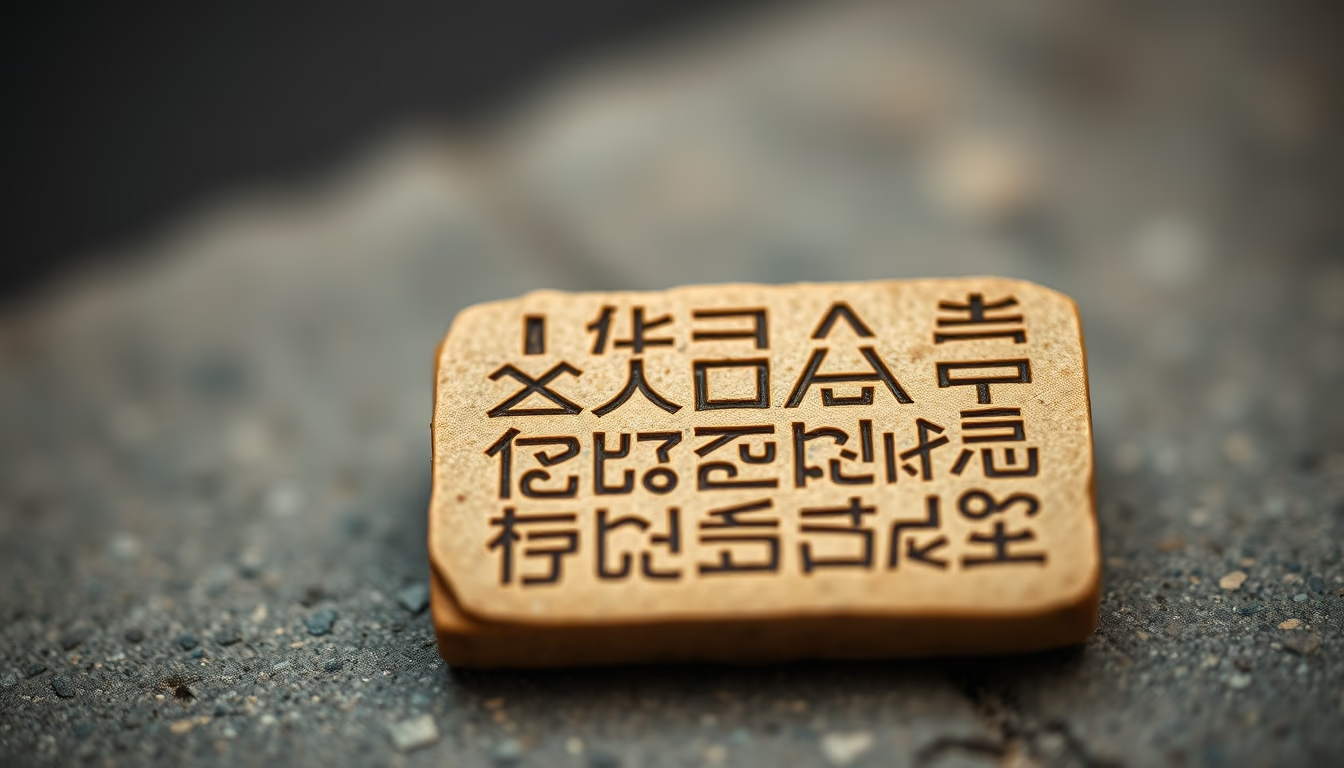
Clay tablet with Sumerian cuneiform script, one of the earliest writing systems, dating to around 3000 BCE.
About this subject
Cuneiform script was developed by the Sumerians in Mesopotamia, modern-day Iraq, around 3200 BCE. Initially pictographic, it evolved into a system of wedge-shaped signs impressed on wet clay tablets with a stylus. These tablets were then dried in the sun or fired for preservation. The term "cuneiform" comes from Latin "cuneus" (wedge), referring to the shape of the strokes.
Sumerians used writing for administrative, commercial, legal, and literary records. The Epic of Gilgamesh, one of the oldest literary works, was preserved on cuneiform tablets. Each tablet could contain simple item lists to complex religious or scientific texts. The script was later adopted by Akkadians, Babylonians, Assyrians, and Elamites, adapting it to their languages.
Decipherment of cuneiform began in the 19th century, with scholars like Henry Rawlinson using the trilingual Behistun Inscription (Old Persian, Elamite, Akkadian) to crack the system. Today, about 500,000 tablets are known, many still untranslated. They provide invaluable insights into daily life, economy, religion, and science in ancient Mesopotamia.
Tablets like this are often fragmented and worn, but each is a time capsule. The tilt-shift miniature technique in the image may give an illusion of a miniature object, but real tablets typically measure 5 to 30 centimeters. Preservation of these artifacts is crucial for archaeology, and many reside in museums such as the British Museum and the Louvre.
Frequently Asked Questions
What is cuneiform writing?
It is a writing system developed by the Sumerians around 3200 BCE, using wedge-shaped signs impressed on clay. It was used by various Mesopotamian civilizations for over 3,000 years.
How were cuneiform tablets made?
They were made from moist clay, shaped into a tablet, and inscribed with a reed stylus. Then they were left to dry in the sun or fired to harden.
Where can I see cuneiform tablets today?
At museums such as the British Museum (London), the Louvre (Paris), the Iraq Museum (Baghdad), and the Penn Museum (Philadelphia).
Direct URL
https://pub-c7d6a6ea828543ac903a74a341ccb2e1.r2.dev/imagens/cuneiform-tablet-sumerian-tilt-shift-miniature-p11.avifHow to credit
Include a visible link back to UtilizAí. Copy one of the snippets below:
<a href="https://xn--utiliza-eza.com/en/midia/imagens/cuneiform-tablet-sumerian-tilt-shift-miniature-p11">Cuneiform tablet sumerian</a> by <a href="https://xn--utiliza-eza.com">UtilizAí</a>, licensed under <a href="https://creativecommons.org/licenses/by/4.0/">CC BY 4.0</a>.
[Cuneiform tablet sumerian](https://xn--utiliza-eza.com/en/midia/imagens/cuneiform-tablet-sumerian-tilt-shift-miniature-p11) by [UtilizAí](https://xn--utiliza-eza.com), CC BY 4.0
License: CC-BY-4.0