Cuneiform tablet sumerian
1344×768 · AVIF · CC BY 4.0
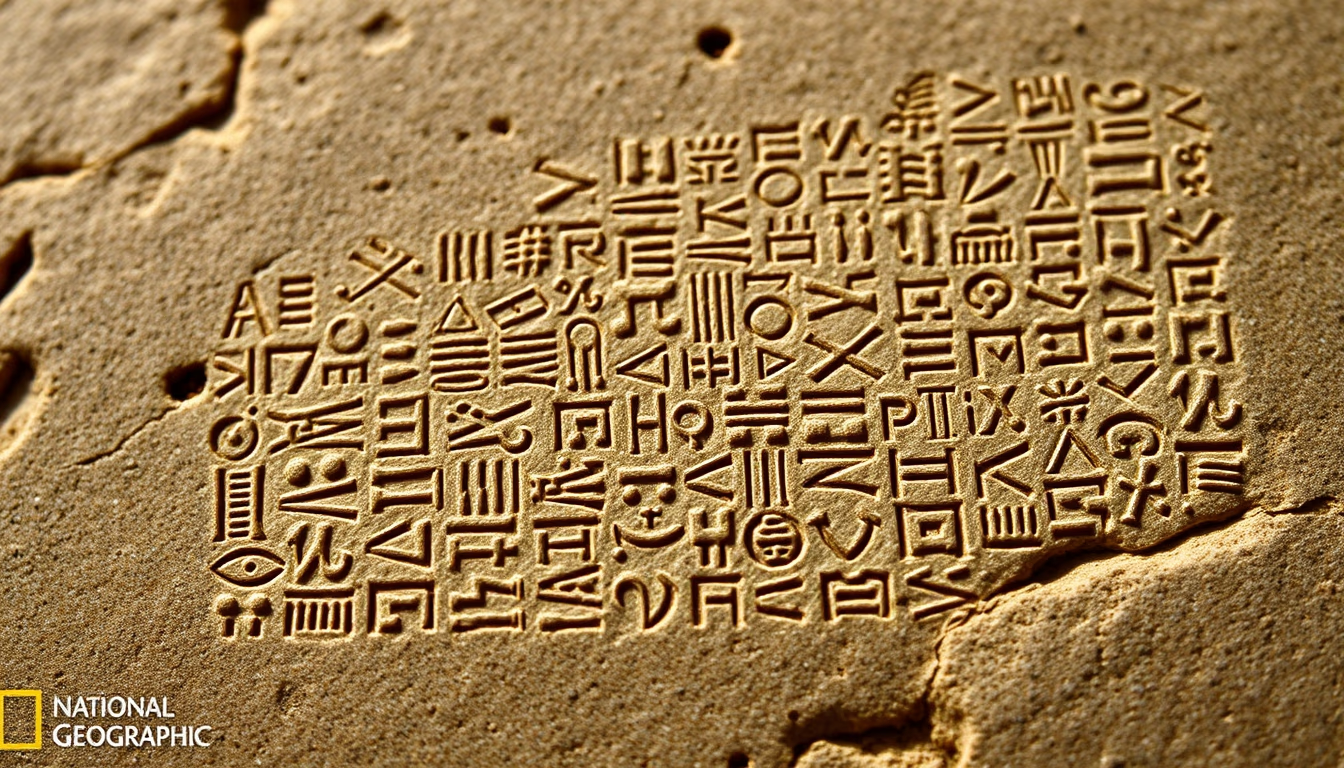
Clay tablets with Sumerian cuneiform writing are essential records of the first Mesopotamian civilization, dating back over 5,000 years.
About this subject
Sumerian cuneiform tablets are among the oldest known examples of writing, originating in Mesopotamia (modern-day Iraq) around 3400 BCE. They were created by pressing a reed stylus with a wedge-shaped tip into soft clay, which was then dried in the sun or baked for preservation. Cuneiform began as pictographs for recording goods and transactions, evolving into a syllabic system capable of expressing epic poems, laws, and treaties.
Most surviving tablets deal with economic administration: tax lists, purchase contracts, temple inventories. But there are also literary texts, such as the Epic of Gilgamesh, and legal codes, like that of Ur-Nammu, pre-dating Hammurabi's. Tablets were often stored in palace or temple archives, and many have been unearthed in excavations of cities like Uruk, Nippur, and Lagash.
Cuneiform was used for over three millennia by various Mesopotamian languages until it was replaced by the Aramaic alphabet. Modern decipherment began in the 19th century, thanks to scholars like Henry Rawlinson, who worked on the Behistun inscription. Today, thousands of tablets are housed in museums worldwide, offering a unique window into Sumerian life, thought, and social organization.
Frequently Asked Questions
What is a Sumerian cuneiform tablet?
It is a clay slab inscribed with wedge-shaped marks using a stylus. Sumerians used this writing system for administrative records, literary texts, and laws, starting around 3400 BCE.
How were cuneiform tablets made?
Clay was shaped into a flat plaque, and while still moist, the scribe pressed a reed stylus to form the signs. The tablet was then dried in the sun or baked to harden.
Why are Sumerian tablets historically important?
They are among the earliest forms of writing and provide detailed insights into the economy, religion, literature, and law of ancient Mesopotamia, influencing later civilizations.
Direct URL
https://pub-c7d6a6ea828543ac903a74a341ccb2e1.r2.dev/imagens/cuneiform-tablet-sumerian-national-geographic-style-p2.avifHow to credit
Include a visible link back to UtilizAí. Copy one of the snippets below:
<a href="https://xn--utiliza-eza.com/en/midia/imagens/cuneiform-tablet-sumerian-national-geographic-style-p2">Cuneiform tablet sumerian</a> by <a href="https://xn--utiliza-eza.com">UtilizAí</a>, licensed under <a href="https://creativecommons.org/licenses/by/4.0/">CC BY 4.0</a>.
[Cuneiform tablet sumerian](https://xn--utiliza-eza.com/en/midia/imagens/cuneiform-tablet-sumerian-national-geographic-style-p2) by [UtilizAí](https://xn--utiliza-eza.com), CC BY 4.0
License: CC-BY-4.0