Cuneiform tablet sumerian
1344×768 · AVIF · CC BY 4.0
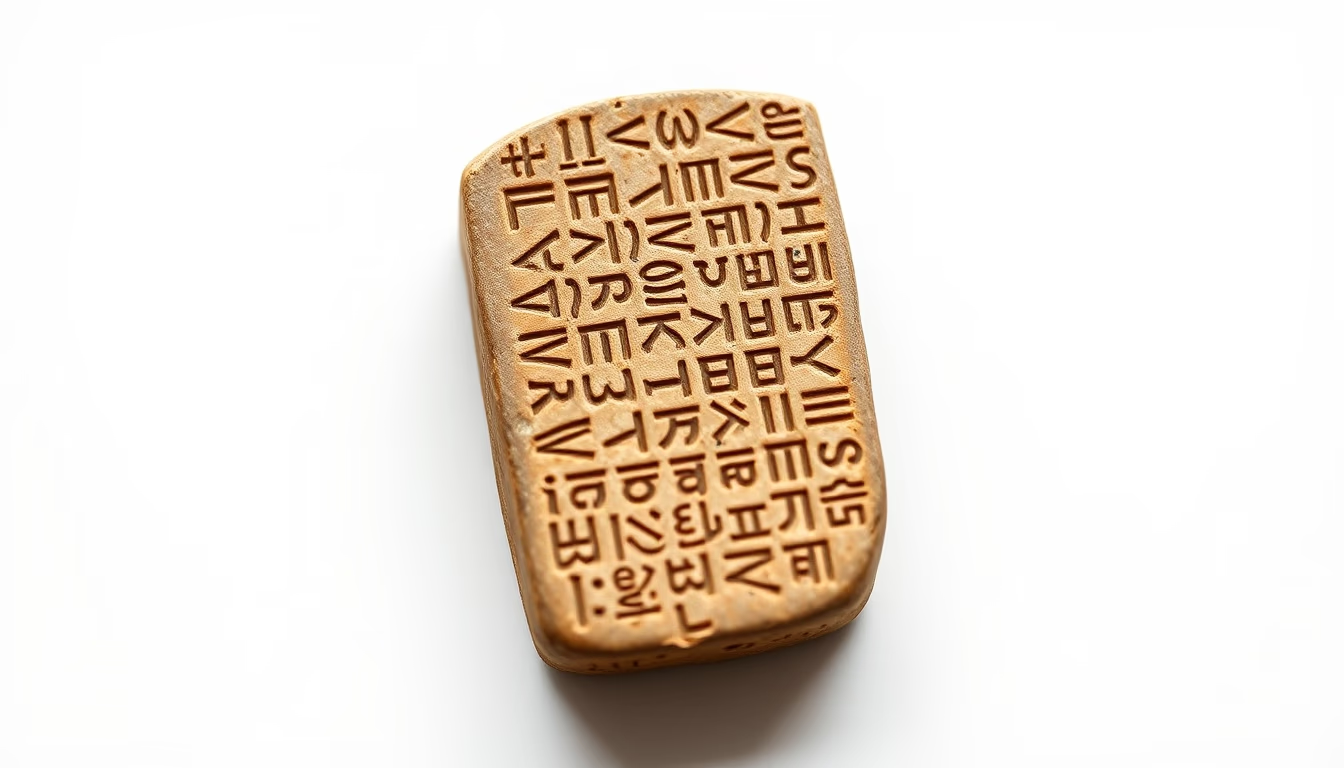
Clay tablet with Sumerian cuneiform script, one of humanity's earliest writing systems, used for administrative and literary records in Mesopotamia.
About this subject
Sumerian cuneiform emerged around 3400 BCE in Mesopotamia, modern-day Iraq. Initially pictographic, it evolved into a system of wedge-shaped signs impressed onto moist clay tablets with a reed stylus. These tablets were then sun-dried or fired for preservation. Cuneiform was later adapted by Akkadian, Babylonian, and Assyrian cultures, remaining in use for over three millennia.
Most cuneiform tablets found are administrative and economic records: lists of goods, commercial transactions, contracts, and inventories. However, literary works such as the Epic of Gilgamesh, one of the oldest known texts, also exist. Writing was the domain of specialized scribes trained in schools called edubba. The knowledge of cuneiform was lost for centuries until deciphered in the 19th century by scholars like Henry Rawlinson.
The preservation of clay tablets is remarkable: many survived millennia in archaeological sites, providing detailed insights into Sumerian daily life, economy, religion, and politics. Tablet production was a craft: clay was prepared, shaped into rectangular or oval forms, and writing was done while still moist. After drying, tablets were often stored in archives or libraries. About 500,000 tablets have been discovered to date, but many remain unpublished or untranslated.
The significance of Sumerian cuneiform to the history of writing is comparable to the invention of the printing press. It marks the transition from oral communication to permanent record-keeping, enabling empire administration and knowledge transmission across generations. Museums worldwide, such as the British Museum and the Louvre, hold significant cuneiform collections, still studied by Assyriologists.
Frequently Asked Questions
How were clay cuneiform tablets made?
Tablets were made from moist clay, shaped into rectangular or oval forms. A wedge-shaped reed stylus was used to impress the signs while the clay was still soft. Afterwards, tablets were sun-dried or fired in kilns to harden.
What was the main practical use of cuneiform writing?
Most cuneiform tablets recorded commercial transactions, inventories, contracts, taxes, and other administrative documents. They were essential for managing temples, palaces, and private businesses in Mesopotamia.
How long did it take to decipher cuneiform?
Cuneiform was gradually deciphered from the early 19th century onward. A milestone was the translation of the Behistun inscription by Henry Rawlinson in the 1840s, which allowed the decipherment of Akkadian. Sumerian, an isolated language, took longer and some texts remain uncertain.
Direct URL
https://pub-c7d6a6ea828543ac903a74a341ccb2e1.r2.dev/imagens/cuneiform-tablet-sumerian-commercial-product-photography-p0.avifHow to credit
Include a visible link back to UtilizAí. Copy one of the snippets below:
<a href="https://xn--utiliza-eza.com/en/midia/imagens/cuneiform-tablet-sumerian-commercial-product-photography-p0">Cuneiform tablet sumerian</a> by <a href="https://xn--utiliza-eza.com">UtilizAí</a>, licensed under <a href="https://creativecommons.org/licenses/by/4.0/">CC BY 4.0</a>.
[Cuneiform tablet sumerian](https://xn--utiliza-eza.com/en/midia/imagens/cuneiform-tablet-sumerian-commercial-product-photography-p0) by [UtilizAí](https://xn--utiliza-eza.com), CC BY 4.0
License: CC-BY-4.0