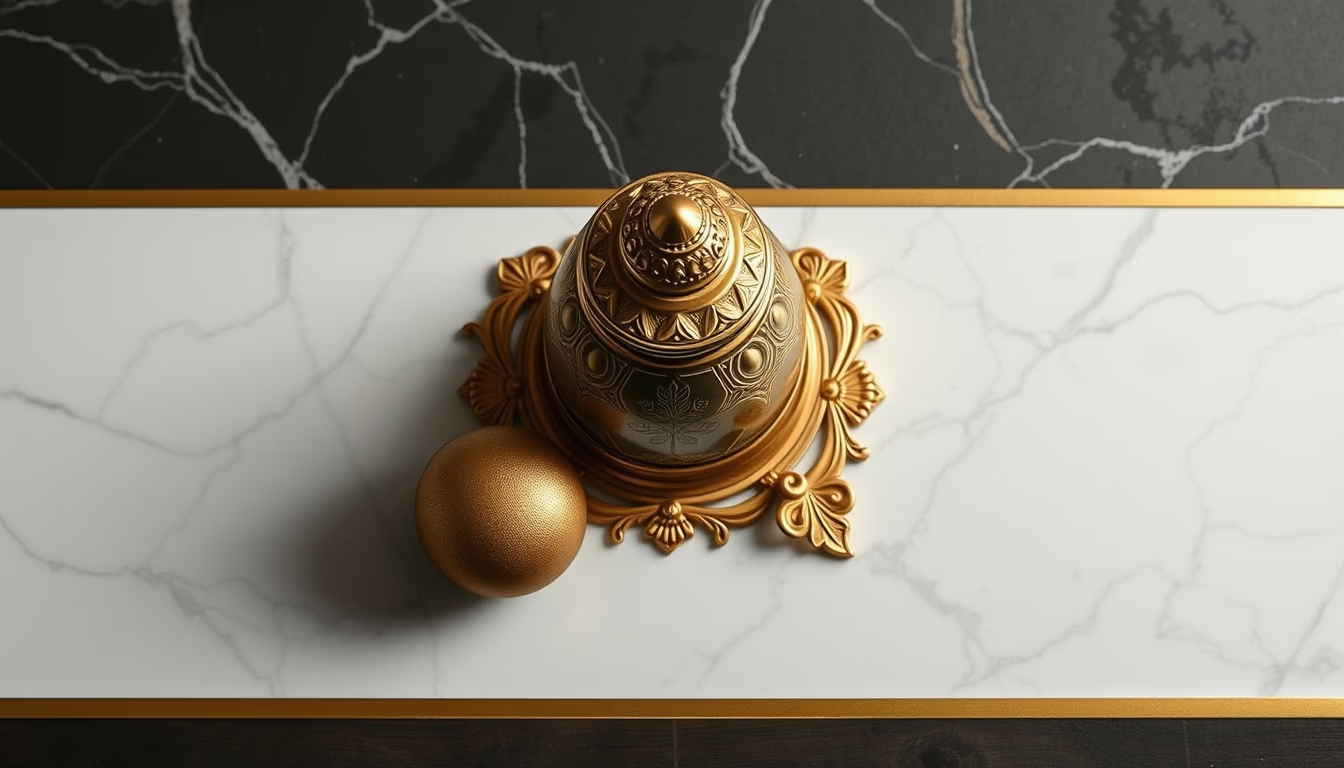
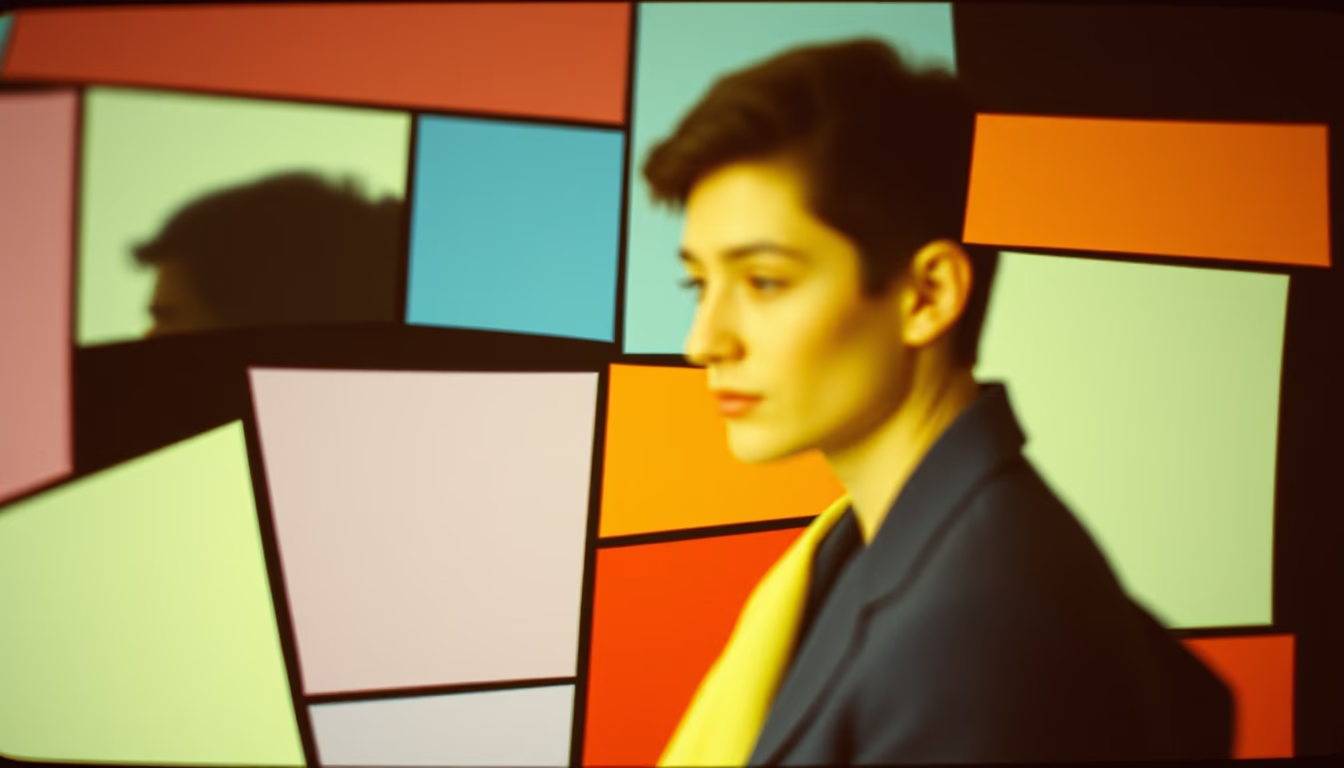
Cubist abstract picasso style
1344×768 · AVIF · CC BY 4.0

Cubism, a revolutionary movement pioneered by Pablo Picasso and Georges Braque, fragments reality into geometric forms and multiple perspectives.
About this subject
Cubism emerged in the early 20th century, around 1907, when Pablo Picasso and Georges Braque began exploring a new form of visual representation. Inspired by African and Iberian art, they abandoned Renaissance perspective and began decomposing objects into geometric shapes like cubes, cones, and cylinders, presenting multiple viewpoints simultaneously. Picasso's 'Les Demoiselles d'Avignon' (1907) is considered the starting point of the movement, where the image is fragmented and figures are distorted. Cubism is divided into two main phases: Analytic Cubism (1910-1912), characterized by neutral colors and forms reduced to fragments, and Synthetic Cubism (1912-1914), which incorporates collage and more vibrant colors. This style profoundly influenced modern art, paving the way for abstraction and other avant-garde movements. Cubist abstraction, in particular, led to experiments with non-representational forms, where composition prioritizes geometric structure over the illusion of reality. Artists like Juan Gris and Fernand Léger also contributed to this approach. In the Brazilian context, Cubism impacted the Modern Art Week of 1922, with Tarsila do Amaral incorporating some geometric influences in her works. The legacy of Cubism remains evident in contemporary art, graphic design, and architecture.
Frequently Asked Questions
What defines Picasso's cubism?
Picasso's cubism is defined by the fragmentation of objects into geometric forms and the simultaneous representation of multiple viewpoints, abandoning traditional perspective.
What are Picasso's main cubist works?
Picasso's major cubist works include 'Les Demoiselles d'Avignon' (1907), 'Portrait of Daniel-Henry Kahnweiler' (1910), and 'Violin' (1912).
How did cubism influence abstract art?
By reducing reality to geometric forms and abandoning faithful representation, cubism laid the conceptual foundations for abstract art, which explores color, form, and line without direct reference to the natural world.
Direct URL
https://pub-c7d6a6ea828543ac903a74a341ccb2e1.r2.dev/imagens/cubist-abstract-picasso-style-isometric-flat-lay-fresh0.avifHow to credit
Include a visible link back to UtilizAí. Copy one of the snippets below:
<a href="https://xn--utiliza-eza.com/en/midia/imagens/cubist-abstract-picasso-style-isometric-flat-lay-fresh0">Cubist abstract picasso style</a> by <a href="https://xn--utiliza-eza.com">UtilizAí</a>, licensed under <a href="https://creativecommons.org/licenses/by/4.0/">CC BY 4.0</a>.
[Cubist abstract picasso style](https://xn--utiliza-eza.com/en/midia/imagens/cubist-abstract-picasso-style-isometric-flat-lay-fresh0) by [UtilizAí](https://xn--utiliza-eza.com), CC BY 4.0
License: CC-BY-4.0