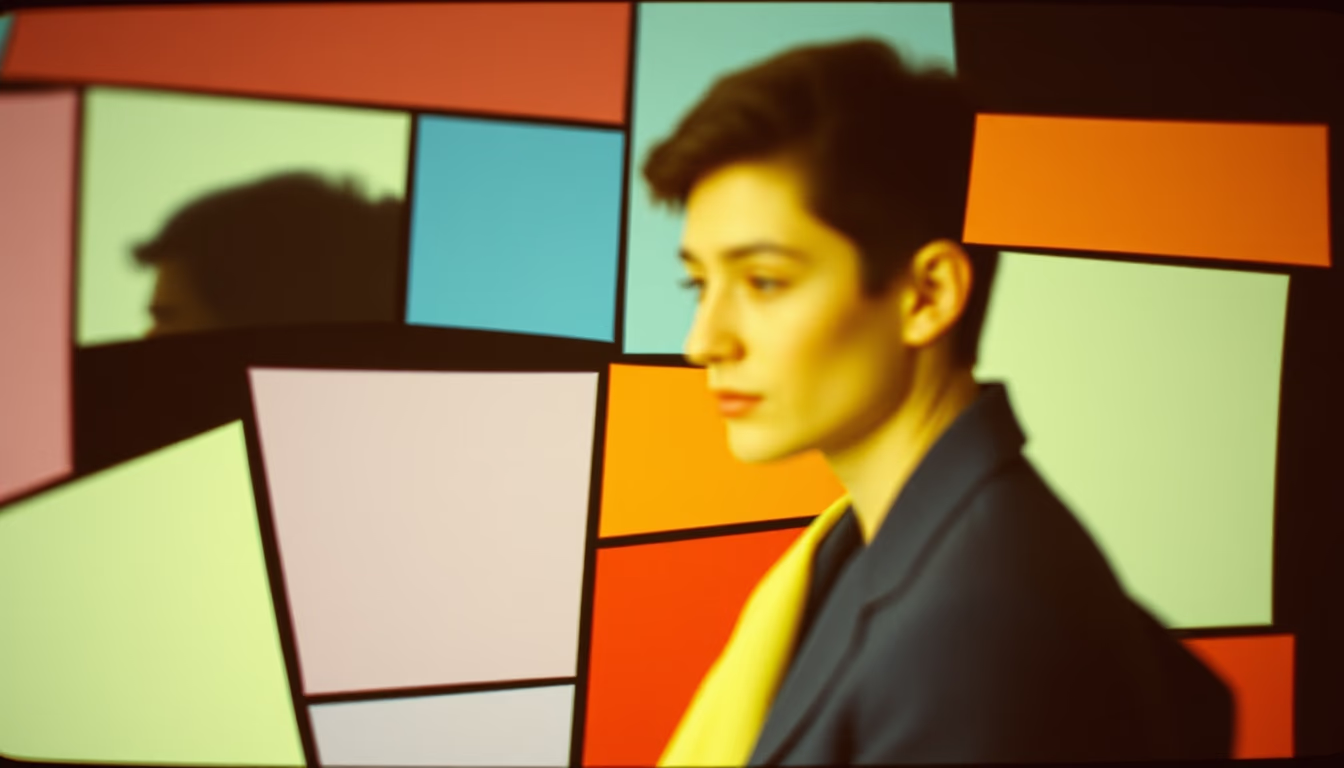
Cubist abstract picasso style
1344×768 · AVIF · CC BY 4.0
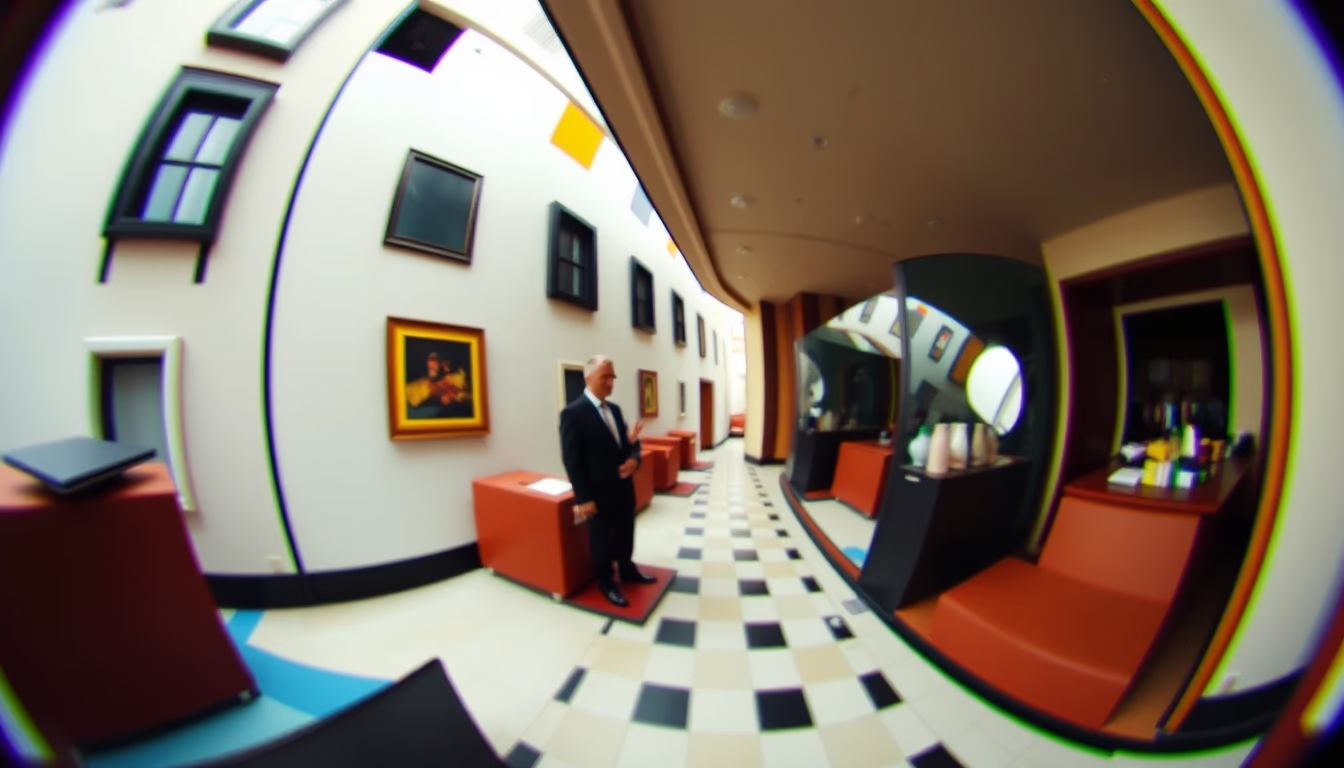
Explore the fusion of Picasso's abstract cubism with fish-eye distortion, creating an innovative visual perspective.
About this subject
Cubism, an art movement pioneered by Pablo Picasso and Georges Braque around 1907, revolutionized visual representation by fragmenting objects into geometric forms and presenting multiple viewpoints simultaneously. This abstract approach broke with Renaissance perspective, profoundly influencing modern art. Picasso, in works such as Les Demoiselles d'Avignon (1907) and Guernica (1937), explored the deconstruction of the human form and simplification into angular planes, foreshadowing abstractionism.
The fish-eye wide-angle effect originates in photography, where ultra-wide lenses distort the image, creating a spherical curvature that magnifies the center and compresses the edges. When applied to painting or digital art, this distortion enhances Cubist dynamism, multiplying perspectives and intentionally warping space. The combination of Cubism with fish-eye generates a visual tension: fragmented surfaces gain new curvature, challenging the viewer's perception.
Historically, Cubism influenced movements such as Futurism and Constructivism and remains present in contemporary experiments. The inclusion of the fish-eye effect in this context adds a layer of complexity, distorting both space and the Cubist fragmentation itself. The result is a work that dialogues with art history while exploring new visual languages, such as virtual reality and 3D modeling.
For the viewer, this synthesis of Cubism and fish-eye offers an immersive and reflective experience: each element seems to bend and stretch, revealing unexpected details. More than a mere stylistic exercise, this approach questions how we perceive the real and artificial world, uniting tradition and technological innovation.
Frequently Asked Questions
What is Cubism?
Cubism is an early 20th-century art movement started by Pablo Picasso and Georges Braque that fragments objects into geometric forms and presents multiple perspectives simultaneously, rejecting traditional realistic representation.
How did Picasso influence abstract art?
Picasso deconstructed the human figure and nature into angular, simplified planes, paving the way for abstraction by prioritizing geometric structure over realistic appearance.
What is the fish-eye effect in art?
The fish-eye effect originates from ultra-wide-angle photographic lenses that distort the image spherically, magnifying the center and curving the edges. In art, it is used to create dynamic and immersive perspectives.
Direct URL
https://pub-c7d6a6ea828543ac903a74a341ccb2e1.r2.dev/imagens/cubist-abstract-picasso-style-fish-eye-wide-angle-fresh1.avifHow to credit
Include a visible link back to UtilizAí. Copy one of the snippets below:
<a href="https://xn--utiliza-eza.com/en/midia/imagens/cubist-abstract-picasso-style-fish-eye-wide-angle-fresh1">Cubist abstract picasso style</a> by <a href="https://xn--utiliza-eza.com">UtilizAí</a>, licensed under <a href="https://creativecommons.org/licenses/by/4.0/">CC BY 4.0</a>.
[Cubist abstract picasso style](https://xn--utiliza-eza.com/en/midia/imagens/cubist-abstract-picasso-style-fish-eye-wide-angle-fresh1) by [UtilizAí](https://xn--utiliza-eza.com), CC BY 4.0
License: CC-BY-4.0