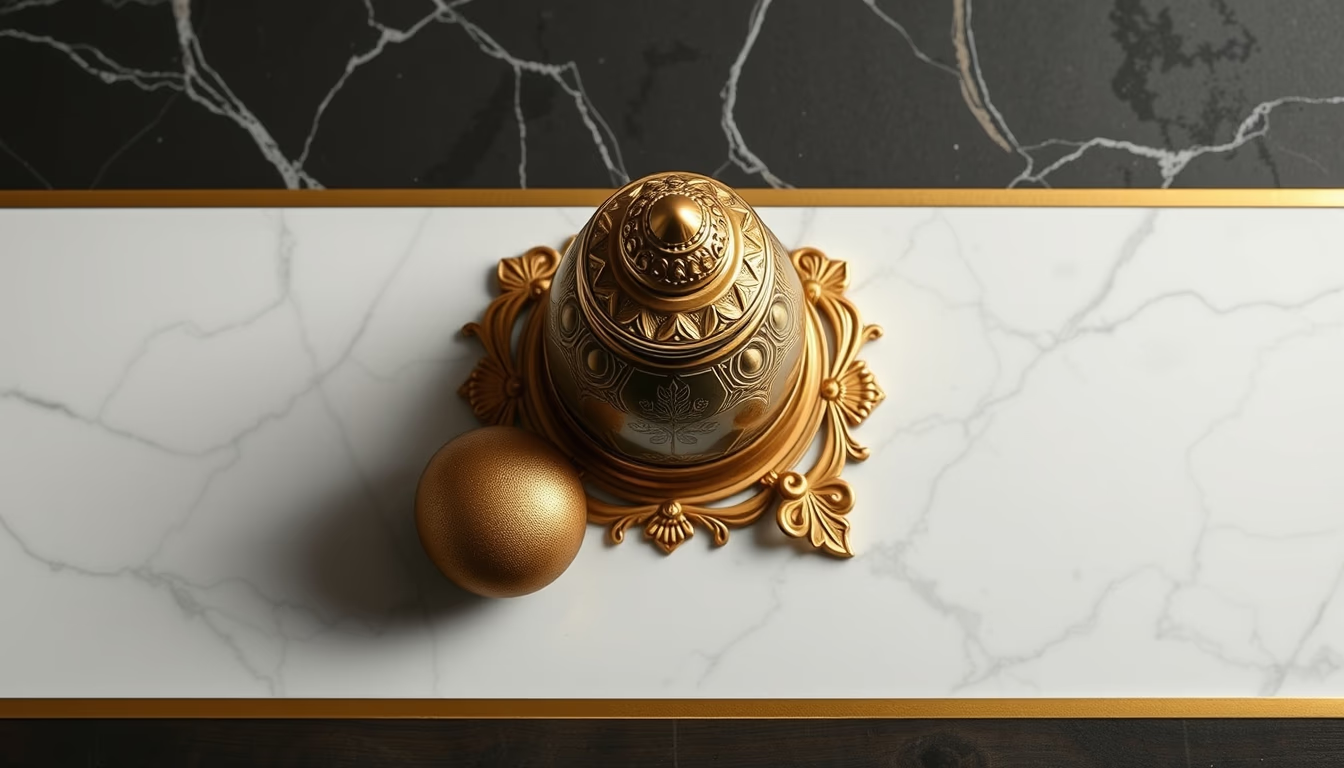
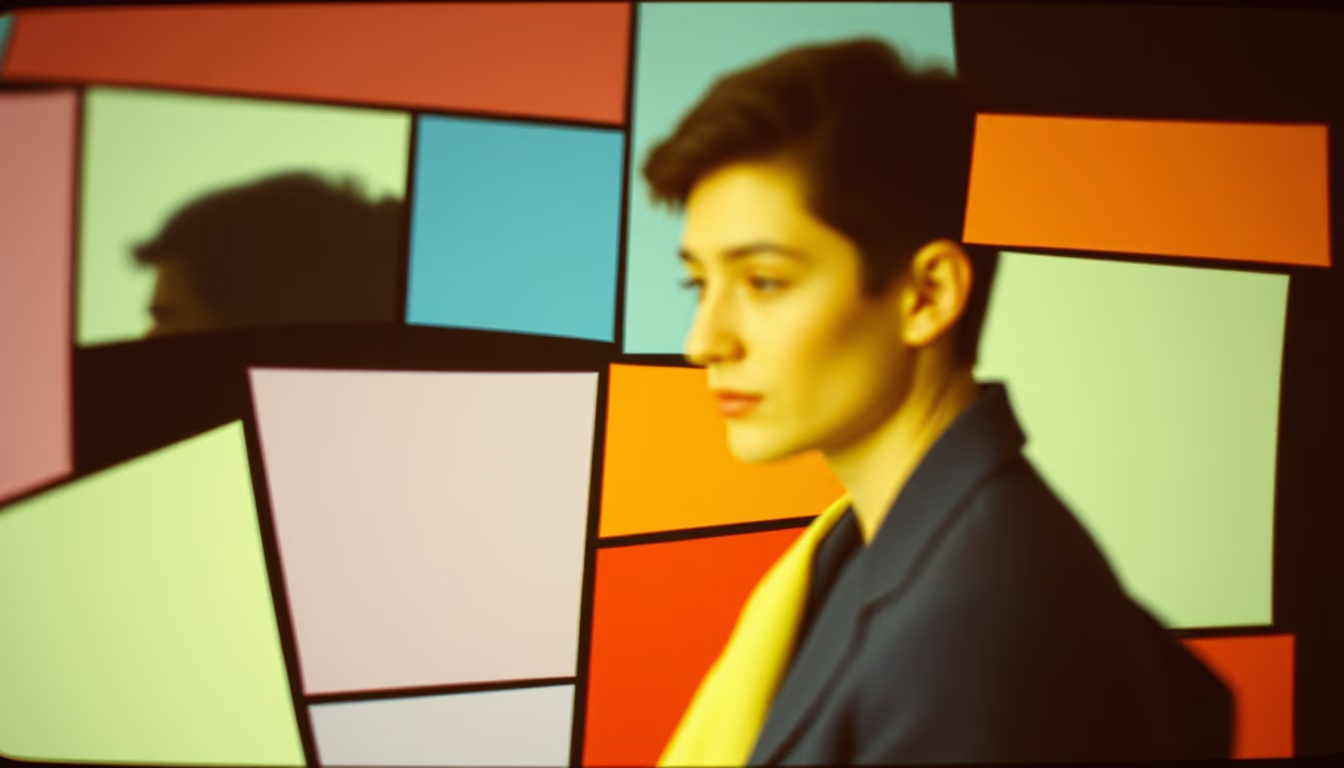
Cubist abstract picasso style
1344×768 · AVIF · CC BY 4.0

Abstract cubism in Picasso's style reinterprets reality with geometric forms and multiple perspectives. Discover the artistic revolution that transformed modern painting.
About this subject
Cubism, a pioneering art movement of the early 20th century, radically abandoned Renaissance perspective and depicted objects from multiple angles simultaneously. Pablo Picasso, alongside Georges Braque, developed this language between 1907 and 1914, influenced by African art and Cézanne's work. In its analytical and synthetic phases, artists fragmented forms into geometric planes, using muted colors early on and later incorporating collage. The painting Les Demoiselles d'Avignon (1907) is considered the starting point, while Guernica (1937) demonstrates the political potential of the style.
The aerial view obtained by drones in modern photography echoes the cubist principle of multiple perspectives. Just as Picasso showed a face in profile and front view in the same face, the drone captures angles impossible for the human eye, flattening depth and highlighting geometric patterns. This aesthetic has not only influenced painting but also architecture, design, and even fashion.
Interestingly, abstract cubism does not mean lack of figuration, but rather a new way of representing reality. Artists like Juan Gris and Fernand Léger expanded the movement, which lasted until World War I, but its legacy endures. Today, exhibitions and books continue to explore how cubism paved the way for abstract art, surrealism, and expressionism. The use of multiple angles and decomposition of form are tools still employed by contemporary artists.
Frequently Asked Questions
What is Cubism?
Cubism is an art movement that emerged between 1907 and 1914, characterized by representing objects from multiple viewpoints, geometric forms, and fragmentation of reality. It was pioneered by Pablo Picasso and Georges Braque.
Who was Pablo Picasso?
Pablo Picasso (1881-1973) was a Spanish painter and sculptor, co-founder of Cubism and one of the most influential artists of the 20th century. His work includes the Blue and Rose periods, Cubism, and masterpieces like Guernica.
How did Cubism influence modern art?
Cubism paved the way for abstraction by abandoning traditional perspective. It influenced movements such as Futurism, Constructivism, and Abstract Expressionism, and its ideas about multiple perspectives are still used today in photography, design, and architecture.
Direct URL
https://pub-c7d6a6ea828543ac903a74a341ccb2e1.r2.dev/imagens/cubist-abstract-picasso-style-aerial-drone-shot-fresh7.avifHow to credit
Include a visible link back to UtilizAí. Copy one of the snippets below:
<a href="https://xn--utiliza-eza.com/en/midia/imagens/cubist-abstract-picasso-style-aerial-drone-shot-fresh7">Cubist abstract picasso style</a> by <a href="https://xn--utiliza-eza.com">UtilizAí</a>, licensed under <a href="https://creativecommons.org/licenses/by/4.0/">CC BY 4.0</a>.
[Cubist abstract picasso style](https://xn--utiliza-eza.com/en/midia/imagens/cubist-abstract-picasso-style-aerial-drone-shot-fresh7) by [UtilizAí](https://xn--utiliza-eza.com), CC BY 4.0
License: CC-BY-4.0