Crypto exchange UI on smartphone showing trading pair
1344×768 · AVIF · CC BY 4.0
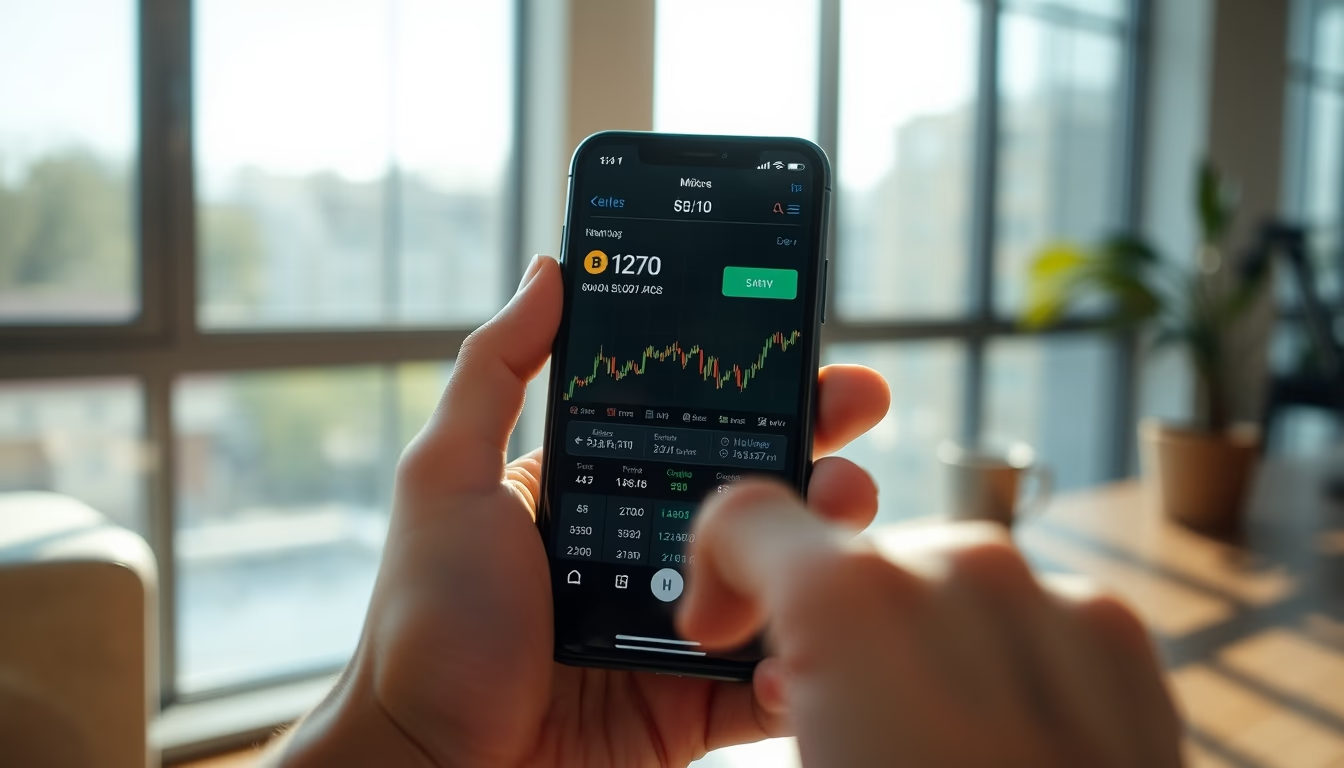
Cryptocurrency exchange interface on a smartphone displays a trading pair with real-time chart, reflecting the rise of mobile trading in Brazil.
About this subject
Using smartphones to trade cryptocurrencies has become widespread in Brazil, driven by easy access to exchanges like Binance, Mercado Bitcoin, and Foxbit. The interface shown displays a trading pair, likely BTC/USDT or ETH/BRL, with real-time candlestick chart, buy and sell orders, and wallet balance. According to Brazil's Federal Revenue, over 4 million Brazilians declared crypto operations in 2023, with mobile being the primary access channel.
Mobile trading's popularity stems from convenience: push notifications, biometric authentication, and instant updates allow investors to track the volatile market 24/7. Unlike traditional brokerages, crypto exchanges offer lower fees and low minimum deposits, attracting both small investors and large traders. Brazil is one of the leading crypto-adopting countries in Latin America, and mobile-focused design is crucial for engaging new users.
A key technical aspect is security: the interface typically includes two-factor authentication (2FA) and withdrawal address whitelisting. Many Brazilian exchanges also integrate with PIX for instant deposits and withdrawals in BRL, easing fiat on/off ramps. The trading pair shown may include stablecoins like USDC or DAI, used to hedge against market volatility.
Trivia: the first crypto exchange app in Brazil was launched in 2014 by Foxbit, but mobile trading exploded only after 2017, with the rise of smartphones and Bitcoin's bull run. Today, apps like Binance and Bybit lead download rankings, offering advanced features such as margin trading and automated bots.
Frequently Asked Questions
How does two-factor authentication work on crypto exchanges?
Two-factor authentication (2FA) adds an extra security layer by requiring a code from an app like Google Authenticator or sent via SMS, in addition to the password. This prevents unauthorized access even if the password is compromised.
What are common fees on crypto exchanges in Brazil?
Fees vary but are generally low: between 0.1% and 0.5% per trade. Some exchanges offer zero fees for certain pairs or discounts using native tokens, such as BNB on Binance.
Is it safe to trade cryptocurrencies on a smartphone?
Yes, provided the user takes precautions: enable 2FA, keep the system updated, avoid public Wi-Fi, and use only trusted exchanges with robust security measures.
Direct URL
https://pub-c7d6a6ea828543ac903a74a341ccb2e1.r2.dev/imagens/crypto-exchange-ui-on-smartphone-showing-trading-pair-documentary-morning-7.avifHow to credit
Include a visible link back to UtilizAí. Copy one of the snippets below:
<a href="https://xn--utiliza-eza.com/en/midia/imagens/crypto-exchange-ui-on-smartphone-showing-trading-pair-documentary-morning-7">Crypto exchange UI on smartphone showing trading pair</a> by <a href="https://xn--utiliza-eza.com">UtilizAí</a>, licensed under <a href="https://creativecommons.org/licenses/by/4.0/">CC BY 4.0</a>.
[Crypto exchange UI on smartphone showing trading pair](https://xn--utiliza-eza.com/en/midia/imagens/crypto-exchange-ui-on-smartphone-showing-trading-pair-documentary-morning-7) by [UtilizAí](https://xn--utiliza-eza.com), CC BY 4.0
License: CC-BY-4.0