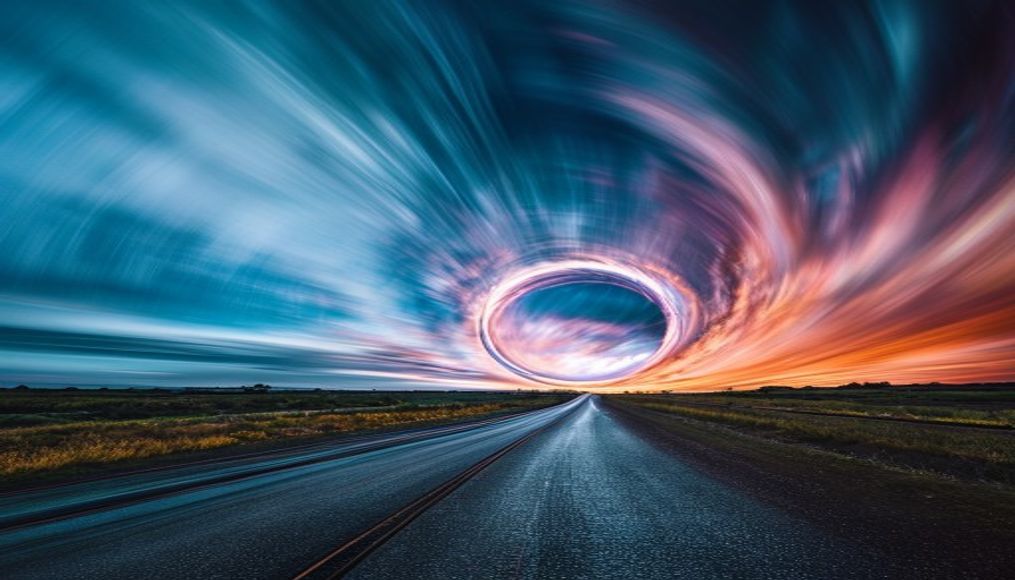
Crab nebula supernova
1344×768 · AVIF · CC BY 4.0

The Crab Nebula is the remnant of supernova SN 1054, observed by Chinese and Arab astronomers in 1054 AD.
About this subject
The Crab Nebula, cataloged as M1 and NGC 1952, is one of the most studied astronomical objects. Located in the constellation Taurus, approximately 6,500 light-years from Earth, it is the result of a massive star explosion that occurred in 1054 AD. Historical records from Chinese and Arab astronomers describe the event as a "guest star" that remained visible during the day for 23 days.
At the center of the nebula lies the Crab Pulsar, a neutron star rotating roughly 30 times per second. Discovered in 1968, it was the first pulsar associated with a supernova remnant. The pulsar emits radiation across the entire electromagnetic spectrum, from radio waves to gamma rays, and is a powerful energy source that illuminates the surrounding nebula.
The nebula has an irregular shape, about 11 light-years in diameter, and is expanding at a speed of approximately 1,500 km/s. Observations by the Hubble Space Telescope have revealed complex filaments of ionized gas, primarily hydrogen and helium, along with interstellar dust. The filamentary structure results from the interaction between the supernova ejecta and the pulsar wind.
The study of the Crab Nebula has been fundamental to understanding stellar evolution, nucleosynthesis, and high-energy astrophysics. It serves as a natural laboratory to test theories on shock waves, particle acceleration, and magnetic fields in extreme environments. Moreover, its continuous synchrotron emission has made it a standard calibrator for astronomical instruments.
Frequently Asked Questions
When was the Crab Nebula supernova observed?
It was observed in 1054 AD by Chinese and Arab astronomers, who recorded a 'guest star' visible during the day for 23 days.
What is the Crab Pulsar?
It is a neutron star at the center of the nebula, rotating about 30 times per second, emitting radiation across the entire electromagnetic spectrum.
Why is the Crab Nebula important for astronomy?
It serves as a natural laboratory to study supernovae, pulsars, shock waves, and magnetic fields, and is used as a standard calibrator for instruments.
Direct URL
https://pub-c7d6a6ea828543ac903a74a341ccb2e1.r2.dev/imagens/crab-nebula-supernova-macro-closeup-p12.avifHow to credit
Include a visible link back to UtilizAí. Copy one of the snippets below:
<a href="https://xn--utiliza-eza.com/en/midia/imagens/crab-nebula-supernova-macro-closeup-p12">Crab nebula supernova</a> by <a href="https://xn--utiliza-eza.com">UtilizAí</a>, licensed under <a href="https://creativecommons.org/licenses/by/4.0/">CC BY 4.0</a>.
[Crab nebula supernova](https://xn--utiliza-eza.com/en/midia/imagens/crab-nebula-supernova-macro-closeup-p12) by [UtilizAí](https://xn--utiliza-eza.com), CC BY 4.0
License: CC-BY-4.0