Cpu socket lga
1344×768 · AVIF · CC BY 4.0
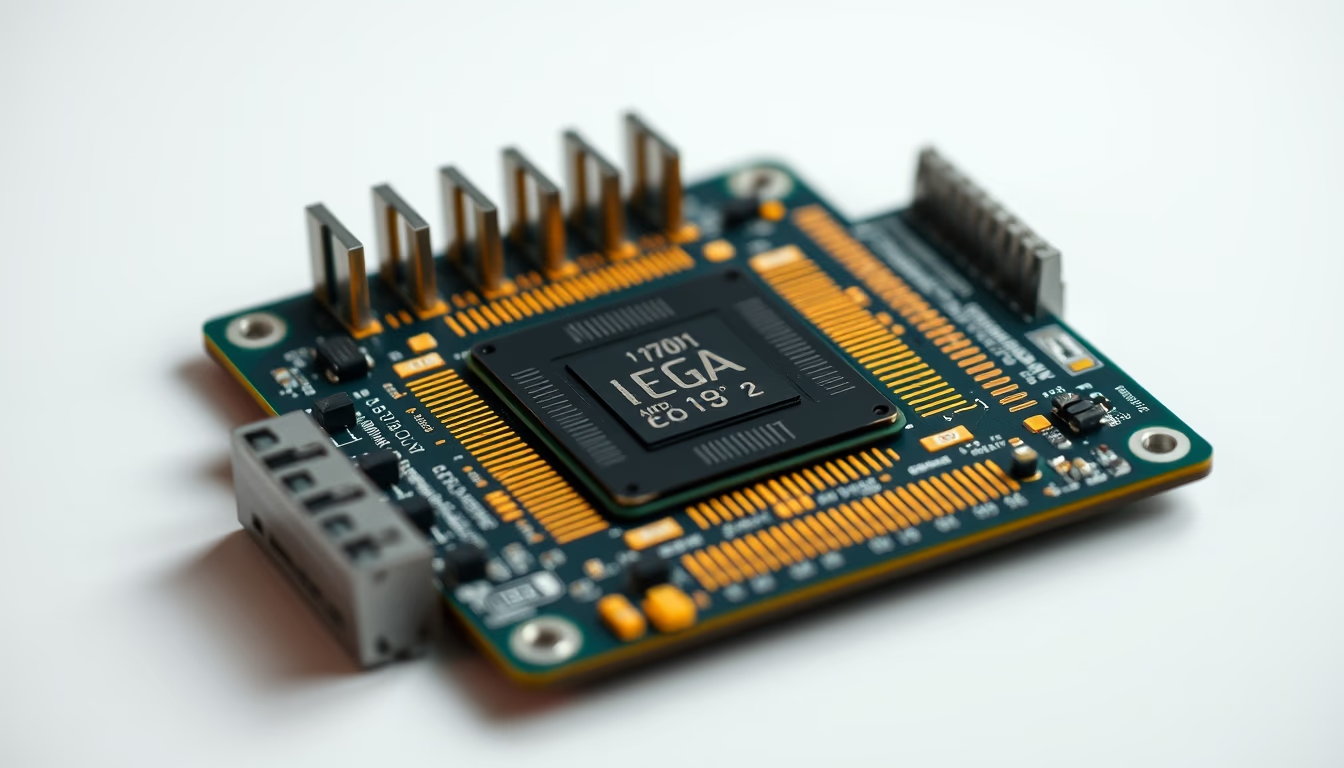
The LGA (Land Grid Array) socket is the standard used in modern Intel and AMD processors, with contacts on the motherboard socket.
About this subject
The LGA (Land Grid Array) socket is a type of processor socket where the electrical connection pins are located on the motherboard, not on the processor. This design contrasts with PGA (Pin Grid Array), where the pins are on the processor. Intel introduced LGA on a large scale with the LGA 775 socket in 2004, and since then the technology has become dominant in desktop and server processors.
One of the main advantages of LGA is the reduced risk of pin damage during processor handling, as the fragile pins are protected in the motherboard socket. Additionally, LGA allows for a higher number of connections, supporting processors with hundreds of pins, such as LGA 1700 (used in Intel Core 12th to 14th generation processors) and LGA 1851 (for future generations). AMD also adopted LGA with the AM5 socket starting in 2022, replacing the PGA used in AM4.
Installing an LGA processor requires care: the processor must be correctly aligned (usually by triangular markings) and gently placed into the socket without pressure to avoid damaging the contacts. The retention lever system ensures proper pressure for electrical contact. Compatibility between processors and sockets is crucial: each processor generation requires a specific socket, although some sockets, like LGA 1200, have supported multiple generations.
Interestingly, LGA is also used in servers, with sockets such as LGA 3647 and LGA 4189, enabling high core counts and memory capacity. The evolution of LGA sockets reflects the advancement in pin density: while LGA 775 had 775 pins, LGA 1700 has 1700, and LGA 1851 reaches 1851. This trend accompanies the demand for more bandwidth and energy efficiency in modern processors.
Frequently Asked Questions
What does LGA stand for?
LGA stands for Land Grid Array, a socket type where the electrical contact pins are on the motherboard and the processor has flat conductive pads.
What is the difference between LGA and PGA?
In LGA, the pins are on the motherboard socket; in PGA, the pins are on the processor. LGA reduces the risk of bending pins on the CPU but requires more care with the socket.
How to install an LGA processor?
Align the triangular markings on the processor and socket, gently place the processor without force, and lower the retention lever to secure it.
Direct URL
https://pub-c7d6a6ea828543ac903a74a341ccb2e1.r2.dev/imagens/cpu-socket-lga-studio-still-life-p10.avifHow to credit
Include a visible link back to UtilizAí. Copy one of the snippets below:
<a href="https://xn--utiliza-eza.com/en/midia/imagens/cpu-socket-lga-studio-still-life-p10">Cpu socket lga</a> by <a href="https://xn--utiliza-eza.com">UtilizAí</a>, licensed under <a href="https://creativecommons.org/licenses/by/4.0/">CC BY 4.0</a>.
[Cpu socket lga](https://xn--utiliza-eza.com/en/midia/imagens/cpu-socket-lga-studio-still-life-p10) by [UtilizAí](https://xn--utiliza-eza.com), CC BY 4.0
License: CC-BY-4.0