Cpu socket lga
1344×768 · AVIF · CC BY 4.0
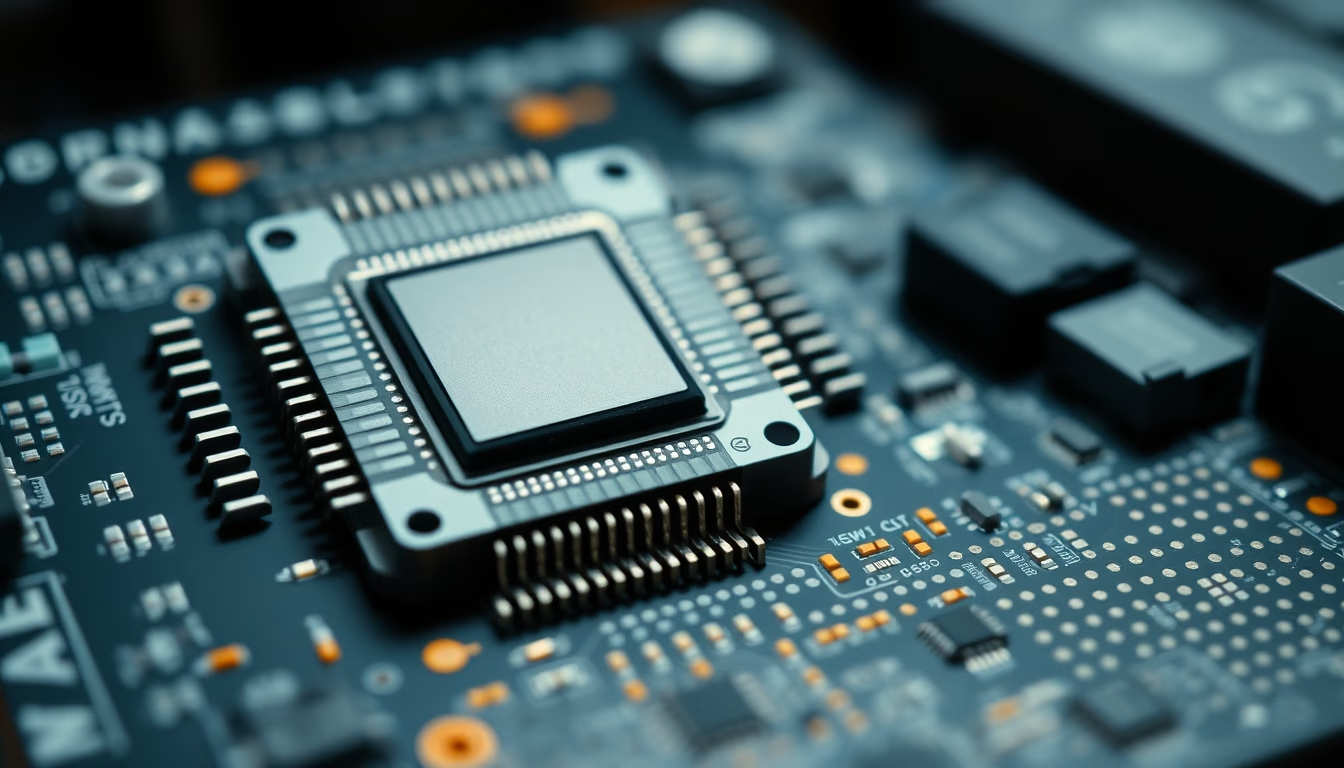
The LGA (Land Grid Array) socket is a processor connection standard used by Intel and AMD, with pins on the motherboard.
About this subject
The LGA (Land Grid Array) socket is a physical interface between the processor and motherboard. Unlike PGA (Pin Grid Array), where pins are on the CPU, LGA places the contact pins on the motherboard in a grid of small conductive pads. The CPU has flat contacts that align with these pads, reducing the risk of pin damage during installation.
Intel popularized LGA in 2004 with the LGA775 (Socket T) used by Pentium 4 and Core 2 Duo processors. Since then, Intel has introduced successive generations: LGA1156, LGA1155, LGA1150, LGA1151, LGA1200, and most recently LGA1700 for 12th to 14th Gen Core processors. AMD, traditionally using PGA for its Ryzen (AM4), migrated to LGA with the AM5 socket (LGA1718) in 2022, supporting Zen 4 architecture. In server and workstation platforms, both manufacturers have long used LGA, such as Intel LGA2066 and AMD sTRX4 (LGA4094).
The main advantage of LGA is higher pin density, allowing more electrical connections without increasing socket size. This is critical for modern CPUs requiring many power and data lines, such as DDR5 memory and PCIe 5.0 lanes. By moving pin fragility to the motherboard, replacement cost in case of damage is higher, but installation is considered safer. The retention mechanism, with lever and pressure plate, ensures firm CPU positioning.
Interestingly, pin counts do not follow a simple market logic: LGA1200 had 1200 pins, LGA1700 has 1700, and AM5 has 1718 pins, including many reserved for ground and no-connects. Cross-generation compatibility is rare: each new socket usually requires a different motherboard, though exceptions exist, like LGA1151 supporting 8th and 9th gen Intel, albeit with chipset limitations. Socket choice directly influences future upgrade possibilities.
Frequently Asked Questions
What is the difference between LGA and PGA sockets?
In LGA (Land Grid Array), pins are on the motherboard and the CPU has flat contacts. In PGA (Pin Grid Array), pins are on the CPU. LGA reduces the risk of bending pins on the CPU, but motherboard damage is costlier to repair.
Which processors currently use LGA sockets?
Intel uses LGA for all modern processors, such as Core i3/i5/i7/i9 12th to 14th Gen (LGA1700). AMD adopted LGA with Ryzen 7000 and higher (AM5, LGA1718) and also on Threadripper and EPYC processors (LGA sTRX4 and SP3).
Can I upgrade the CPU without changing the motherboard?
It depends on socket compatibility. Processors within the same generation and chipset are often compatible. For instance, a Core i5-12400 can be replaced by a Core i9-13900K, both LGA1700. But switching generations may require a new motherboard.
Direct URL
https://pub-c7d6a6ea828543ac903a74a341ccb2e1.r2.dev/imagens/cpu-socket-lga-lo-fi-disposable-camera-p9.avifHow to credit
Include a visible link back to UtilizAí. Copy one of the snippets below:
<a href="https://xn--utiliza-eza.com/en/midia/imagens/cpu-socket-lga-lo-fi-disposable-camera-p9">Cpu socket lga</a> by <a href="https://xn--utiliza-eza.com">UtilizAí</a>, licensed under <a href="https://creativecommons.org/licenses/by/4.0/">CC BY 4.0</a>.
[Cpu socket lga](https://xn--utiliza-eza.com/en/midia/imagens/cpu-socket-lga-lo-fi-disposable-camera-p9) by [UtilizAí](https://xn--utiliza-eza.com), CC BY 4.0
License: CC-BY-4.0