Cpu chip pin grid
1344×768 · AVIF · CC BY 4.0
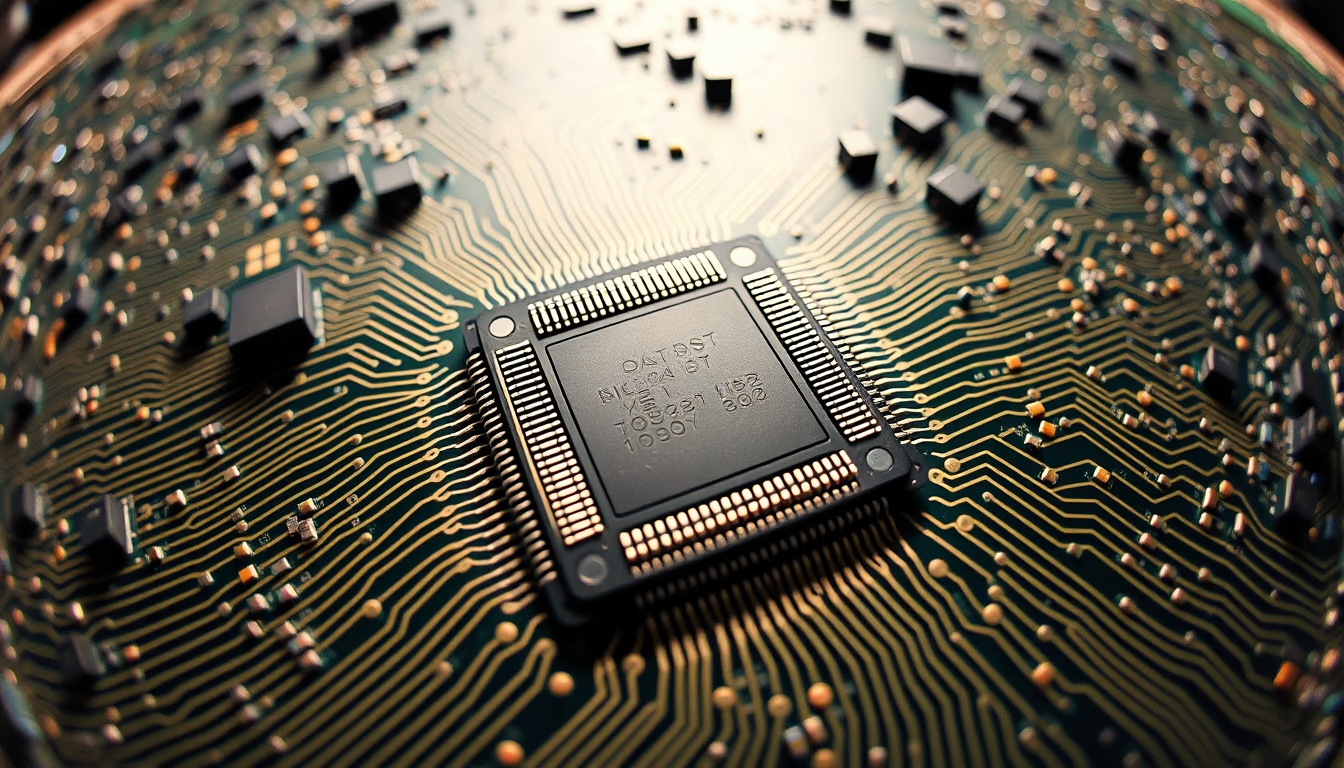
The CPU chip with pin grid array (PGA) is a type of package where metallic pins connect the processor to the motherboard.
About this subject
The pin grid array (PGA) is one of the primary packaging types used in processors, especially during the 1990s and 2000s. In this design, metal pins are arranged in a grid on the underside of the chip, which fit into corresponding sockets on the motherboard. This configuration provides good electrical conductivity and heat dissipation, but the pins are fragile and can bend or break if mishandled.
Famous processors using PGA include the Intel Pentium III and Pentium 4 in sockets such as Socket 370 and Socket 478, as well as AMD Athlon 64 in sockets like Socket 939 and Socket AM2. However, starting in the early 2000s, Intel transitioned to land grid array (LGA), which moves the pins to the socket, leaving the chip with flat contacts. AMD followed suit with its Ryzen and EPYC series, now using LGA. Today, PGA is more common in budget processors or embedded systems, such as some Intel Atom and AMD A-Series models.
The main advantage of PGA over LGA is lower manufacturing cost and the ability to replace the processor without changing the socket. However, the fragility of the pins requires careful installation. Moreover, the pin count has increased over time to support more electrical connections, reaching over 1000 pins in server processors. The high pin density demands precision in manufacturing and limits scalability, which is why modern architectures prefer LGA.
In terms of performance, PGA offers no direct benefit over LGA, but signal integrity may be slightly better at high frequencies due to shorter electrical paths. However, the difference is minimal. PGA also facilitates thermal management by providing more contact area with the cooler. Despite the gradual replacement, PGA remains relevant in niches such as laptop processors and compact devices where simpler sockets are advantageous.
Frequently Asked Questions
What is a pin grid array (PGA)?
A pin grid array (PGA) is a chip packaging type where metal pins are arranged in a grid on the underside of the processor. These pins fit into sockets on the motherboard to establish electrical connections.
Which CPUs currently use PGA?
Today, PGA is mostly used in low-cost processors and embedded systems, such as some Intel Atom and AMD A-Series models. Most modern desktop CPUs, like Intel Core and AMD Ryzen, use LGA.
What is the difference between PGA and LGA?
In PGA, the pins are on the processor; in LGA, the pins are on the motherboard socket. LGA reduces the risk of pin damage but makes the socket more complex. PGA is cheaper to manufacture but requires careful handling.
Direct URL
https://pub-c7d6a6ea828543ac903a74a341ccb2e1.r2.dev/imagens/cpu-chip-pin-grid-fish-eye-wide-angle-p11.avifHow to credit
Include a visible link back to UtilizAí. Copy one of the snippets below:
<a href="https://xn--utiliza-eza.com/en/midia/imagens/cpu-chip-pin-grid-fish-eye-wide-angle-p11">Cpu chip pin grid</a> by <a href="https://xn--utiliza-eza.com">UtilizAí</a>, licensed under <a href="https://creativecommons.org/licenses/by/4.0/">CC BY 4.0</a>.
[Cpu chip pin grid](https://xn--utiliza-eza.com/en/midia/imagens/cpu-chip-pin-grid-fish-eye-wide-angle-p11) by [UtilizAí](https://xn--utiliza-eza.com), CC BY 4.0
License: CC-BY-4.0