Corn cob fresh harvest in farmer hands
1344×768 · AVIF · CC BY 4.0
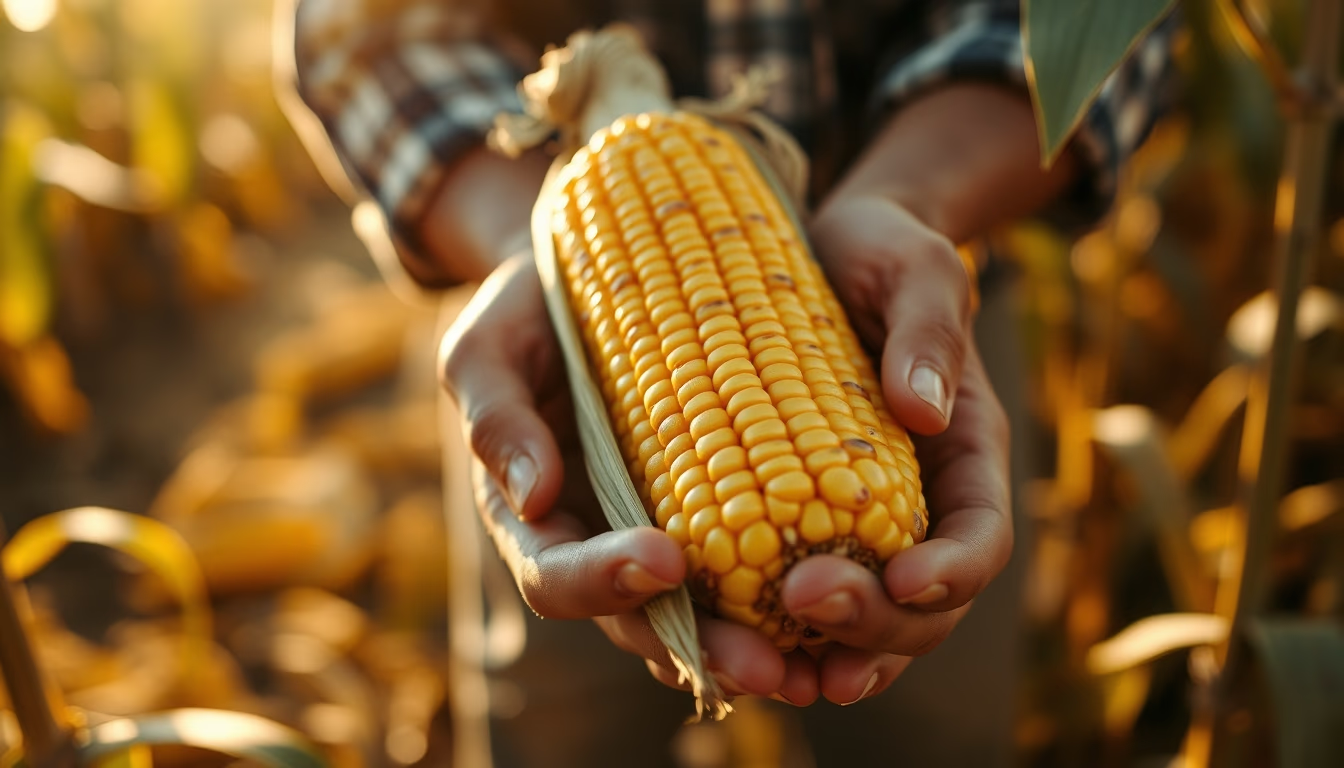
Freshly harvested corn cob in a farmer's hands, symbolizing the strength of Brazilian agribusiness.
About this subject
Corn (Zea mays) is one of the pillars of Brazilian agriculture, with the country ranking third in global production, behind only the United States and China. In the 2022/2023 harvest, Brazil harvested around 130 million tons, solidifying its position as a major global exporter. The cob depicted, with golden, well-formed kernels, represents the result of decades of genetic improvement and cultivation techniques that enabled the Cerrado and other regions to become productive agricultural frontiers.
The farmer, a central figure in the production chain, is responsible for practices ranging from no-till planting to mechanized harvesting. In Brazil, manual harvesting still persists on small farms and in family agriculture, which accounts for a large portion of domestically consumed corn, especially as green corn for fresh consumption or processed (pamonha, curau, etc.). The calloused hand of the rural worker highlights a direct connection to the land, contrasting with the high-tech image often associated with agribusiness.
Corn cultivation in Brazil has deep historical roots, grown by indigenous peoples long before the arrival of Europeans. Today, the cereal is raw material for animal feed, ethanol, oil, flour, and countless byproducts. The harvest period, typically between February and June in the Center-West, depends on the region and cultivar cycle. The "safrinha" corn, planted after soybeans, has become a common strategy to optimize land use and increase profitability.
Interestingly, each ear can contain between 400 and 600 kernels, and a single plant usually produces one or two commercial ears. Corn is a monoecious plant, with separate male (tassel) and female (silk) flowers, facilitating cross-pollination and breeding. The variety in the image is likely a modern hybrid, resistant to pests and adapted to tropical climates, but the farmer still depends on factors like rainfall and temperature to ensure grain quality.
The corn agribusiness moves billions of reais annually, employing millions of people directly and indirectly. The image, captured in the late afternoon with golden light, conveys a sense of completed harvest and satisfaction of fieldwork.
Frequently Asked Questions
What is the importance of corn in Brazilian agriculture?
Corn is vital to the economy, mainly used as animal feed, and also as raw material for ethanol, oil, and food. Brazil is one of the world's largest producers and exporters.
How is corn harvested in Brazil?
Harvesting can be manual on small farms or mechanized with combines. The period varies by region, but in the Center-West it occurs between February and June.
What is safrinha corn?
It is corn planted after the soybean harvest in the same season. This practice optimizes land use and increases farmer income, common in Brazil.
Direct URL
https://pub-c7d6a6ea828543ac903a74a341ccb2e1.r2.dev/imagens/corn-cob-fresh-harvest-in-farmer-hands-wide-late-afternoon-4.avifHow to credit
Include a visible link back to UtilizAí. Copy one of the snippets below:
<a href="https://xn--utiliza-eza.com/en/midia/imagens/corn-cob-fresh-harvest-in-farmer-hands-wide-late-afternoon-4">Corn cob fresh harvest in farmer hands</a> by <a href="https://xn--utiliza-eza.com">UtilizAí</a>, licensed under <a href="https://creativecommons.org/licenses/by/4.0/">CC BY 4.0</a>.
[Corn cob fresh harvest in farmer hands](https://xn--utiliza-eza.com/en/midia/imagens/corn-cob-fresh-harvest-in-farmer-hands-wide-late-afternoon-4) by [UtilizAí](https://xn--utiliza-eza.com), CC BY 4.0
License: CC-BY-4.0