Corn cob fresh harvest in farmer hands
1344×768 · AVIF · CC BY 4.0
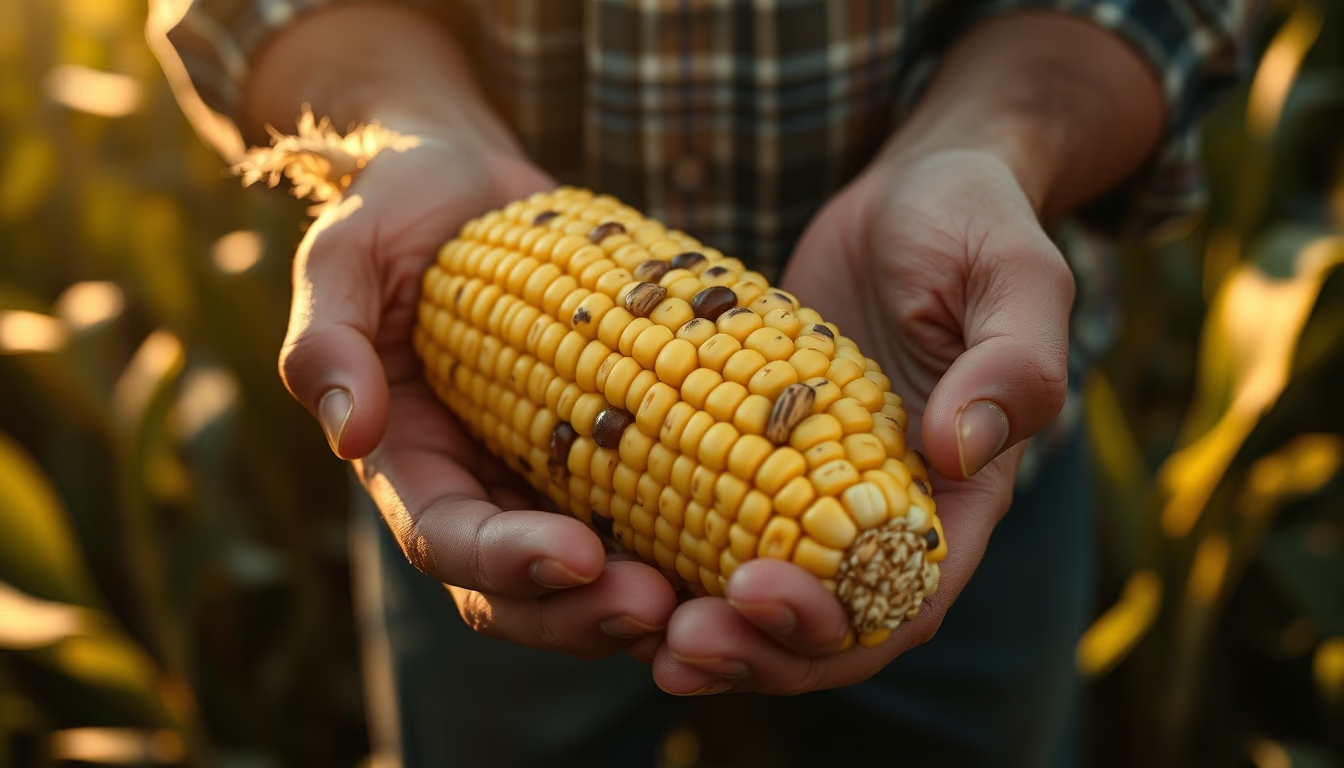
Fresh corn cob in a farmer's hands, late afternoon, in a Brazilian cornfield.
About this subject
Corn is one of the pillars of Brazilian agriculture, with an annual harvest exceeding 100 million tons, placing the country among the world's top producers alongside the United States and China. Manual harvesting, though less common in large mechanized farms of the Central-West region, still persists in small and medium-sized properties, especially in the South and Southeast, where family farming accounts for a significant share of production. The freshly harvested cob shows golden, uniform kernels, indicating the ideal physiological maturity point, when moisture content is between 25% and 30%, perfect for fresh consumption or silage.
The late afternoon scene is typical of the harvest period, which in Brazil concentrates between February and June for the summer crop and from August to November for the second crop (safrinha). Corn is grown in nearly all states, with Mato Grosso, Paraná, and Goiás leading national production. The crop requires careful soil management, fertilization, and pest control, such as fall armyworm and corn leafhopper, which can compromise yields.
Holding the cob, the farmer illustrates the direct link between human labor and the food that supplies the country. Corn is used for animal feed, ethanol production, oil, flour, and various processed foods. In Brazil, per capita fresh corn consumption is low compared to other countries, but the crop holds strong symbolic value during June festivals, when dishes like pamonha, canjica, and curau are typical.
The image, captured in a wide angle during late afternoon, takes advantage of the golden light that highlights the details of the cob and the worker's hands. This type of record is common in agribusiness campaigns and institutional materials that value rural production and food security.
Frequently Asked Questions
What is the importance of corn in Brazilian agriculture?
Corn is one of Brazil's most important crops, with annual production exceeding 100 million tons. The country is the third-largest producer worldwide, behind only the United States and China. The grain is primarily used for animal feed, ethanol production, and food manufacturing.
When does corn harvesting occur in Brazil?
Harvesting varies by region and crop type. The summer crop is harvested between February and June, while the second crop (safrinha), planted after soybeans, is harvested between August and November. The exact period depends on weather conditions and the planted variety's cycle.
Which are the main corn-producing states in Brazil?
Mato Grosso leads national production, followed by Paraná and Goiás. Other important states include Minas Gerais, São Paulo, and Rio Grande do Sul. Together, these states account for over 80% of Brazil's corn production.
Direct URL
https://pub-c7d6a6ea828543ac903a74a341ccb2e1.r2.dev/imagens/corn-cob-fresh-harvest-in-farmer-hands-wide-late-afternoon.avifHow to credit
Include a visible link back to UtilizAí. Copy one of the snippets below:
<a href="https://xn--utiliza-eza.com/en/midia/imagens/corn-cob-fresh-harvest-in-farmer-hands-wide-late-afternoon">Corn cob fresh harvest in farmer hands</a> by <a href="https://xn--utiliza-eza.com">UtilizAí</a>, licensed under <a href="https://creativecommons.org/licenses/by/4.0/">CC BY 4.0</a>.
[Corn cob fresh harvest in farmer hands](https://xn--utiliza-eza.com/en/midia/imagens/corn-cob-fresh-harvest-in-farmer-hands-wide-late-afternoon) by [UtilizAí](https://xn--utiliza-eza.com), CC BY 4.0
License: CC-BY-4.0