Corn cob fresh harvest in farmer hands
1344×768 · AVIF · CC BY 4.0
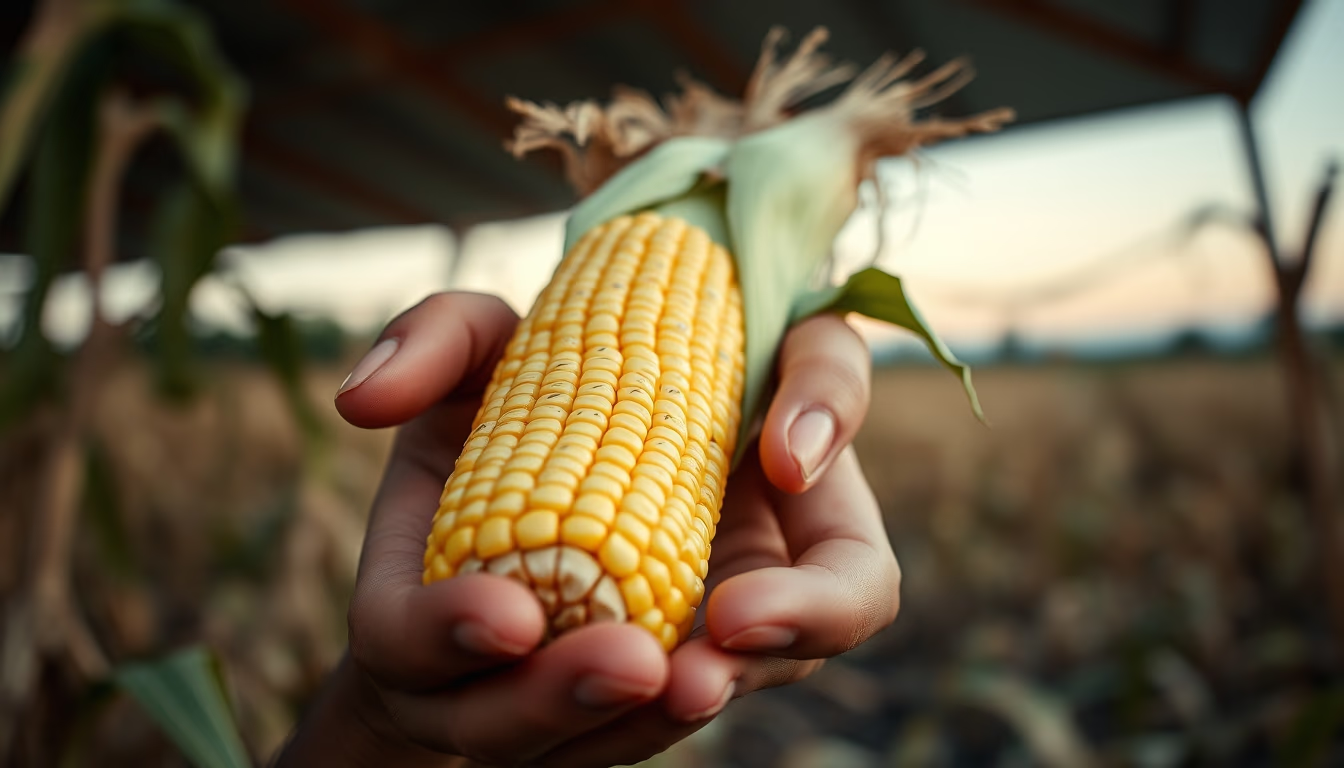
Freshly harvested corn cob in a farmer's hands at twilight, a symbol of the Brazilian harvest.
About this subject
Corn is one of the pillars of Brazilian agribusiness, with the 2023/2024 harvest reaching about 120 million tons, according to Conab. Brazil is the third largest producer worldwide, behind only the United States and China. The image depicts the moment of manual harvesting, a practice still common on small and medium-sized farms, especially in the South and Central-West regions. The farmer holds a mature ear of corn with aligned grains and a golden color, indicating the ideal harvest point for fresh consumption or industrial processing.
Corn is grown in two main seasons in Brazil: the first, planted between September and November, and the second, known as safrinha, between January and April. Safrinha accounts for about 70% of national production, concentrated in Mato Grosso, Paraná, and Goiás. Manual harvesting, although less efficient than mechanized, is valued in niche markets such as organic corn and landrace varieties. The twilight background in the image suggests the end of a workday in the field.
The corn cob consists of grains rich in starch, fiber, and nutrients like B vitamins and potassium. In Brazil, corn is used both for human consumption, in forms such as pamonha, curau, and polenta, and for animal feed, accounting for more than 60% of domestic consumption. Corn production also supplies the biofuel industry, with corn ethanol gaining ground in recent years, especially in Mato Grosso.
The image captures the direct connection between the farmer and the fruit of their labor, a recurring theme in Brazilian rural iconography. The twilight lighting gives a nostalgic and grateful tone to the harvest, reinforcing the importance of field work for the country's food security.
Frequently Asked Questions
What is the importance of corn for Brazilian agribusiness?
Corn is one of Brazil's main crops, with an annual production of about 120 million tons. It is essential for human and animal food, as well as raw material for biofuels such as corn ethanol.
What does 'safrinha' corn mean?
Safrinha is the second corn crop, planted between January and April, usually after soybean harvest. It accounts for approximately 70% of national production and is predominant in Mato Grosso, Paraná, and Goiás.
What are the main uses of corn in Brazil?
Corn is used for human consumption (pamonha, curau, polenta, etc.), animal feed (main destination, over 60% of consumption), and ethanol production, which has been growing especially in Mato Grosso.
Direct URL
https://pub-c7d6a6ea828543ac903a74a341ccb2e1.r2.dev/imagens/corn-cob-fresh-harvest-in-farmer-hands-closeup-twilight-3.avifHow to credit
Include a visible link back to UtilizAí. Copy one of the snippets below:
<a href="https://xn--utiliza-eza.com/en/midia/imagens/corn-cob-fresh-harvest-in-farmer-hands-closeup-twilight-3">Corn cob fresh harvest in farmer hands</a> by <a href="https://xn--utiliza-eza.com">UtilizAí</a>, licensed under <a href="https://creativecommons.org/licenses/by/4.0/">CC BY 4.0</a>.
[Corn cob fresh harvest in farmer hands](https://xn--utiliza-eza.com/en/midia/imagens/corn-cob-fresh-harvest-in-farmer-hands-closeup-twilight-3) by [UtilizAí](https://xn--utiliza-eza.com), CC BY 4.0
License: CC-BY-4.0