Concrete texture grey
1344×768 · AVIF · CC BY 4.0
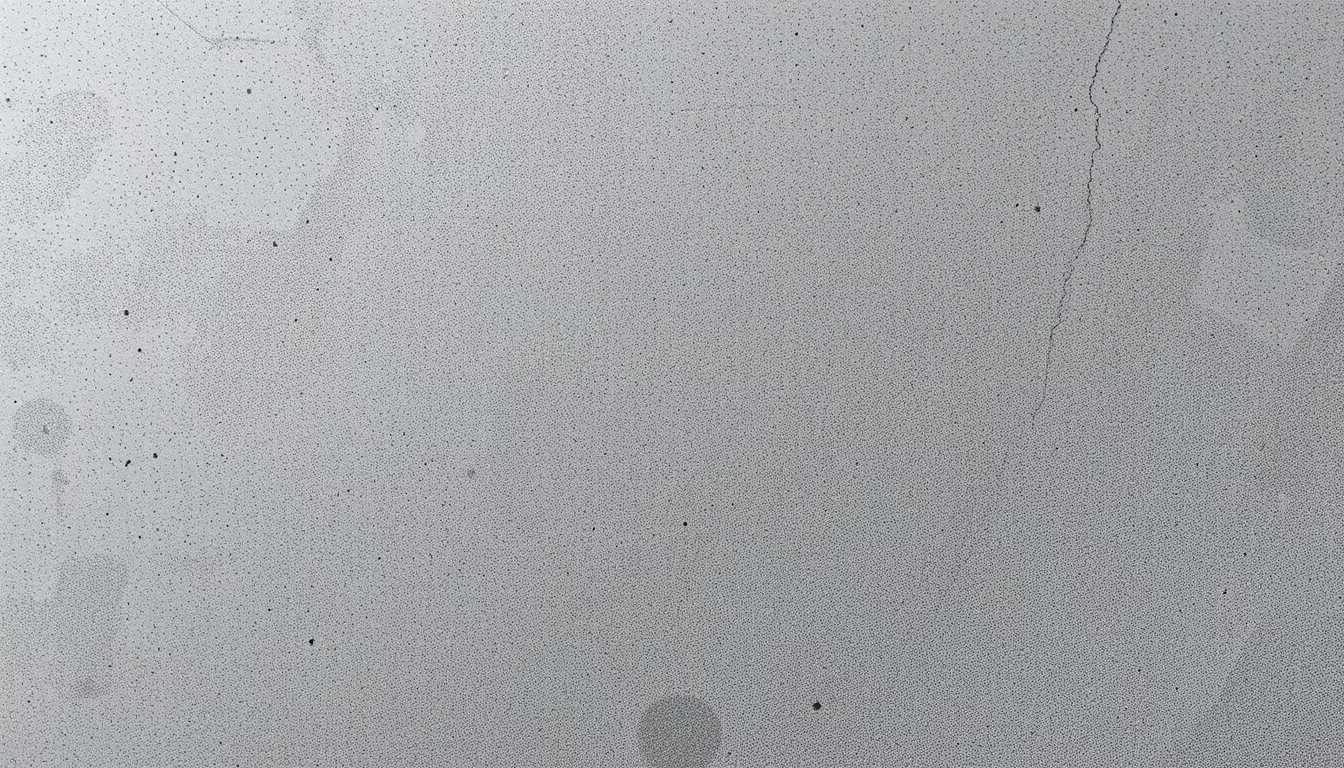
The grey concrete texture reveals the beauty of imperfection and the dialogue between the natural and the built in contemporary architecture.
About this subject
Grey concrete is one of the most emblematic materials of modern architecture, resulting from a mixture of cement, water, aggregates, and additives. Its history dates back to ancient Rome, but it became a protagonist in the 20th century, especially with the Brutalist movement, which valued material honesty and the raw aesthetics of surfaces. Architects like Le Corbusier and Oscar Niemeyer explored the texture of exposed concrete, turning imperfections and formwork marks into decorative elements.
In fine art photography, grey concrete texture is often isolated to highlight abstract patterns, cracks, and tonal variations that tell the story of the material's aging. Each concrete surface is unique, influenced by the mix composition, curing method, and climatic conditions during setting. These characteristics make concrete a rich subject for studies of light and shadow, evoking a sense of solidity and timelessness.
Interestingly, the grey color of concrete is not only functional but also symbolic, representing neutrality and modernity. In contemporary projects, concrete texture is often combined with other materials, such as wood and glass, to create tactile and visual contrasts. Photography of concrete textures is thus not only an aesthetic record but also a documentation of 20th-century architectural heritage and material culture.
Frequently Asked Questions
Why is grey concrete so widely used in modern architecture?
Grey concrete is valued for its durability, structural versatility, and minimalist aesthetics. Its neutral color allows combinations with various materials, while the exposed texture expresses construction authenticity, especially in the Brutalist movement.
How does the curing process affect the final texture of concrete?
Concrete texture is directly influenced by water evaporation rate during curing. Fast curing can cause surface cracks, while slow curing favors a smoother finish. The formwork type and vibration also determine the final pattern.
What is the relationship between exposed concrete and the Brutalist movement?
Brutalism, popular between the 1950s and 1970s, celebrated exposed concrete as an expression of structural honesty. Architects like Le Corbusier used the raw texture to emphasize form and materiality, rejecting decorative cladding.
Direct URL
https://pub-c7d6a6ea828543ac903a74a341ccb2e1.r2.dev/imagens/concrete-texture-grey-fine-art-photography-p5.avifHow to credit
Include a visible link back to UtilizAí. Copy one of the snippets below:
<a href="https://xn--utiliza-eza.com/en/midia/imagens/concrete-texture-grey-fine-art-photography-p5">Concrete texture grey</a> by <a href="https://xn--utiliza-eza.com">UtilizAí</a>, licensed under <a href="https://creativecommons.org/licenses/by/4.0/">CC BY 4.0</a>.
[Concrete texture grey](https://xn--utiliza-eza.com/en/midia/imagens/concrete-texture-grey-fine-art-photography-p5) by [UtilizAí](https://xn--utiliza-eza.com), CC BY 4.0
License: CC-BY-4.0