Concrete texture grey
1344×768 · AVIF · CC BY 4.0
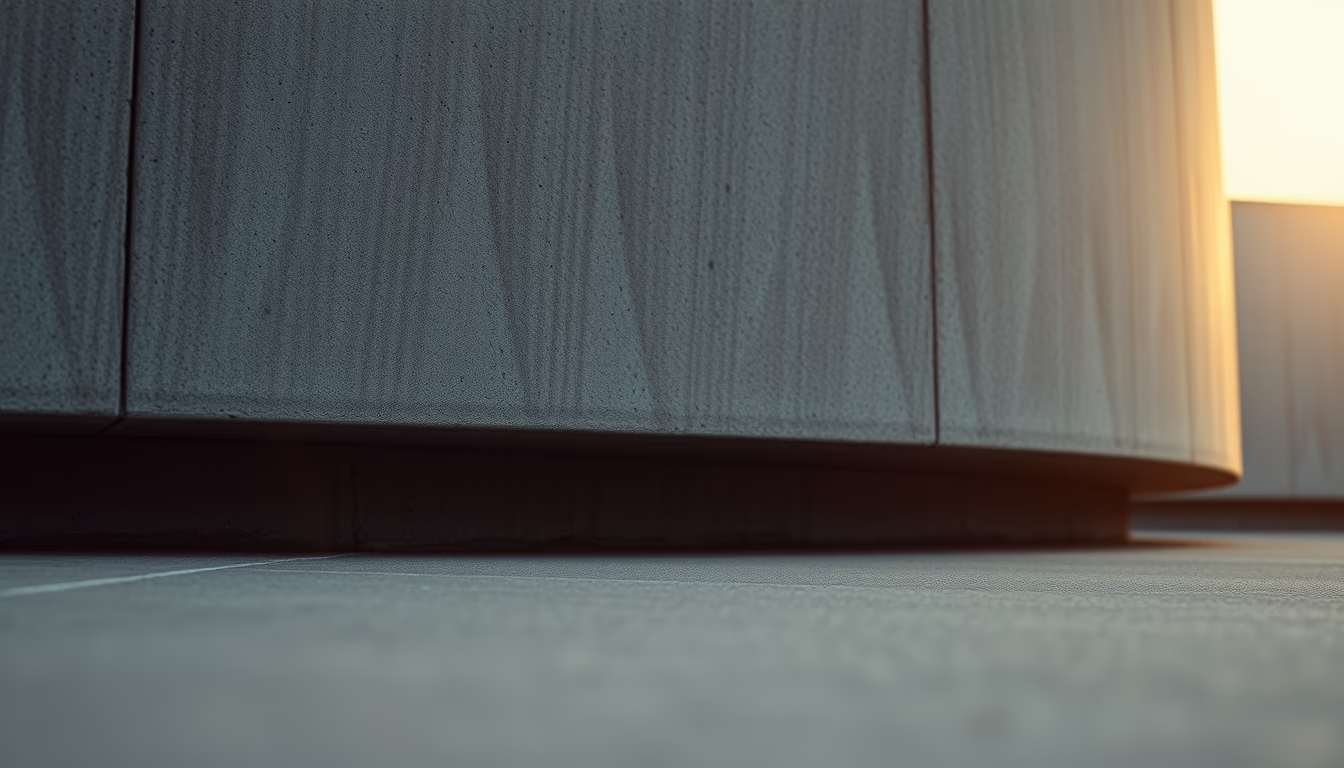
Grey concrete texture is an architectural element combining durability and raw aesthetics, widely used in modern construction.
About this subject
Concrete is one of the most versatile materials in civil construction, composed of cement, aggregates, and water. Its characteristic grey texture varies according to the finishing type: smooth, rough, stamped, or exposed. This variation is achieved through techniques such as polishing, sandblasting, or using textured forms. In brutalist architecture, popular from the 1950s to the 1970s, exposed concrete was valued for its structural honesty and undecorated aesthetic. Buildings like the São Paulo Museum of Art (MASP) and the Palácio da Alvorada in Brasília exemplify this approach.
Beyond appearance, concrete texture influences functional properties such as coating adhesion, slip resistance, and acoustics. Rough surfaces are common on sidewalks to prevent slipping, while smooth textures facilitate cleaning in indoor environments. Concrete can also be pigmented to obtain tones beyond grey, but natural grey remains the most widely used due to cost and availability.
Interestingly, concrete texture can be artificially reproduced in other materials, such as wallpaper or vinyl flooring, to achieve the industrial look without the weight and cost of the original material. In photography and graphic design, grey concrete textures are widely used as backgrounds or compositional elements, evoking robustness and neutrality.
From a technical standpoint, concrete surface texture is measured by the coefficient of friction and roughness depth. Standards such as NBR 16447 in Brazil establish criteria for floor textures in public areas. Texture maintenance over time depends on exposure to weather, traffic, and chemical agents, and can be restored through hydroblasting or application of sealants.
Frequently Asked Questions
What are the main types of grey concrete texture?
The main types include smooth (troweled), rough (exposed aggregate), stamped (decorative with molds), and exposed (brutalist). Each is achieved through different finishing techniques.
How does concrete texture affect safety?
Rough surfaces increase friction, reducing slip risks, and are used on sidewalks and ramps. Very smooth textures can become slippery when wet. Technical standards regulate these aspects.
Can concrete texture be altered after hardening?
Yes, techniques such as sandblasting, hydroblasting, polishing, or applying coatings can modify the texture. However, aggressive processes may damage the structure and require caution.
Direct URL
https://pub-c7d6a6ea828543ac903a74a341ccb2e1.r2.dev/imagens/concrete-texture-grey-cinematic-wide-shot-p0.avifHow to credit
Include a visible link back to UtilizAí. Copy one of the snippets below:
<a href="https://xn--utiliza-eza.com/en/midia/imagens/concrete-texture-grey-cinematic-wide-shot-p0">Concrete texture grey</a> by <a href="https://xn--utiliza-eza.com">UtilizAí</a>, licensed under <a href="https://creativecommons.org/licenses/by/4.0/">CC BY 4.0</a>.
[Concrete texture grey](https://xn--utiliza-eza.com/en/midia/imagens/concrete-texture-grey-cinematic-wide-shot-p0) by [UtilizAí](https://xn--utiliza-eza.com), CC BY 4.0
License: CC-BY-4.0