Concert stage empty with lights
1344×768 · AVIF · CC BY 4.0
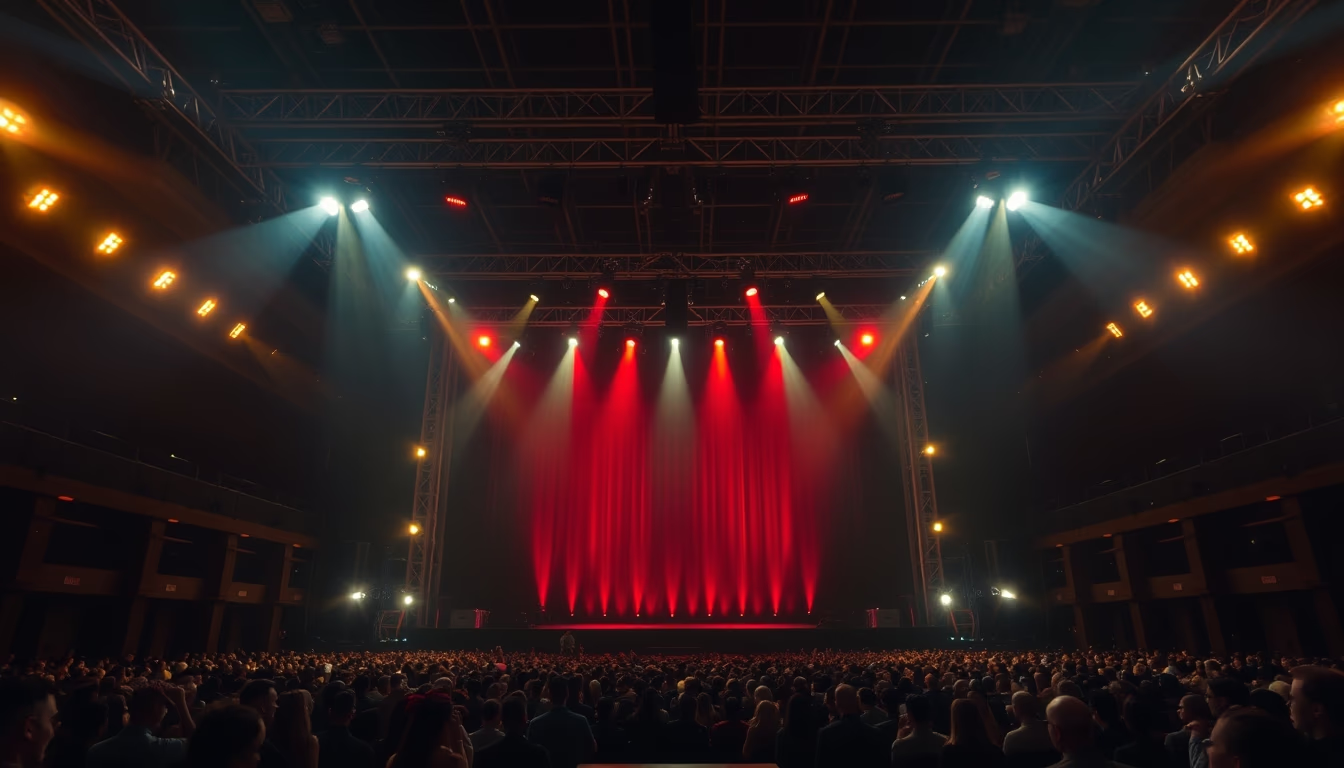
An empty concert stage with lights on reveals the complex lighting engineering required to create immersive atmospheres in large music events.
About this subject
An empty concert stage, lit by an elaborate lighting system, is more than just a structure: it is the technological heart of a live performance. Theatrical lighting, often underestimated, is responsible for transforming a neutral space into an environment charged with emotion and meaning. Each spotlight, LED panel, and moving head is strategically positioned to highlight artists, create depth, and guide the audience's attention. In a packed arena or an outdoor festival, setting up this equipment can take days, involving lighting engineers, programmers, and technicians. The momentary emptiness of the stage, with lights on, allows one to observe the symmetry and complexity of the rig: trusses, cables, and reflectors form an architecture of their own, often compared to contemporary art installations.
The evolution of stage lighting has kept pace with technology. From the first incandescent lamps used in 19th-century theater to modern digital control systems like the DMX protocol, the ability to create dynamic effects has grown exponentially. Major shows, such as those at the Rock in Rio festival or tours by bands like U2 and Coldplay, use thousands of fixtures synchronized with music and projections. An empty stage, with all equipment visible, is a testament to the invisible work that occurs before the curtain rises. Lighting does not merely illuminate; it tells a story, sets the mood, and in many cases becomes a main character, as in the shows of the French duo Daft Punk or Roger Waters' “The Wall” tour.
Interestingly, the empty stage moment is also a period of fine-tuning. Technicians calibrate colors, align beams, and program sequences that will respond to triggers during the performance. For keen fans, seeing the deserted stage with lights operating in test mode is a preview of the spectacle. At some festivals, like Glastonbury or Coachella, this scene has even become a tourist attraction, with people photographing the structure before the shows begin. The beauty of an lit empty stage lies in the promise of what is to come: the transformation of silicon and metal into pure collective emotion.
Frequently Asked Questions
Why is the stage empty with lights on before a show?
This moment is used for lighting tests, equipment calibration, and fine-tuning of the programming. It also allows technicians to verify that all systems are working correctly before the performance.
What are the main types of lights used in concerts?
The most common are moving heads, which rotate and change color; LED panels, which create visual effects and serve as scenery; and traditional spotlights (par cans or wash lights) for general illumination. All are controlled by digital consoles via DMX or Art-Net protocol.
How has stage lighting evolved over time?
It started with simple incandescent lamps in theater. In the 1970s, the first computer-controlled systems appeared. Today, low-consumption LEDs, lasers, projection mapping, and network-based remote control are used, allowing precisely synchronized effects and increasingly immersive shows.
Direct URL
https://pub-c7d6a6ea828543ac903a74a341ccb2e1.r2.dev/imagens/concert-stage-empty-with-lights-national-geographic-style-p0.avifHow to credit
Include a visible link back to UtilizAí. Copy one of the snippets below:
<a href="https://xn--utiliza-eza.com/en/midia/imagens/concert-stage-empty-with-lights-national-geographic-style-p0">Concert stage empty with lights</a> by <a href="https://xn--utiliza-eza.com">UtilizAí</a>, licensed under <a href="https://creativecommons.org/licenses/by/4.0/">CC BY 4.0</a>.
[Concert stage empty with lights](https://xn--utiliza-eza.com/en/midia/imagens/concert-stage-empty-with-lights-national-geographic-style-p0) by [UtilizAí](https://xn--utiliza-eza.com), CC BY 4.0
License: CC-BY-4.0