Compost bin kitchen
1344×768 · AVIF · CC BY 4.0
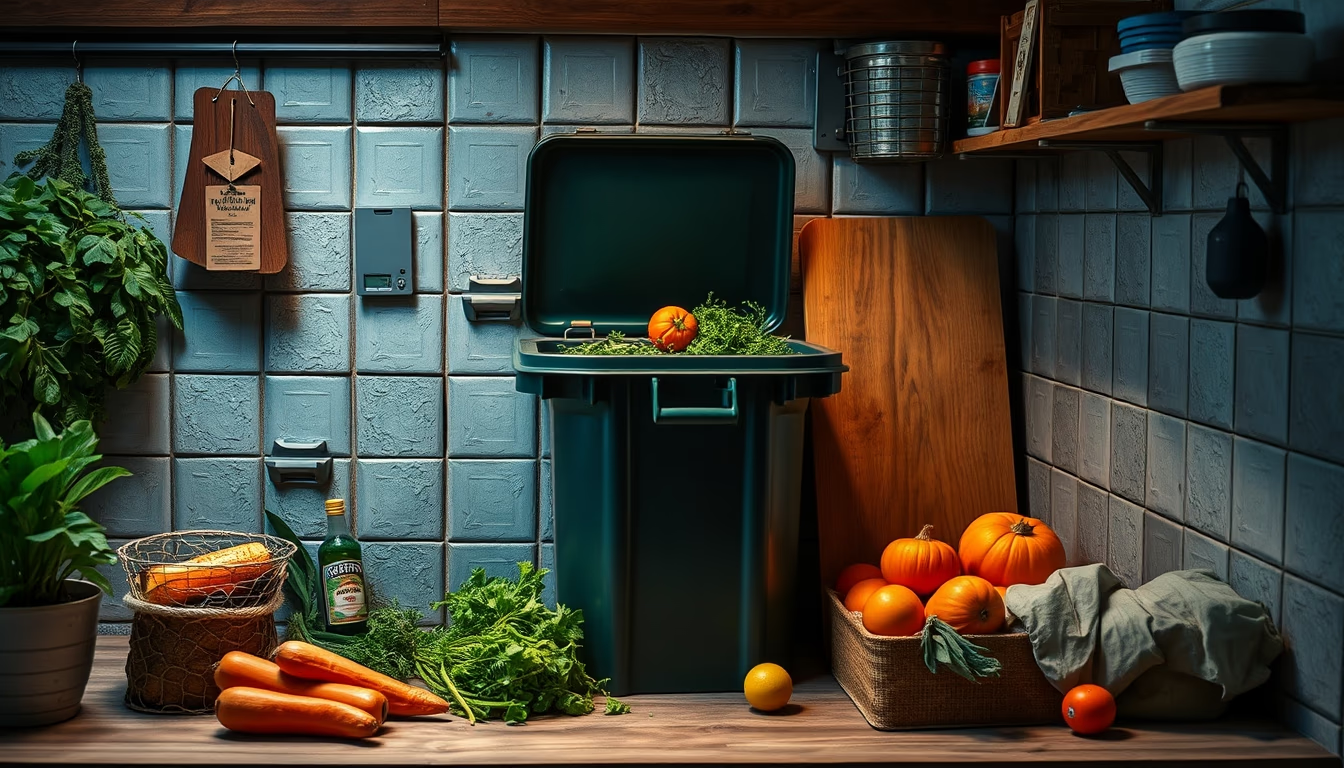
A kitchen compost bin turns organic waste into nutrient-rich fertilizer, reducing household trash.
About this subject
Home composting in the kitchen is a sustainable practice that turns food scraps into natural fertilizer. Common methods include simple bins, worm composters (vermicomposting), and bokashi systems, which use effective microorganisms. Each approach has its benefits: worm bins produce humus and liquid fertilizer, while bokashi ferments waste without odor. The choice depends on available space and waste volume.
From an environmental perspective, kitchen composting significantly reduces the amount of waste sent to landfills. In Brazil, over 50% of household waste is organic, and diverting it for composting avoids methane emissions, a potent greenhouse gas. Moreover, the resulting compost enriches soil, improves water retention, and reduces the need for chemical fertilizers in gardens and planters.
To start, you need a container with a lid, such as a plastic or wooden compost bin, and basic care: balance green materials (nitrogen-rich, like fruit and vegetable peels) with brown materials (carbon-rich, like dry leaves and shredded paper). Avoid meat, dairy, and oily cooked food to prevent smells and pests. In about two to three months, the compost will be ready, with a uniform texture and the earthy smell of healthy soil.
Frequently Asked Questions
What can I put in a kitchen compost bin?
You can compost fruit and vegetable peels, coffee grounds, tea bags, crushed eggshells, plant trimmings, and paper towels. Avoid meat, dairy, oily foods, and excessive citrus to prevent pests.
How do I prevent bad odors in the compost bin?
Bad odors signal imbalance. Add more dry materials (leaves, paper) to absorb moisture, turn the mixture to aerate, and keep the lid closed. Never include meat or dairy.
How long does it take for compost to be ready?
Depending on the method and care, compost can be ready in 2 to 6 months. In worm bins, humus is harvested every 2-3 months. Bokashi ferments in 2 weeks, then needs 2-4 more weeks in soil.
Direct URL
https://pub-c7d6a6ea828543ac903a74a341ccb2e1.r2.dev/imagens/compost-bin-kitchen-fine-art-photography-p0.avifHow to credit
Include a visible link back to UtilizAí. Copy one of the snippets below:
<a href="https://xn--utiliza-eza.com/en/midia/imagens/compost-bin-kitchen-fine-art-photography-p0">Compost bin kitchen</a> by <a href="https://xn--utiliza-eza.com">UtilizAí</a>, licensed under <a href="https://creativecommons.org/licenses/by/4.0/">CC BY 4.0</a>.
[Compost bin kitchen](https://xn--utiliza-eza.com/en/midia/imagens/compost-bin-kitchen-fine-art-photography-p0) by [UtilizAí](https://xn--utiliza-eza.com), CC BY 4.0
License: CC-BY-4.0