Compass map outdoor
1344×768 · AVIF · CC BY 4.0
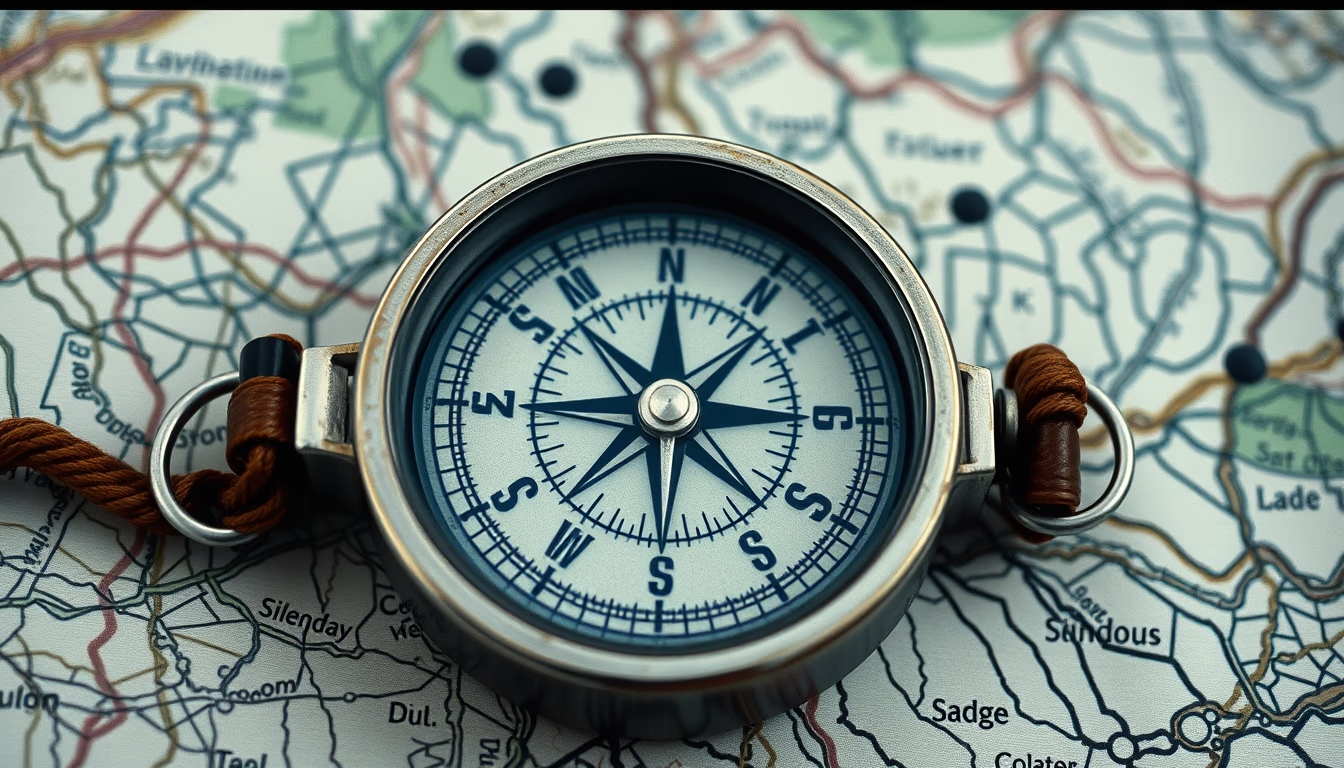
Compass and map outdoors, essential tools for navigation in survival and exploration activities.
About this subject
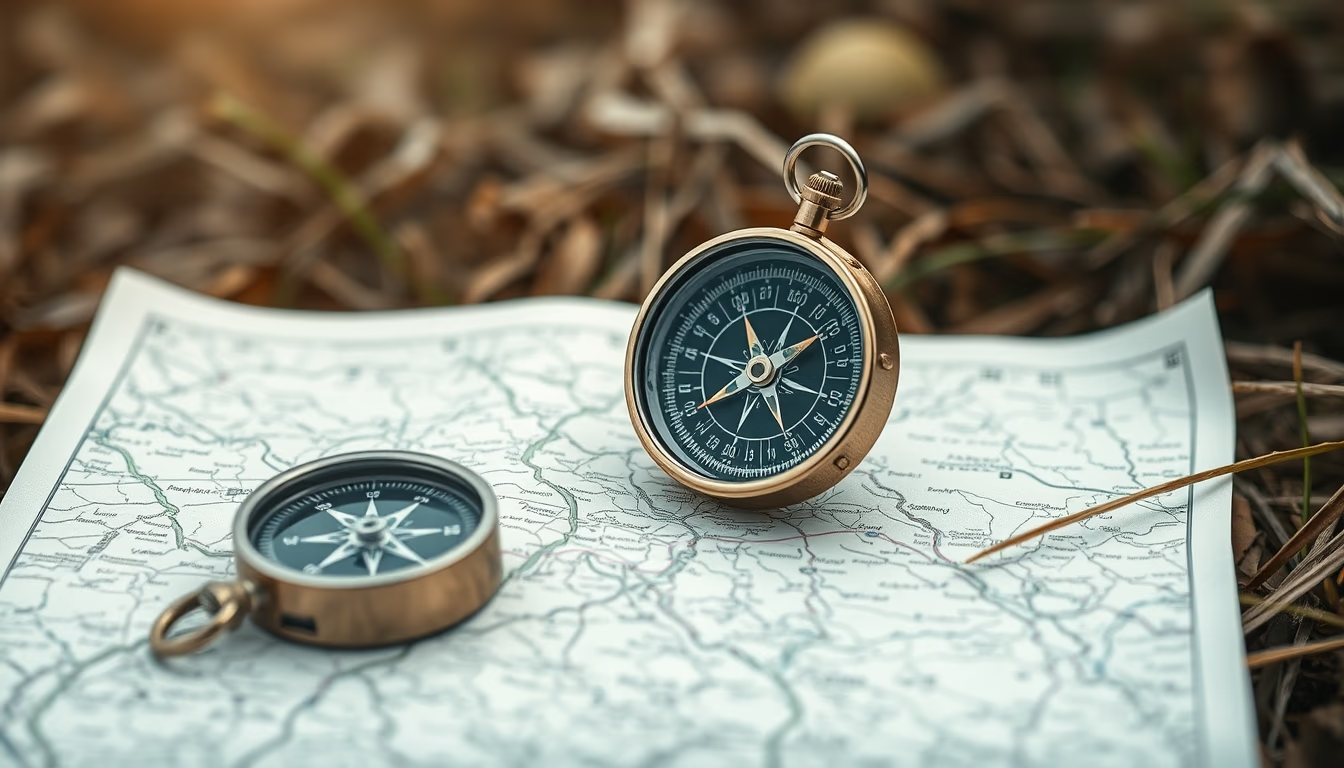
The compass is one of the oldest and most reliable navigation instruments, used since the Han Dynasty in China around the 2nd century BC for orientation. When combined with a topographic map, it allows the user to determine their position, plot routes, and avoid getting lost in unfamiliar terrain. In survival contexts, the compass is often considered safer than electronic systems because it does not depend on batteries or satellite signals.
Maps used with compasses are typically topographic charts that represent terrain, watercourses, trails, and landmarks. Properly orienting the map to magnetic north is the first step for accurate navigation. Techniques such as triangulation and reading UTM coordinates are fundamental skills for explorers and military personnel.
The film grain authentic style evokes an analog aesthetic, reminiscent of photographs from 20th-century expeditions when equipment was purely mechanical. This texture lends an air of authenticity and nostalgia, reinforcing the idea that traditional navigation still holds value in the modern world.
Interesting fact: the difference between magnetic north and true north (magnetic declination) varies by location and must be corrected for precise navigation. In some regions, such as Canada, declination can reach 25 degrees, which can lead to significant errors if ignored.
Frequently Asked Questions
How to use a compass with a map?
First, align the compass edge with the desired route on the map. Rotate the bezel until the north-south lines are parallel to the map's grid lines. Hold the compass level and turn your body until the needle points to magnetic north. Follow the direction indicated by the travel arrow.
What is magnetic declination and why is it important?
Magnetic declination is the angular difference between magnetic north (where the compass points) and true north. Ignoring this difference can cause route deviations. In areas with large declination, adjust the compass bezel or correct manually.
What is the difference between analog and digital compasses for survival?
Analog compasses need no batteries and are more resistant to impacts and water. Digital ones offer extra features like altimeter and GPS but can fail in extreme conditions. For survival, a combination of both is ideal.
Direct URL
https://pub-c7d6a6ea828543ac903a74a341ccb2e1.r2.dev/imagens/compass-map-outdoor-film-grain-authentic-fresh5.avifHow to credit
Include a visible link back to UtilizAí. Copy one of the snippets below:
<a href="https://xn--utiliza-eza.com/en/midia/imagens/compass-map-outdoor-film-grain-authentic-fresh5">Compass map outdoor</a> by <a href="https://xn--utiliza-eza.com">UtilizAí</a>, licensed under <a href="https://creativecommons.org/licenses/by/4.0/">CC BY 4.0</a>.
[Compass map outdoor](https://xn--utiliza-eza.com/en/midia/imagens/compass-map-outdoor-film-grain-authentic-fresh5) by [UtilizAí](https://xn--utiliza-eza.com), CC BY 4.0
License: CC-BY-4.0