Compass map outdoor
1344×768 · AVIF · CC BY 4.0
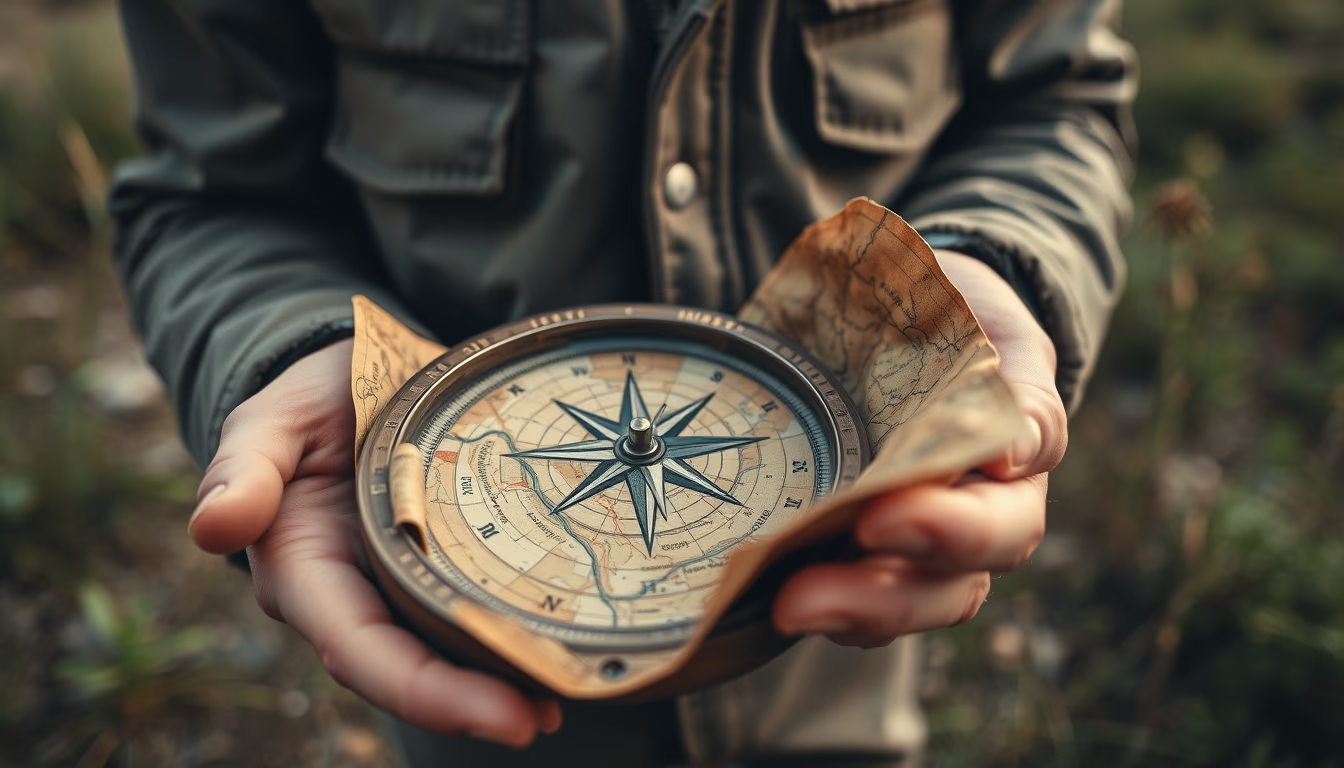
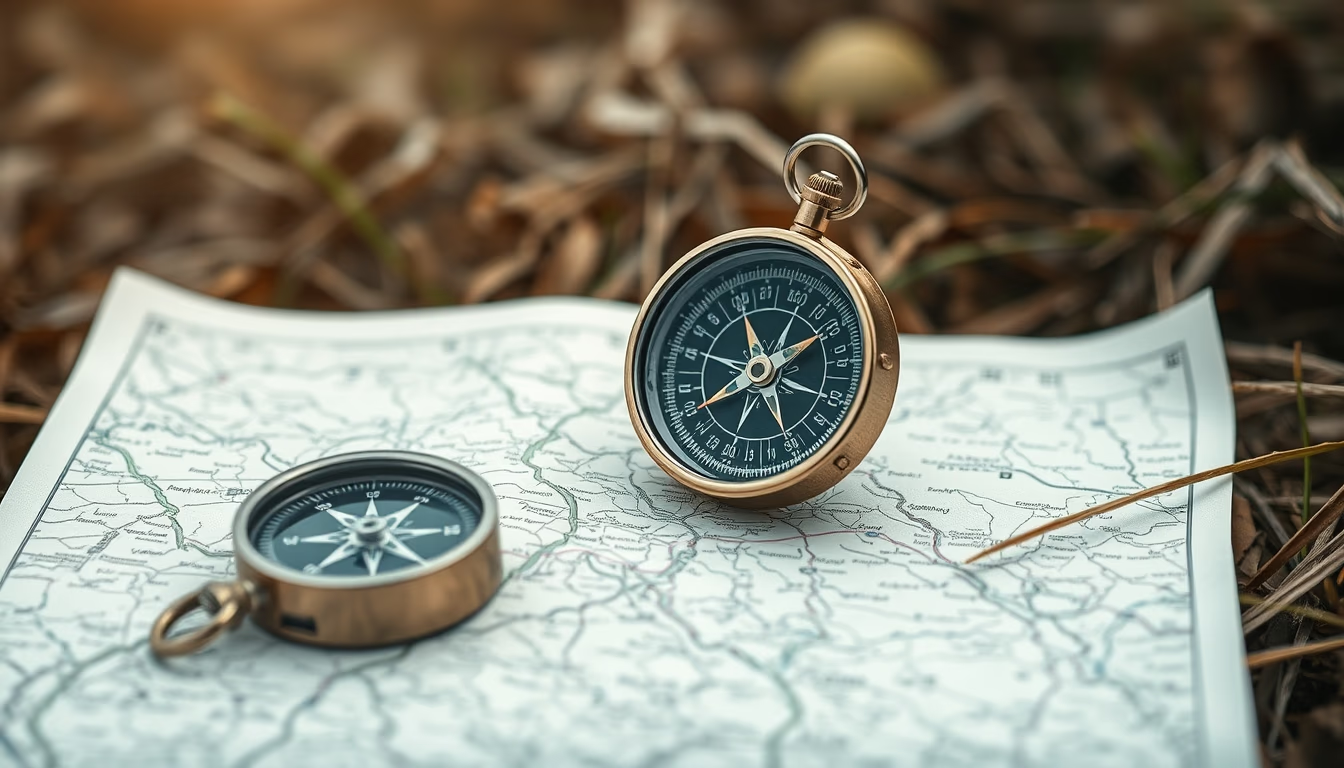
Compass and map are essential tools for navigation in remote environments, combining classic orienteering techniques with analog reliability.
About this subject
The combined use of compass and map is a fundamental skill for outdoor activities such as trekking, mountaineering, and survival expeditions. Unlike electronic devices, these instruments do not rely on batteries or GPS signal, being reliable in any weather or geographic condition. The magnetic compass, invented in China during the Han Dynasty (2nd century BC), allows aligning the map to magnetic north and calculating precise azimuths.
To navigate with map and compass, one must understand concepts like magnetic declination, the difference between magnetic north and true north, which varies by location. In Brazil, declination can reach 20 degrees in some regions, requiring periodic adjustments. Practicing triangulation and reading contour lines are advanced techniques that increase navigation accuracy.
In survival situations, the ability to read a topographic map and use the compass to mark bearings can be decisive. For instance, if you get lost in a dense forest, plotting a travel line with a constant azimuth prevents walking in circles. Many survival kits include a baseplate compass, which facilitates measuring distances and angles directly on the map.
Additionally, the back bearing technique allows returning to the starting point, essential for long hikes. Combining these instruments with observation of natural elements (sun, stars, moss) reinforces the adventurer's self-sufficiency. Simply handling a map and compass develops spatial awareness and confidence to explore unknown environments.
Frequently Asked Questions
What is the difference between magnetic north and true north?
Magnetic north is where the compass needle points, while true north is the geographic North Pole. The difference is called magnetic declination and varies by location.
How to use compass and map together?
First, orient the map by aligning the compass edge with the north-south grid lines. Rotate your body until the needle aligns with the north on the dial. Then read the desired azimuth and follow that direction.
Does a compass work anywhere in the world?
Yes, but magnetic declination must be adjusted. Near the magnetic poles, compass accuracy decreases due to the vertical dip of the needle.
Direct URL
https://pub-c7d6a6ea828543ac903a74a341ccb2e1.r2.dev/imagens/compass-map-outdoor-documentary-nature-style-fresh2.avifHow to credit
Include a visible link back to UtilizAí. Copy one of the snippets below:
<a href="https://xn--utiliza-eza.com/en/midia/imagens/compass-map-outdoor-documentary-nature-style-fresh2">Compass map outdoor</a> by <a href="https://xn--utiliza-eza.com">UtilizAí</a>, licensed under <a href="https://creativecommons.org/licenses/by/4.0/">CC BY 4.0</a>.
[Compass map outdoor](https://xn--utiliza-eza.com/en/midia/imagens/compass-map-outdoor-documentary-nature-style-fresh2) by [UtilizAí](https://xn--utiliza-eza.com), CC BY 4.0
License: CC-BY-4.0