Community garden plots
1344×768 · AVIF · CC BY 4.0
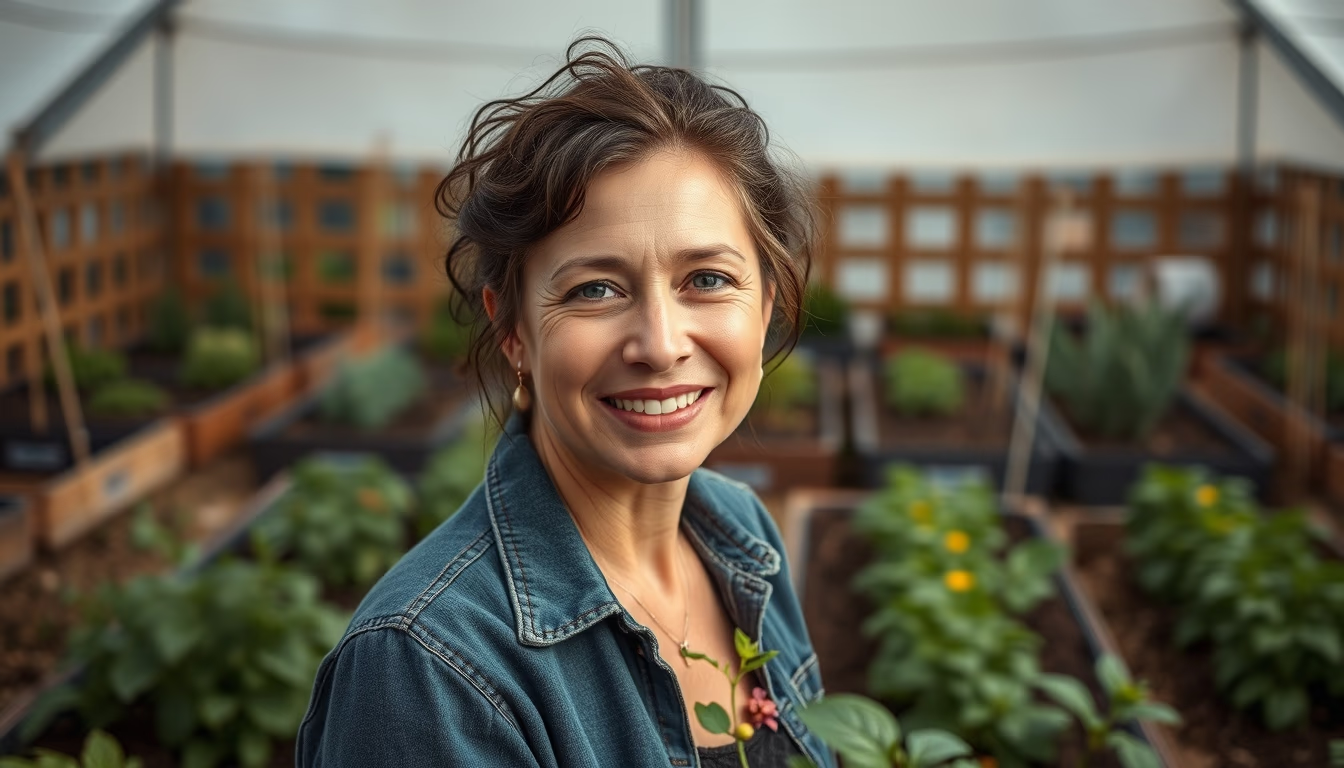
Community garden plots are shared cultivation spaces that promote food security, sustainability, and social bonds in urban and rural areas.
About this subject
Community garden plots are cultivation areas managed collectively by local residents, associations, or cooperatives. They originated from urban agriculture movements in the 19th century but gained momentum in recent decades as a response to food insecurity and environmental degradation. In Brazil, these initiatives are common in the peripheries of large cities like São Paulo and Rio de Janeiro, where vacant lots are transformed into productive beds. The São Paulo City Hall, for instance, runs the "Community Gardens" program that already covers over 500 spaces, providing inputs and technical assistance.
These spaces offer multiple benefits: production of fresh and organic food, reduction of food costs, improvement of urban landscapes, and strengthening of social cohesion. Studies indicate that participation in community gardens reduces stress and increases physical activity among participants. Moreover, they contribute to local biodiversity by attracting pollinators and improving soil quality. Economically, families who grow their own vegetables can save up to 30% on produce purchases.
Culturally, community garden plots revive traditional cultivation knowledge, such as the use of natural fertilizers and crop rotation. In quilombola and indigenous communities, these spaces are fundamental for preserving heirloom seeds and ancestral agricultural practices. Globally, the Food and Agriculture Organization of the United Nations (FAO) recommends implementing community gardens as a strategy to combat hunger and adapt to climate change. Cities like Detroit (USA) and Havana (Cuba) are iconic examples of how these plots can revitalize entire neighborhoods.
Curiously, the largest community garden in the world is in Mumbai, India, with over 4,000 plots cultivated by low-income families. In Brazil, the Landless Workers Movement (MST) also encourages the creation of collective gardens in camps and settlements, ensuring diversified food and income generation.
Frequently Asked Questions
How can I start a community garden in my neighborhood?
First, gather a group of interested people and identify an available plot (public or private). Then, contact the local municipality to check regulations and possible partnerships. Finally, plan the cultivation based on space, climate, and the group's food needs.
What are the main challenges in maintaining a community garden?
Challenges include ensuring regular water supply, protecting against pests, engaging volunteers consistently, and managing conflicts. Common solutions are drip irrigation systems, intercropping, and regular meetings for collective decision-making.
Are community gardens suitable for apartments?
Yes, as long as there are common areas like terraces, balconies, or indoor gardens. In such cases, pots, planters, and vertical systems allow the cultivation of vegetables, herbs, and medicinal plants, preserving the collaborative spirit.
Direct URL
https://pub-c7d6a6ea828543ac903a74a341ccb2e1.r2.dev/imagens/community-garden-plots-studio-editorial-portrait-p4.avifHow to credit
Include a visible link back to UtilizAí. Copy one of the snippets below:
<a href="https://xn--utiliza-eza.com/en/midia/imagens/community-garden-plots-studio-editorial-portrait-p4">Community garden plots</a> by <a href="https://xn--utiliza-eza.com">UtilizAí</a>, licensed under <a href="https://creativecommons.org/licenses/by/4.0/">CC BY 4.0</a>.
[Community garden plots](https://xn--utiliza-eza.com/en/midia/imagens/community-garden-plots-studio-editorial-portrait-p4) by [UtilizAí](https://xn--utiliza-eza.com), CC BY 4.0
License: CC-BY-4.0