Community garden plots
1344×768 · AVIF · CC BY 4.0
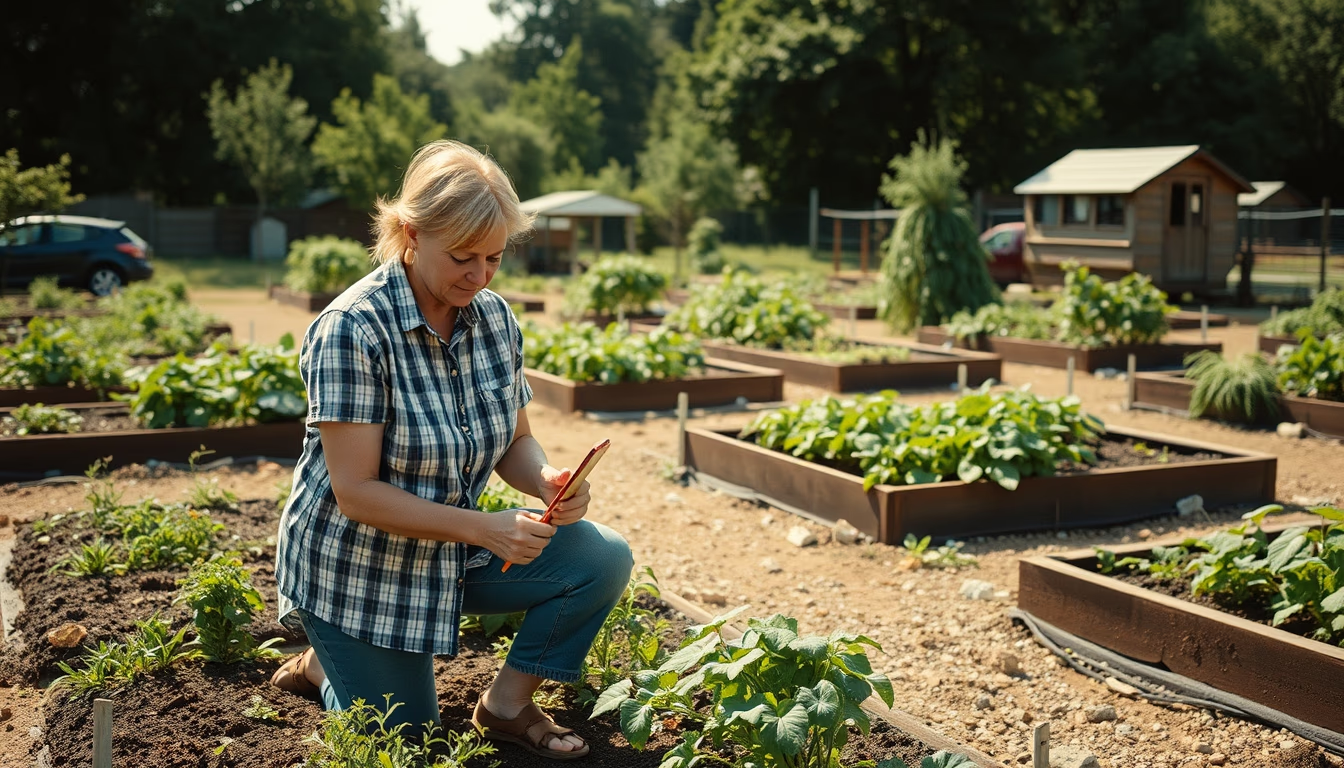
Community garden plots are shared cultivation spaces that promote food security, social bonds, and sustainability in urban and rural areas.
About this subject
Community garden plots are parcels of land, often in urban areas, where groups of people collectively cultivate food, ornamental plants, and herbs. They emerged as a response to food shortages during wars, such as the Victory Gardens in World War II, but today they are tools for urban resilience, combating food deserts and strengthening social cohesion. In New York City, the GreenThumb program manages over 550 community gardens, many in low-income neighborhoods, providing fresh produce and green space.
The benefits extend beyond fresh food production: these gardens reduce pollution, improve soil drainage, create habitats for pollinators, and promote mental health among participants. In Havana, Cuba, urban gardens supply up to 90% of locally consumed vegetables, a model of large-scale organic agriculture. In Brazil, examples like the Horta Comunitária do Jardim Ângela in São Paulo have transformed vacant lots into sources of income and environmental education.
Culturally, community gardens are spaces for knowledge exchange, where traditional farming techniques blend with modern agroecological practices. They often include composting, rainwater harvesting, and heirloom seeds, strengthening food sovereignty. The movement gained momentum during the COVID-19 pandemic as food insecurity rose, and is expected to expand in 2026, driven by urban agriculture policies and the lo-fi aesthetic of disposable camera photography that celebrates simple, sustainable daily life.
Frequently Asked Questions
How can I start a community garden in my city?
Look for available land (public or private), gather interested people, contact your local government or neighborhood associations, and develop a plan for shared cultivation and management. Many cities offer support programs, such as seedling donations and workshops.
What are the main environmental benefits of community gardens?
They reduce air and water pollution, increase urban biodiversity, improve soil drainage, capture carbon, and decrease demand for food transported over long distances.
Are community gardens only for growing food?
No. They also serve as spaces for recreation, environmental education, occupational therapy, and social integration. They can increase property values and prevent illegal occupation of vacant lots.
Direct URL
https://pub-c7d6a6ea828543ac903a74a341ccb2e1.r2.dev/imagens/community-garden-plots-lo-fi-disposable-camera-p1.avifHow to credit
Include a visible link back to UtilizAí. Copy one of the snippets below:
<a href="https://xn--utiliza-eza.com/en/midia/imagens/community-garden-plots-lo-fi-disposable-camera-p1">Community garden plots</a> by <a href="https://xn--utiliza-eza.com">UtilizAí</a>, licensed under <a href="https://creativecommons.org/licenses/by/4.0/">CC BY 4.0</a>.
[Community garden plots](https://xn--utiliza-eza.com/en/midia/imagens/community-garden-plots-lo-fi-disposable-camera-p1) by [UtilizAí](https://xn--utiliza-eza.com), CC BY 4.0
License: CC-BY-4.0