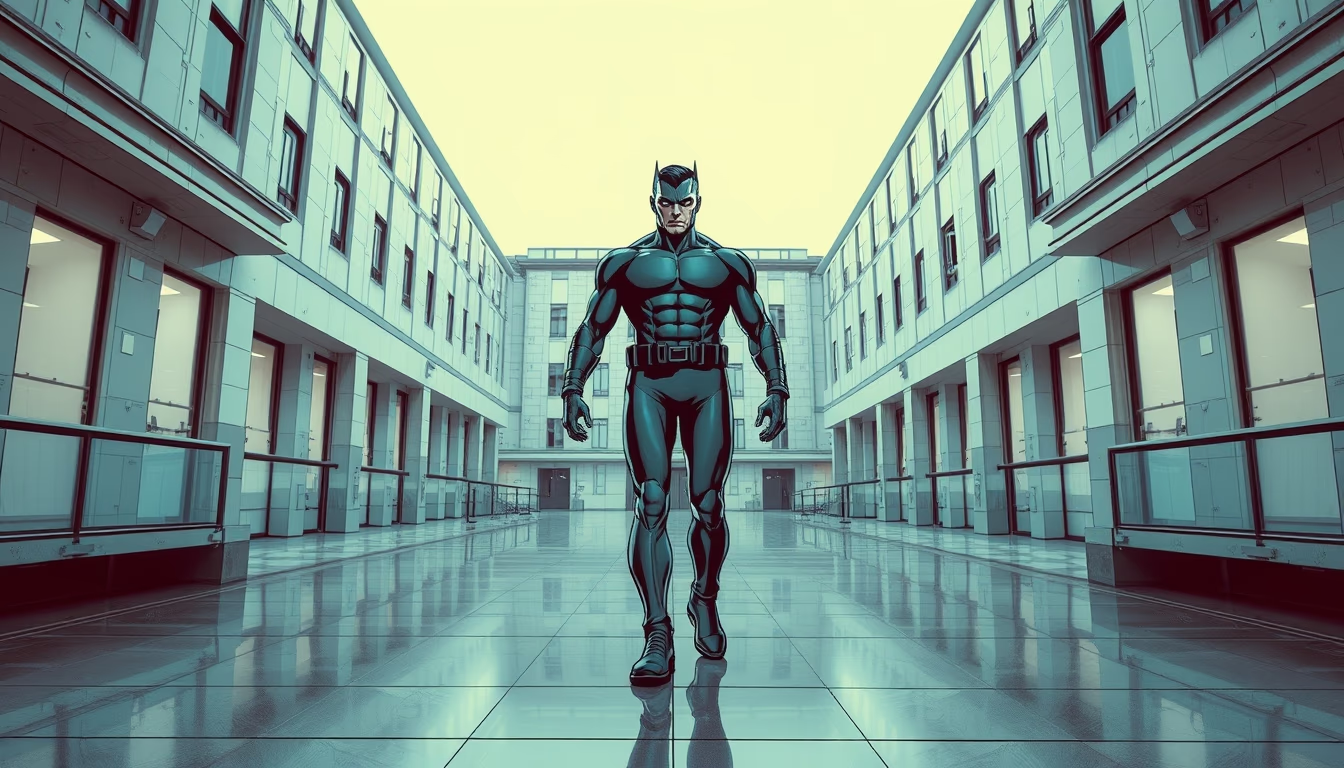
Comic book art board
1344×768 · AVIF · CC BY 4.0
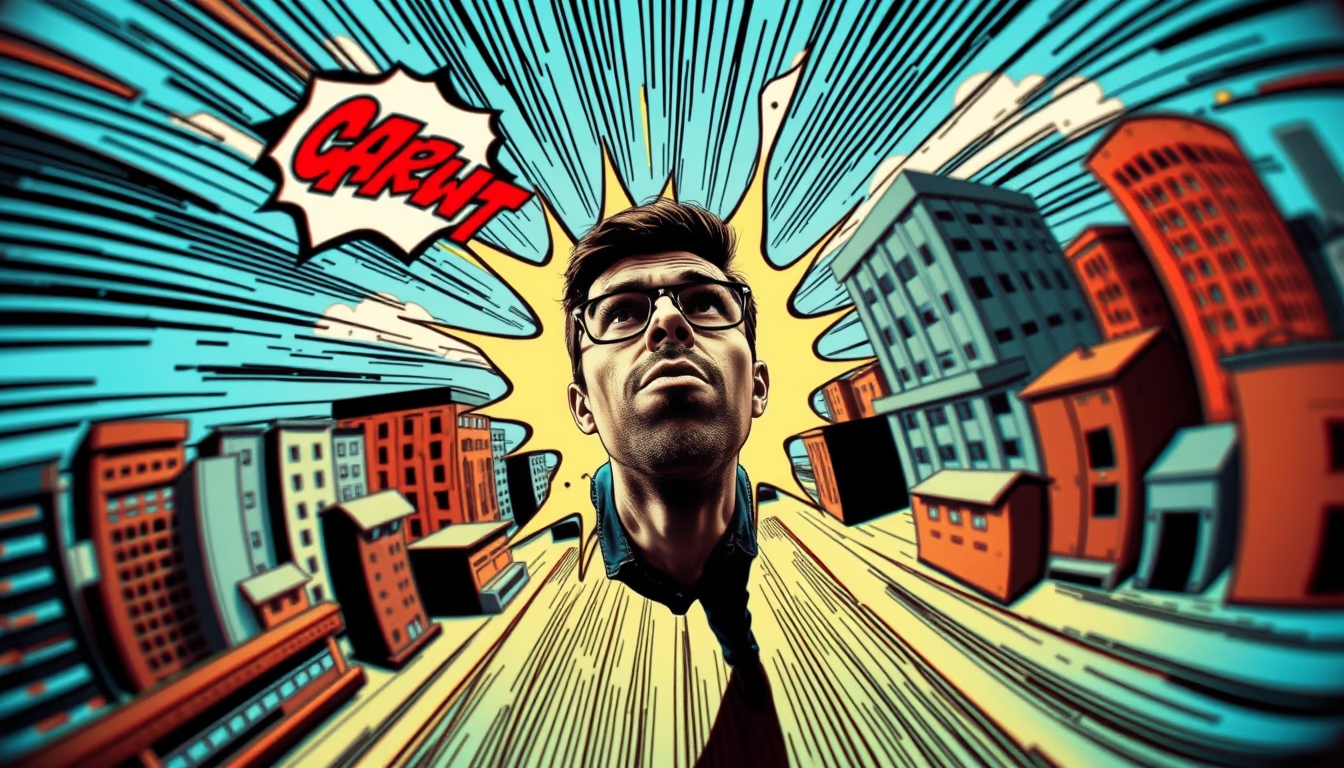
The comic book art board is the physical surface where illustrators create comic pages, using techniques from pencil to inking.
About this subject
The comic book art board, also known as an inking board, is the traditional surface used by pencillers and inkers to produce comic pages. Typically made of high-grammage Bristol board or illustration board, it comes in standardized sizes like 11x17 inches (about 28x43 cm), allowing for panel creation at scale and later reduction for print. The rigid support prevents tearing and warping during handling with India ink, brushes, and technical pens.
In the comic publishing industry, the choice of board depends on the technique. Traditional artists often choose smooth Bristol for ink, while others prefer textured surfaces for pencil effects. Many professionals use vellum overlays to transfer drawings or make adjustments without damaging the original art. The art board is the starting point for digital or manual coloring, being scanned at high resolution for publication.
Historically, comic legends such as Jack Kirby and Will Eisner worked on art boards that later became collector's items. The original comic art market moves millions of dollars, with auctions of rare boards reaching astronomical sums. The fish-eye effect is a lens or distortion that magnifies the center of the image, common in action scenes or dramatic perspectives, and can be applied on the physical board or in digital finishing.
Interestingly, Brazilian comic art boards by artists like Mauricio de Sousa and Ziraldo are also highly valued. In Brazil, A3 format is common for comic strips and cartoons. Proper conservation includes storage in acid-free sleeves and protection from UV light, as prolonged exposure yellows the paper. For effects like fish-eye, artists often draw the perspective grid directly on the board before inking.
Frequently Asked Questions
What is the standard size of a comic book art board?
The most common size is 11x17 inches (about 28x43 cm), known as tabloid or Bristol board. Other formats include A3 (29.7x42 cm) for comic strips and cartoons.
How to preserve original comic art boards?
Store them in acid-free sleeves, away from direct sunlight and humidity. Ideal storage includes neutral plastic folders and controlled temperature.
What is the fish-eye technique in comic drawings?
It is a visual distortion effect that magnifies the center of the image and curves the edges, simulating a fish-eye lens. Used to create dramatic perspective and a sense of movement in action scenes.
Direct URL
https://pub-c7d6a6ea828543ac903a74a341ccb2e1.r2.dev/imagens/comic-book-art-board-fish-eye-wide-angle-fresh4.avifHow to credit
Include a visible link back to UtilizAí. Copy one of the snippets below:
<a href="https://xn--utiliza-eza.com/en/midia/imagens/comic-book-art-board-fish-eye-wide-angle-fresh4">Comic book art board</a> by <a href="https://xn--utiliza-eza.com">UtilizAí</a>, licensed under <a href="https://creativecommons.org/licenses/by/4.0/">CC BY 4.0</a>.
[Comic book art board](https://xn--utiliza-eza.com/en/midia/imagens/comic-book-art-board-fish-eye-wide-angle-fresh4) by [UtilizAí](https://xn--utiliza-eza.com), CC BY 4.0
License: CC-BY-4.0