Coffee plantation worker picking ripe coffee cherries by hand
1344×768 · AVIF · CC BY 4.0
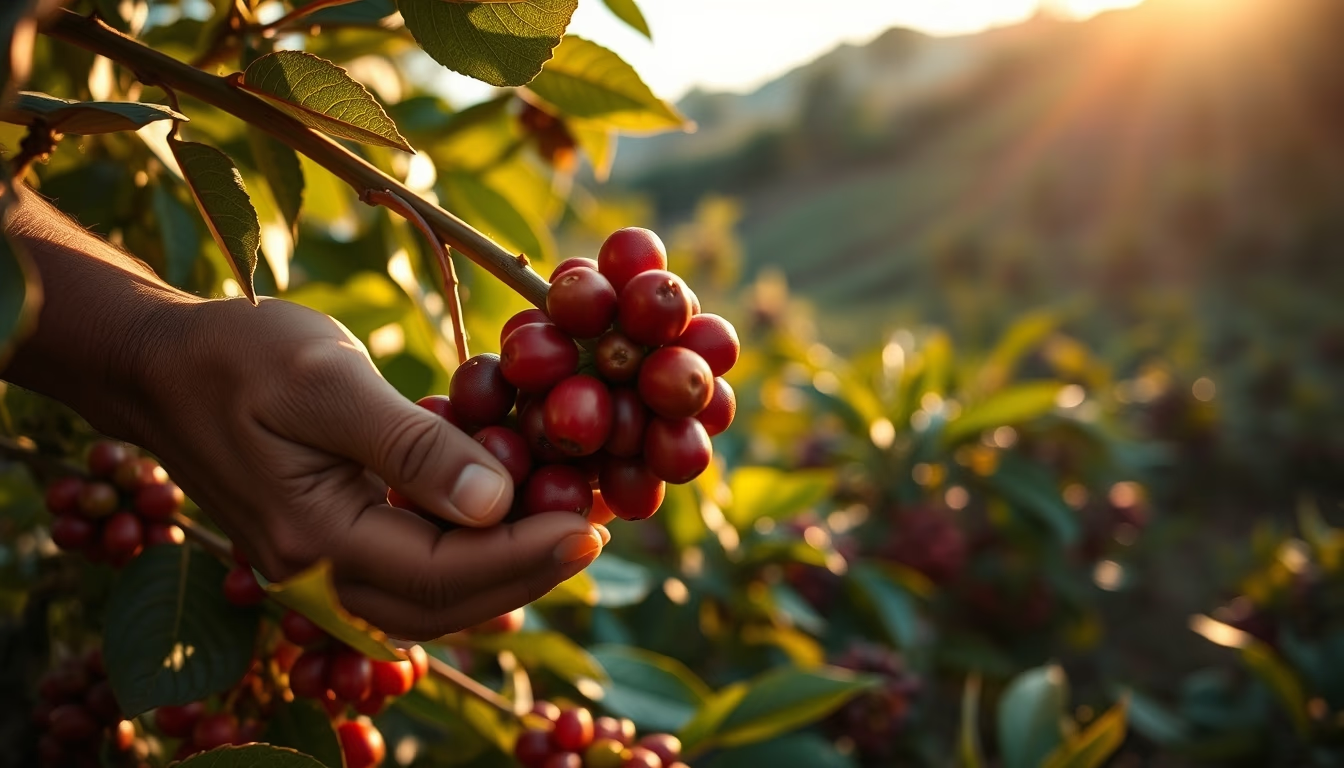
Rural worker handpicks ripe coffee cherries on a Brazilian farm, a practice that ensures quality and supports millions of jobs.
About this subject
Manual coffee harvesting is a tradition dating back to the 18th century in Brazil, when the crop became an economic driver. Despite increasing mechanization, selective handpicking remains prevalent in mountainous regions and on farms prioritizing specialty coffees. Skilled workers pick only ripe cherries, making multiple passes through the same plant during the harvest season from May to September in major producing states like Minas Gerais, Espírito Santo, and São Paulo.
Each worker harvests an average of 60 to 100 liters of coffee per day, depending on topography and plant density. Payment is typically by production, requiring skill and physical endurance. The activity generates about 8 million direct and indirect jobs in Brazilian rural areas, according to the Brazilian Coffee Industry Association (ABIC). Brazil is the world's largest coffee producer and exporter, responsible for one-third of all coffee consumed globally.
Manual harvesting allows careful selection of beans, essential for high-quality coffees that fetch premiums in the international market. Brazil has over 300,000 coffee farms, most of them small and medium-sized. The image captured in the late afternoon shows the golden light typical of coffee plantations, when workers end their roughly 8-hour daily shift under the sun.
The tradition of manual harvesting faces challenges such as labor shortages and an aging rural workforce. Certification programs like Rainforest Alliance and Fair Trade encourage sustainable practices and better working conditions. Brazilian coffee is known for its flavor diversity, from the smooth Cerrado to the full-bodied Southern Minas.
Frequently Asked Questions
Why is manual coffee harvesting still important in Brazil?
Manual harvesting allows selecting only ripe cherries, ensuring higher quality for specialty coffees. It also generates millions of rural jobs and preserves cultural traditions in regions where mechanization is impractical due to steep terrain.
How many kilos of coffee does a worker harvest per day?
On average, a worker harvests 60 to 100 liters of coffee per day, equivalent to about 30 to 50 kg of coffee in husk. The volume varies depending on farm productivity and the picker's experience.
Which is the main coffee-producing region in Brazil?
Minas Gerais is the largest producing state, accounting for about 50% of national output. Other important regions include Espírito Santo, São Paulo, Bahia, and Rondônia. The Cerrado Mineiro and Mogiana Paulista are highlights for specialty coffees.
Direct URL
https://pub-c7d6a6ea828543ac903a74a341ccb2e1.r2.dev/imagens/coffee-plantation-worker-picking-ripe-coffee-cherries-by-hand-wide-late-afternoon-3.avifHow to credit
Include a visible link back to UtilizAí. Copy one of the snippets below:
<a href="https://xn--utiliza-eza.com/en/midia/imagens/coffee-plantation-worker-picking-ripe-coffee-cherries-by-hand-wide-late-afternoon-3">Coffee plantation worker picking ripe coffee cherries by hand</a> by <a href="https://xn--utiliza-eza.com">UtilizAí</a>, licensed under <a href="https://creativecommons.org/licenses/by/4.0/">CC BY 4.0</a>.
[Coffee plantation worker picking ripe coffee cherries by hand](https://xn--utiliza-eza.com/en/midia/imagens/coffee-plantation-worker-picking-ripe-coffee-cherries-by-hand-wide-late-afternoon-3) by [UtilizAí](https://xn--utiliza-eza.com), CC BY 4.0
License: CC-BY-4.0