Coffee plantation worker picking ripe coffee cherries by hand
1344×768 · AVIF · CC BY 4.0
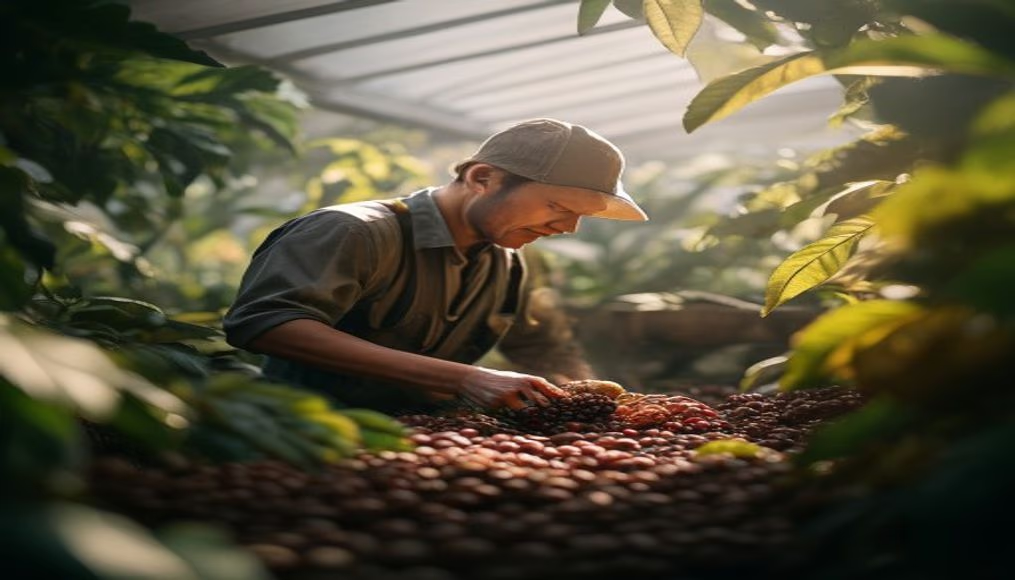
Rural worker hand-picks ripe coffee cherries on a Brazilian farm, a practice that ensures selective bean quality.
About this subject
Manual coffee harvesting is a century-old tradition in Brazil, the world's largest producer and exporter of coffee. Unlike mechanical harvesting, which indiscriminately knocks down green and ripe fruits, manual selection allows picking only the cherries at the ideal ripeness point, called “cerejas”. This method is essential for specialty coffees, which require uniformity and sweetness. The worker, usually from rural communities, walks along the coffee rows with a sieve or basket attached to the waist, performing quick and precise movements. Each plant can yield 2 to 4 kilograms of coffee cherries per harvest, depending on the variety and weather conditions.
Brazilian coffee farming employs about 8 million people directly and indirectly, mainly in the states of Minas Gerais, Espírito Santo, São Paulo, and Bahia. Manual harvesting, although more expensive and time-consuming, is valued in the gourmet coffee market, where traceability and quality are differentiators. The harvest period varies by region: in the Cerrado Mineiro, for instance, it occurs between May and September. During the season, workers can harvest 60 to 120 liters of coffee per day, depending on plantation density and experience.
The image captures a typical midday moment, when the sun is overhead and the light is intense, a condition that helps the picker identify bright red cherries among the dark green foliage. The symmetry of the composition suggests well-aligned rows, common in technified farms that use pruning and irrigation systems. Despite increasing mechanization, manual harvesting persists on small and medium-sized properties, also serving as an important income source for agricultural communities.
Interesting fact: Brazil produces over 50 million coffee bags per year, with about 30% still harvested manually. The selective harvesting technique is passed down through generations and is part of the country's cultural heritage. In recent years, certification initiatives such as Rainforest Alliance and Utz encourage sustainable practices that include valuing manual labor and environmental protection.
Frequently Asked Questions
Why is manual coffee harvesting considered superior to mechanical?
Manual harvesting allows selecting only ripe cherries, ensuring uniformity and sweetness. In mechanical harvesting, green and ripe fruits are knocked down together, which can compromise batch quality.
What is the productivity of a worker in manual coffee harvesting?
An experienced worker harvests 60 to 120 liters of coffee per day, equivalent to about 30 to 60 kilograms of coffee cherries. Productivity depends on plantation density and the picker's skill.
In which regions of Brazil is manual coffee harvesting most common?
Manual harvesting is most common on small and medium-sized properties in Minas Gerais, Espírito Santo, São Paulo, and Bahia. In mountainous regions like the Serra da Mantiqueira, the terrain hinders mechanization, making manual harvesting essential.
Direct URL
https://pub-c7d6a6ea828543ac903a74a341ccb2e1.r2.dev/imagens/coffee-plantation-worker-picking-ripe-coffee-cherries-by-hand-symmetric-bright-midday.avifHow to credit
Include a visible link back to UtilizAí. Copy one of the snippets below:
<a href="https://xn--utiliza-eza.com/en/midia/imagens/coffee-plantation-worker-picking-ripe-coffee-cherries-by-hand-symmetric-bright-midday">Coffee plantation worker picking ripe coffee cherries by hand</a> by <a href="https://xn--utiliza-eza.com">UtilizAí</a>, licensed under <a href="https://creativecommons.org/licenses/by/4.0/">CC BY 4.0</a>.
[Coffee plantation worker picking ripe coffee cherries by hand](https://xn--utiliza-eza.com/en/midia/imagens/coffee-plantation-worker-picking-ripe-coffee-cherries-by-hand-symmetric-bright-midday) by [UtilizAí](https://xn--utiliza-eza.com), CC BY 4.0
License: CC-BY-4.0