Coffee plantation worker picking ripe coffee cherries by hand
1344×768 · AVIF · CC BY 4.0
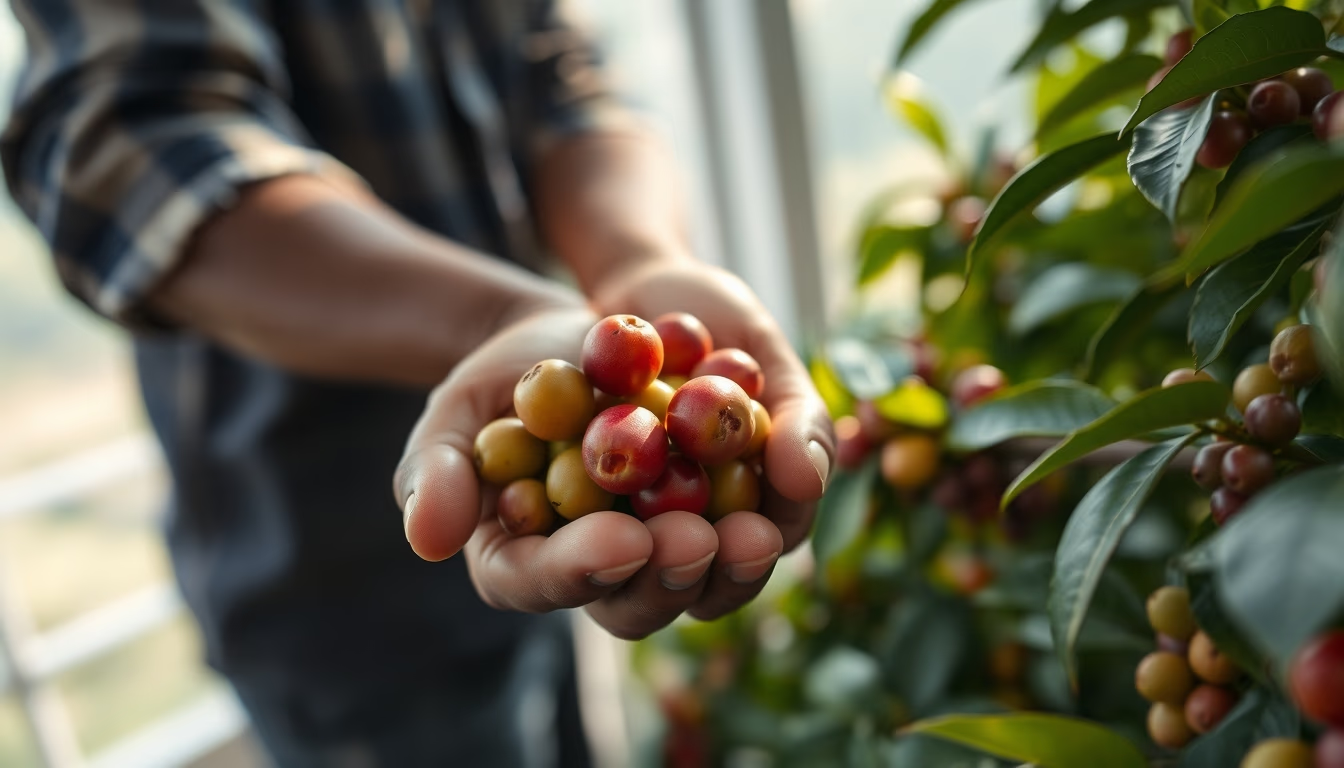
A coffee plantation worker hand-picks ripe cherries in the morning, a common practice on high-quality Brazilian farms.
About this subject
Hand-picking coffee is a tradition dating back to the 18th century in Brazil, when coffee became a major economic driver. Unlike mechanical harvesting, which drops both green and ripe fruits indiscriminately, manual selection ensures only perfectly ripe cherries are picked. This is crucial for specialty coffees, which require uniform ripeness. The worker uses baskets or bags tied to the waist, walking along rows of coffee trees searching for red or yellow fruits, depending on the variety. In Brazil, the world's largest coffee producer and exporter, manual harvesting still prevails in mountainous regions like Serra da Mantiqueira and southern Minas Gerais, where slopes hinder mechanization. The workday starts at dawn, when temperatures are cooler and fruit quality is preserved. Each worker can harvest 60 to 100 liters of coffee per day, depending on plantation density. This practice also creates seasonal jobs, boosting local economies in municipalities like Poços de Caldas and São João del-Rei. Although more costly, manual labor is valued by sustainability and fair trade certifications, which ensure better conditions for pickers.
Frequently Asked Questions
Why is manual coffee harvesting important for specialty coffees?
Manual harvesting allows selecting only ripe cherries, ensuring uniformity and superior quality, essential for specialty coffees that require refined sensory profiles.
How many kilograms of coffee does a worker pick per day?
A worker picks 60 to 100 liters of coffee per day, equivalent to approximately 30 to 50 kg of coffee cherry, depending on density and variety.
In which regions of Brazil is manual harvesting still predominant?
It predominates in mountainous regions such as Serra da Mantiqueira, southern Minas Gerais, and parts of Espírito Santo, where slopes hinder mechanization.
Direct URL
https://pub-c7d6a6ea828543ac903a74a341ccb2e1.r2.dev/imagens/coffee-plantation-worker-picking-ripe-coffee-cherries-by-hand-documentary-morning-7.avifHow to credit
Include a visible link back to UtilizAí. Copy one of the snippets below:
<a href="https://xn--utiliza-eza.com/en/midia/imagens/coffee-plantation-worker-picking-ripe-coffee-cherries-by-hand-documentary-morning-7">Coffee plantation worker picking ripe coffee cherries by hand</a> by <a href="https://xn--utiliza-eza.com">UtilizAí</a>, licensed under <a href="https://creativecommons.org/licenses/by/4.0/">CC BY 4.0</a>.
[Coffee plantation worker picking ripe coffee cherries by hand](https://xn--utiliza-eza.com/en/midia/imagens/coffee-plantation-worker-picking-ripe-coffee-cherries-by-hand-documentary-morning-7) by [UtilizAí](https://xn--utiliza-eza.com), CC BY 4.0
License: CC-BY-4.0