Coffee plantation worker picking ripe coffee cherries by hand
1344×768 · AVIF · CC BY 4.0
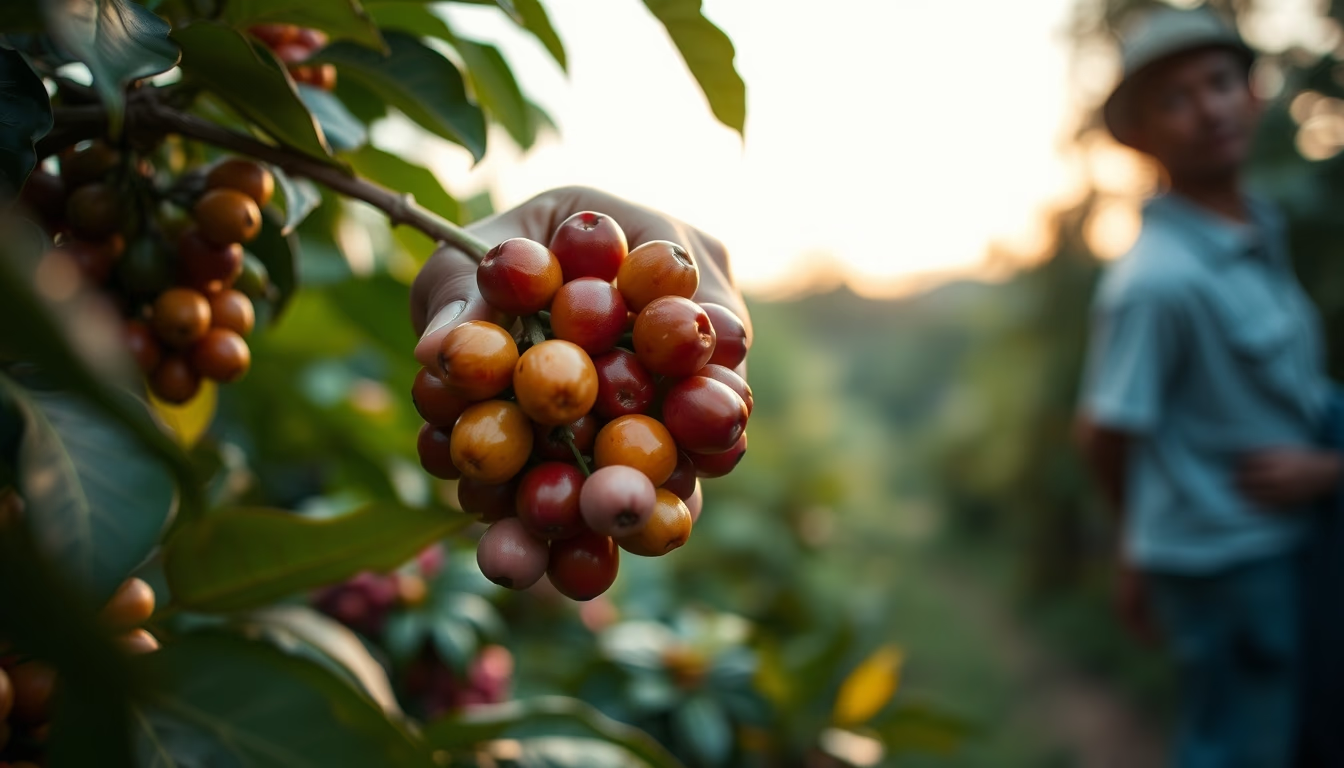
Rural worker hand-picks ripe coffee cherries on a Brazilian farm, ensuring selection of fruits at peak maturity.
About this subject
Manual coffee harvesting is a traditional practice that persists in many producing regions of Brazil, especially in mountainous areas where machinery use is unfeasible. The specialized worker, known as a picker, walks through rows of coffee trees selecting only ripe fruits, which show intense red or yellow coloration depending on the variety. This selectivity is crucial for the final beverage quality, as green or overripe beans compromise flavor. Brazil is the world's largest coffee producer and exporter, responsible for about one-third of global production, with emphasis on the states of Minas Gerais, Espírito Santo, São Paulo, and Bahia. The 2023/24 Brazilian coffee crop was estimated at 54.7 million 60-kg bags, according to the National Supply Company (Conab). Manual harvesting requires skill and rhythm: an experienced worker can pick 60 to 100 liters of coffee per day, depending on crop density and topography. The harvest period varies by region and altitude, typically from May to September in the Southeast. The coffee plant (Coffea arabica) originated in Ethiopia and was introduced to Brazil in the 18th century; today the country has over 2,000 producing municipalities. Selective manual picking is valued for specialty coffees, which command higher prices on the international market. Rural workers in coffee cultivation face challenges such as sun exposure, repetitive posture, and the need for constant visual attention to distinguish the exact ripening point. Despite increasing mechanization, manual harvesting still employs thousands of people, especially on small farms and in high-altitude cultivars.
Frequently Asked Questions
Why is manual coffee harvesting important for quality?
Manual harvesting allows selecting only ripe fruits, avoiding mixing with green or overripe beans that impair beverage flavor. This is essential for specialty coffees, which require uniformity and sweetness.
How much coffee does a rural worker pick per day?
An experienced picker can harvest 60 to 100 liters of coffee per day, depending on crop density, coffee variety, and terrain topography.
Which is the main coffee-producing region in Brazil?
Minas Gerais is the largest producing state, accounting for about 50% of national output, followed by Espírito Santo, São Paulo, and Bahia. Together, these states concentrate most of Brazil's coffee cultivation.
Direct URL
https://pub-c7d6a6ea828543ac903a74a341ccb2e1.r2.dev/imagens/coffee-plantation-worker-picking-ripe-coffee-cherries-by-hand-closeup-twilight-5.avifHow to credit
Include a visible link back to UtilizAí. Copy one of the snippets below:
<a href="https://xn--utiliza-eza.com/en/midia/imagens/coffee-plantation-worker-picking-ripe-coffee-cherries-by-hand-closeup-twilight-5">Coffee plantation worker picking ripe coffee cherries by hand</a> by <a href="https://xn--utiliza-eza.com">UtilizAí</a>, licensed under <a href="https://creativecommons.org/licenses/by/4.0/">CC BY 4.0</a>.
[Coffee plantation worker picking ripe coffee cherries by hand](https://xn--utiliza-eza.com/en/midia/imagens/coffee-plantation-worker-picking-ripe-coffee-cherries-by-hand-closeup-twilight-5) by [UtilizAí](https://xn--utiliza-eza.com), CC BY 4.0
License: CC-BY-4.0