Coffee plantation worker picking ripe coffee cherries by hand
1344×768 · AVIF · CC BY 4.0
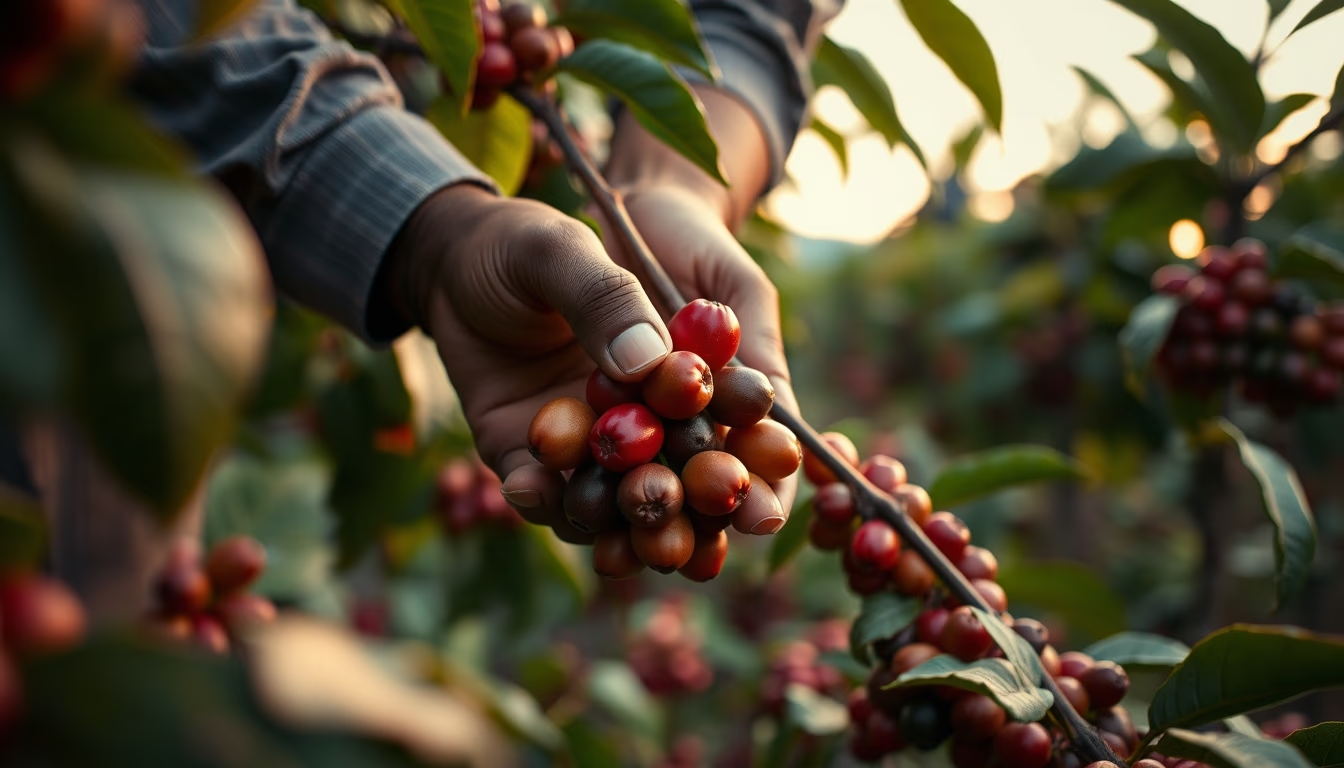
A farmworker hand-picks ripe coffee cherries on a Brazilian plantation, highlighting the tradition of selective harvesting.
About this subject
Coffee is one of the most iconic products of Brazilian agribusiness, and Brazil has been the world's largest producer and exporter for decades. Manual harvesting, as depicted, is still common in mountainous regions or on high-quality arabica coffee farms, where selecting only ripe fruits is essential for the final flavor. Unlike mechanical harvesting, which knocks down all fruits at once, selective picking by experienced workers allows only the cherries at the ideal ripeness point, red or purple, to be collected. This labor-intensive process yields about 50 to 100 liters of coffee per picker per day, depending on field productivity.
Brazilian coffee cultivation dates back to the 18th century, but it was in the 19th century that it became the country's main economic activity, especially in the Paraíba Valley (Rio de Janeiro and São Paulo) and later in southern Minas Gerais, the Cerrado Mineiro, and Espírito Santo. Today, Brazil produces around 50 million 60-kg bags per year, with over 80% being Coffea arabica. The manual harvest workforce is predominantly composed of temporary workers, many from poorer regions of the Northeast, who migrate to farms during the harvest season from May to September.
The image captured at twilight shows a worker in close-up, highlighting details of the activity: the hand holding a handful of ripe cherries, the basket tied to the waist, and the background laden with coffee trees. This scene is common on family farms or those adopting fair trade practices and certifications such as Rainforest Alliance or UTZ, which require decent working conditions. Additionally, manual harvesting is a tradition increasingly threatened by mechanization but still valued for specialty coffees, which command premiums of up to 30% above commodity prices.
Interestingly, coffee is not native to Brazil. Originating in Ethiopia, it arrived in the country around 1727, brought from French Guiana. Since then, the crop has adapted so well to Brazilian climate and soil that the country became the global leader, with Minas Gerais state accounting for about 50% of national production. Manual harvesting, though more expensive, reduces damage to beans and enables the production of high-scoring coffees in cupping tests, such as those above 80 points on the Specialty Coffee Association scale.
Frequently Asked Questions
Why is manual coffee harvesting still used in Brazil?
Manual harvesting is preferred in mountainous areas and for specialty coffees because it allows selective picking of only ripe fruits, ensuring higher quality. Although more expensive and time-consuming, it reduces bean damage and is required by fair trade certifications.
How many kilograms of coffee does a worker pick per day?
An experienced picker can collect 50 to 100 liters of coffee per day, equivalent to approximately 30 to 60 kg of cherries, depending on plant density and terrain topography.
What is the importance of coffee for the Brazilian economy?
Coffee is one of the main products of Brazilian agribusiness, accounting for about 2% of agricultural GDP. Brazil produces around 50 million bags per year, being the world's largest exporter, with emphasis on the states of Minas Gerais, Espírito Santo, and São Paulo.
Direct URL
https://pub-c7d6a6ea828543ac903a74a341ccb2e1.r2.dev/imagens/coffee-plantation-worker-picking-ripe-coffee-cherries-by-hand-closeup-twilight-4.avifHow to credit
Include a visible link back to UtilizAí. Copy one of the snippets below:
<a href="https://xn--utiliza-eza.com/en/midia/imagens/coffee-plantation-worker-picking-ripe-coffee-cherries-by-hand-closeup-twilight-4">Coffee plantation worker picking ripe coffee cherries by hand</a> by <a href="https://xn--utiliza-eza.com">UtilizAí</a>, licensed under <a href="https://creativecommons.org/licenses/by/4.0/">CC BY 4.0</a>.
[Coffee plantation worker picking ripe coffee cherries by hand](https://xn--utiliza-eza.com/en/midia/imagens/coffee-plantation-worker-picking-ripe-coffee-cherries-by-hand-closeup-twilight-4) by [UtilizAí](https://xn--utiliza-eza.com), CC BY 4.0
License: CC-BY-4.0