Coffee plantation worker picking ripe coffee cherries by hand
1344×768 · AVIF · CC BY 4.0
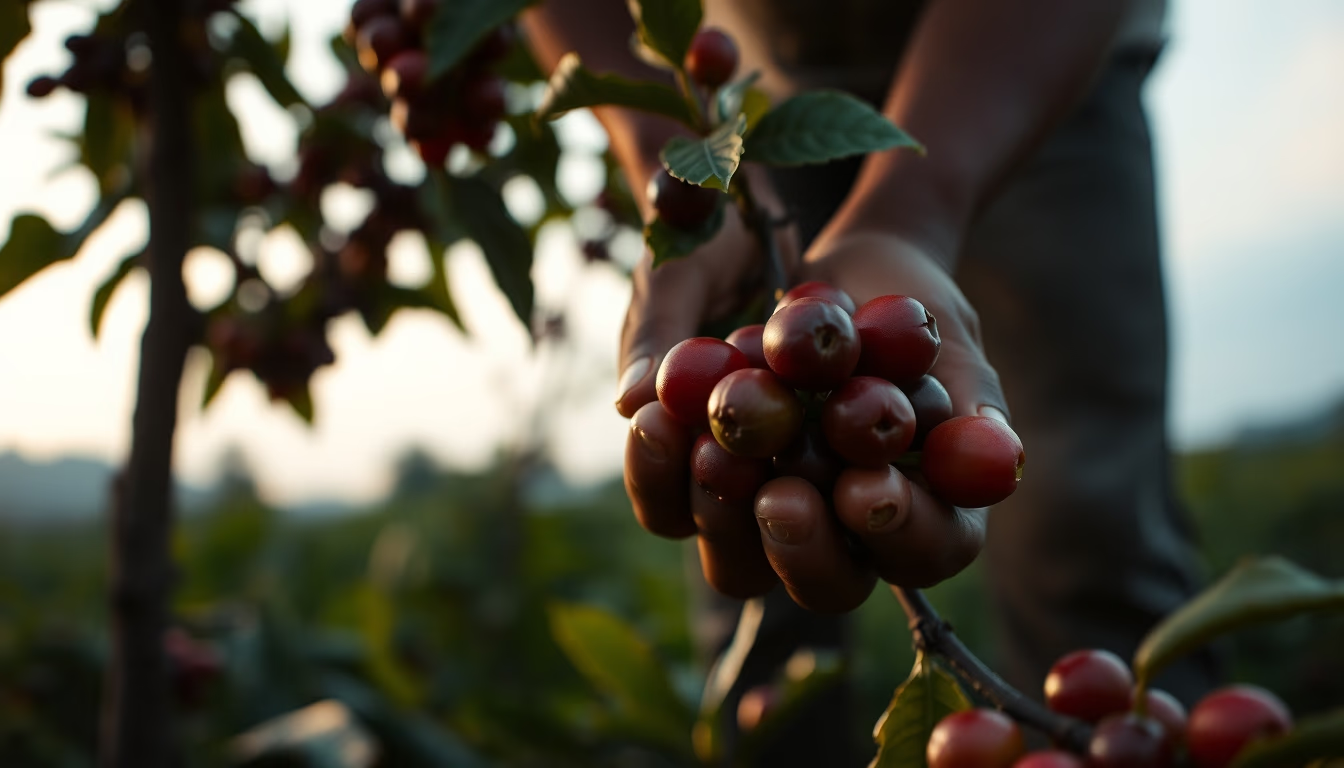
Rural worker hand-picks ripe coffee cherries on a Brazilian farm, a practice that ensures quality and employs millions.
About this subject
Brazil is the world's largest coffee producer and exporter, accounting for about one-third of global output. The manual harvesting depicted here is a traditional method still widely used on small and medium-sized farms, especially in the mountainous regions of Minas Gerais, São Paulo, and Espírito Santo. Unlike mechanical harvesting, which collects fruits at any stage of ripeness, hand-picking allows workers to select only the cherries at the ideal point: red or yellow fruits indicating full maturity. This results in higher quality beans, prized in the specialty coffee market.
Manual harvesting requires skill and rhythm: an experienced worker can pick between 60 and 100 liters of coffee per day, using baskets or bags strapped to the waist. The harvest season in Brazil runs from May to September, depending on region and altitude. Despite advances in mechanization, manual picking remains essential on steep slopes or organic plantations, where topography or certifications demand individualized care.
Coffee arrived in Brazil in the 18th century, from French Guiana, and found ideal conditions in the tropical climate and fertile soil. Slave labor was used for decades; today, manual harvesting is done by free rural workers, many of them temporary migrants who move during the harvest. The activity is regulated by labor laws and safety standards, but still faces challenges such as low pay and precarious conditions in some areas.
The image, captured at twilight, shows the contrast between the worker and the coffee tree laden with ripe fruits. The soft evening light is common in plantations, when the heat subsides and harvesting intensifies to take advantage of the coolness. This scene symbolizes the hard work that transforms a wild fruit into one of the most consumed beverages on the planet.
Frequently Asked Questions
Why is manual coffee harvesting important for quality?
Manual harvesting allows workers to select only ripe fruits (red or yellow cherries), avoiding green or overripe beans. This results in a sweeter, more acidic and aromatic beverage, essential for specialty coffees.
How long does the coffee harvest season last in Brazil?
The harvest runs from May to September, peaking between June and July. Exact duration depends on region, altitude, and coffee variety. In some areas, harvesting can extend into October.
What are the main challenges faced by manual coffee pickers?
Key challenges include low pay, seasonal work, exposure to sun and pesticides, and poor housing and transportation conditions. Mechanization also reduces demand for labor.
Direct URL
https://pub-c7d6a6ea828543ac903a74a341ccb2e1.r2.dev/imagens/coffee-plantation-worker-picking-ripe-coffee-cherries-by-hand-closeup-twilight-3.avifHow to credit
Include a visible link back to UtilizAí. Copy one of the snippets below:
<a href="https://xn--utiliza-eza.com/en/midia/imagens/coffee-plantation-worker-picking-ripe-coffee-cherries-by-hand-closeup-twilight-3">Coffee plantation worker picking ripe coffee cherries by hand</a> by <a href="https://xn--utiliza-eza.com">UtilizAí</a>, licensed under <a href="https://creativecommons.org/licenses/by/4.0/">CC BY 4.0</a>.
[Coffee plantation worker picking ripe coffee cherries by hand](https://xn--utiliza-eza.com/en/midia/imagens/coffee-plantation-worker-picking-ripe-coffee-cherries-by-hand-closeup-twilight-3) by [UtilizAí](https://xn--utiliza-eza.com), CC BY 4.0
License: CC-BY-4.0