Co working space empty
1344×768 · AVIF · CC BY 4.0
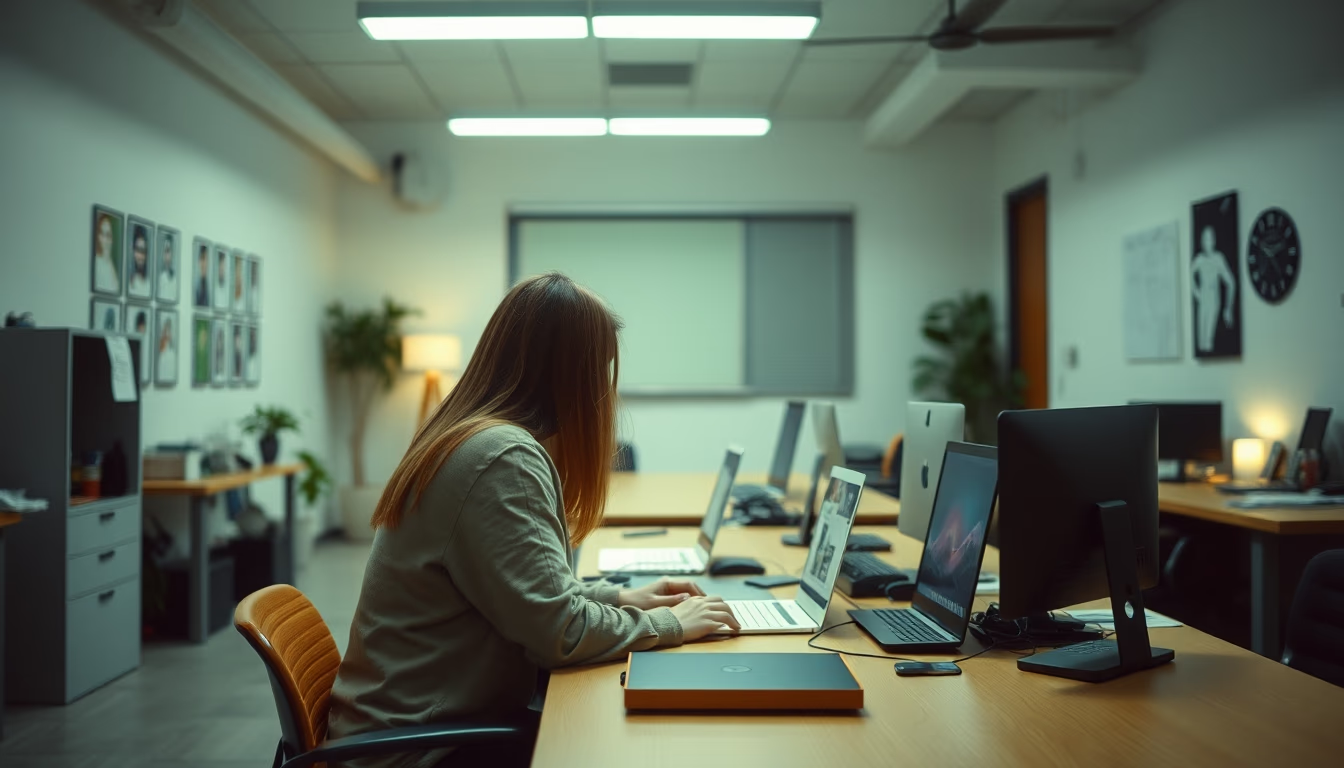
Empty co-working spaces reflect shifts in hybrid work and the demand for flexibility after the pandemic.
About this subject
Co-working spaces emerged in the early 2000s as an alternative to traditional offices, offering shared workstations and infrastructure for freelancers, startups, and remote professionals. The concept gained global traction, with hubs like WeWork popularizing collaborative environments and modern design. In Brazil, cities such as São Paulo and Rio de Janeiro saw a proliferation of these spaces, especially between 2015 and 2019, driven by the growth of entrepreneurship and the creative economy.
The COVID-19 pandemic severely impacted the model. Mandatory remote work emptied co-working spaces, and many closed or reduced operations. Even after reopening, the adoption of hybrid work changed dynamics: professionals began using these spaces more sporadically, seeking locations near home or with flexible hours. JLL data shows global average occupancy fell from 80% in 2019 to around 50% in 2023, with slow recovery.
Today, co-working spaces are reinventing themselves. They offer on-demand plans, private rooms for video conferences, and wellness programs. The "lo-fi disposable camera" style in photography evokes nostalgia for simpler times, contrasting with the high-tech nature of current spaces. This aesthetic, common in captures of empty environments, suggests introspection and a search for authenticity in a digital world.
In Brazil, flexibility is key. Many co-working spaces in capitals have adapted to host digital nomads, with networking events and decompression areas. The trend for 2026 points to hybrid spaces that combine work, leisure, and community, reducing the emptiness observed today.
Frequently Asked Questions
Why are co-working spaces empty nowadays?
The COVID-19 pandemic accelerated remote and hybrid work, reducing the frequency of co-working usage. Many professionals now prefer working from home or using these spaces only occasionally, resulting in lower occupancy.
What does the 'lo-fi disposable camera' style mean in co-working photos?
This photographic style mimics disposable cameras, with grain, desaturated colors, and imperfections. It evokes nostalgia and authenticity, contrasting with the polished aesthetic of modern spaces, and is used to convey emptiness and introspection.
How are co-working spaces adapting to hybrid work?
They offer flexible plans, private rooms for online meetings, extended hours, and services like high-speed internet and coffee. Many also invest in community events to attract digital nomads and local professionals.
Direct URL
https://pub-c7d6a6ea828543ac903a74a341ccb2e1.r2.dev/imagens/co-working-space-empty-lo-fi-disposable-camera-p0.avifHow to credit
Include a visible link back to UtilizAí. Copy one of the snippets below:
<a href="https://xn--utiliza-eza.com/en/midia/imagens/co-working-space-empty-lo-fi-disposable-camera-p0">Co working space empty</a> by <a href="https://xn--utiliza-eza.com">UtilizAí</a>, licensed under <a href="https://creativecommons.org/licenses/by/4.0/">CC BY 4.0</a>.
[Co working space empty](https://xn--utiliza-eza.com/en/midia/imagens/co-working-space-empty-lo-fi-disposable-camera-p0) by [UtilizAí](https://xn--utiliza-eza.com), CC BY 4.0
License: CC-BY-4.0