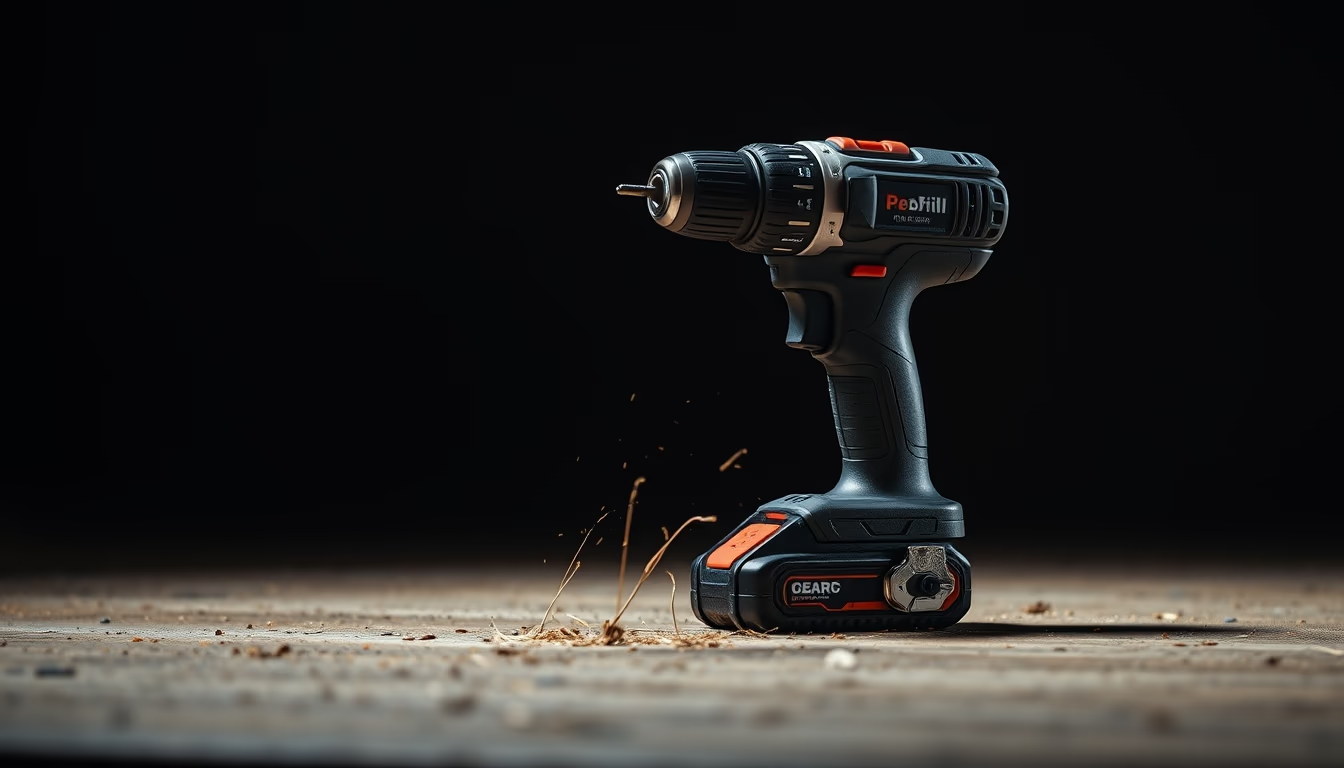
Circular saw blade
1344×768 · AVIF · CC BY 4.0

The circular saw is an essential tool in woodworking and construction, featuring blades with sharp teeth for precise cuts in wood, metal, and other materials.
About this subject
A circular saw blade is a steel disc with peripheral teeth, designed to be attached to a circular saw, a portable or stationary power tool widely used in woodworking, carpentry, and construction. There are several types of blades, each optimized for a specific material: wood blades with tungsten carbide teeth, metal blades with high-speed steel teeth, and diamond blades for masonry and tiles. Diameter ranges from 10 to 350 mm, and the number of teeth influences cutting speed and finish, more teeth produce finer cuts.
Historically, the first circular saw was patented in the late 18th century by Samuel Miller in England, but it was improved by Walter Taylor and others. Its popularity soared in the 20th century with powerful electric motors. Today, blades are precision-manufactured by companies like Freud, DeWalt, and Bosch using advanced metallurgy, including heat treatment and laser welding. Safety is crucial: using guards, push sticks, and safety glasses reduces accident risk, as blades spin at high speeds (up to 6,000 rpm in handheld saws).
In the Brazilian context, the circular saw is ubiquitous in metalworking shops and construction sites, ranking among the best-selling tools. Proper maintenance, such as periodic sharpening and lubrication, extends blade life. Interestingly, some blades feature variable tooth geometry (ATB, TCG, etc.) to reduce vibration and noise. In 2026, trends include non-stick coatings and smart sensors that monitor wear.
Frequently Asked Questions
What is the difference between circular saw blades for wood and for metal?
Blades for wood have tungsten carbide teeth with aggressive angles, while blades for metal use high-speed steel with finer, straight teeth. Cutting speed and feed also differ: wood allows higher RPM than metal.
How to choose the number of teeth on a circular saw blade?
Blades with more teeth (40 to 80) give smoother, precise cuts, ideal for finishing. Fewer teeth (10 to 24) cut faster but leave a rougher surface, suitable for ripping.
Can I sharpen a circular saw blade at home?
Yes, with appropriate files or carbide grinding machines, but it requires skill. It is recommended to send the blade to a professional to maintain original geometry and avoid imbalance.
Direct URL
https://pub-c7d6a6ea828543ac903a74a341ccb2e1.r2.dev/imagens/circular-saw-blade-fine-art-photography-p5.avifHow to credit
Include a visible link back to UtilizAí. Copy one of the snippets below:
<a href="https://xn--utiliza-eza.com/en/midia/imagens/circular-saw-blade-fine-art-photography-p5">Circular saw blade</a> by <a href="https://xn--utiliza-eza.com">UtilizAí</a>, licensed under <a href="https://creativecommons.org/licenses/by/4.0/">CC BY 4.0</a>.
[Circular saw blade](https://xn--utiliza-eza.com/en/midia/imagens/circular-saw-blade-fine-art-photography-p5) by [UtilizAí](https://xn--utiliza-eza.com), CC BY 4.0
License: CC-BY-4.0