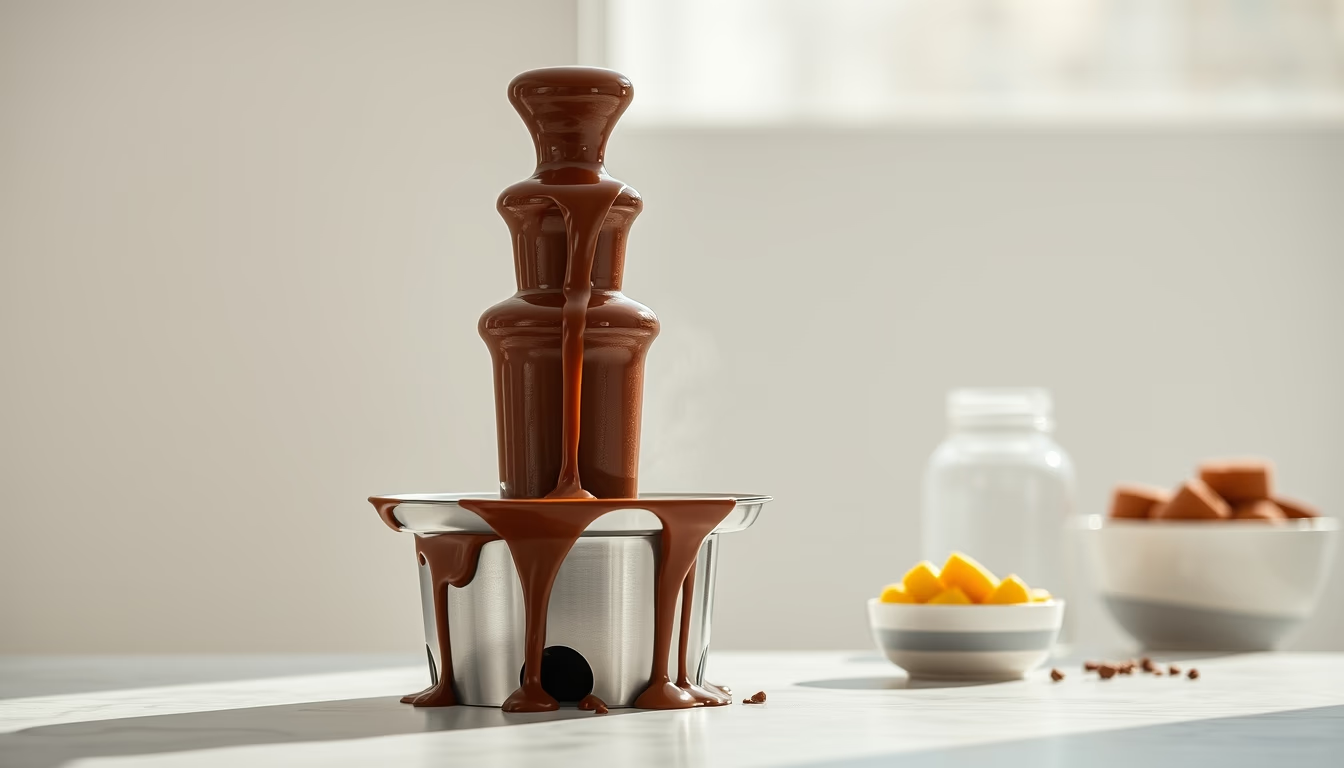
Chocolate fountain flowing
1344×768 · AVIF · CC BY 4.0

Chocolate fountains are devices that melt and circulate liquid chocolate in a cascading flow, popular at parties and buffets since the 1990s.
About this subject
Chocolate fountains have become a staple of celebrations and events, especially weddings and graduations. Invented by Canadian David K. Smith in 1991 and patented the same year, they operate through a heating and pumping mechanism that keeps chocolate at a constant temperature, causing it to cascade down multiple tiers. The chocolate used must be specifically formulated for fountains, typically a blend with vegetable oil to ensure fluidity and shine without hardening too quickly. Unlike regular chocolate, it has a lower melting point and higher viscosity.
The popularity of chocolate fountains exploded in the 1990s, driven by corporate events and themed parties. They are often found at dessert buffets, where guests dip fruits, marshmallows, cakes, or cookies into the flowing chocolate. The most common version is milk chocolate, but dark, white, and even flavored options like caramel or strawberry exist. In terms of size, fountains range from small household models 30 cm tall to large professional structures over 1.5 meters, capable of holding several kilograms of chocolate.
Interestingly, the chocolate fountain has roots in the Swiss tradition of chocolate fondue, created in the 1960s. However, the cascading version is a modern phenomenon, influenced by buffet culture and the pursuit of visual and gustatory experiences. At sustainable events, some fountains use organic or fair-trade chocolate, and newer models incorporate technology to maintain ideal temperature for hours. Cleaning, however, is labor-intensive: the equipment must be disassembled and hand-washed without harsh detergents to avoid damaging the non-stick coating.
Frequently Asked Questions
What type of chocolate is used in chocolate fountains?
Chocolate for fountains is specially formulated, usually a blend of chocolate and vegetable oil, such as soybean or coconut oil, to achieve the ideal viscosity and prevent rapid hardening. Regular chocolate should not be used as it may clog the mechanism.
How to clean a chocolate fountain?
Clean after the chocolate dries. Disassemble the fountain, wash parts in warm water with mild detergent and a soft sponge. Avoid abrasives and do not submerge the motor. Dry thoroughly before reassembling.
How long can a chocolate fountain run?
It depends on the model and chocolate quantity. Professional fountains can run continuously for 6 to 8 hours, while home models operate for 2 to 4 hours. Breaks are recommended to prevent overheating.
Direct URL
https://pub-c7d6a6ea828543ac903a74a341ccb2e1.r2.dev/imagens/chocolate-fountain-flowing-aerial-drone-shot-fresh16.avifHow to credit
Include a visible link back to UtilizAí. Copy one of the snippets below:
<a href="https://xn--utiliza-eza.com/en/midia/imagens/chocolate-fountain-flowing-aerial-drone-shot-fresh16">Chocolate fountain flowing</a> by <a href="https://xn--utiliza-eza.com">UtilizAí</a>, licensed under <a href="https://creativecommons.org/licenses/by/4.0/">CC BY 4.0</a>.
[Chocolate fountain flowing](https://xn--utiliza-eza.com/en/midia/imagens/chocolate-fountain-flowing-aerial-drone-shot-fresh16) by [UtilizAí](https://xn--utiliza-eza.com), CC BY 4.0
License: CC-BY-4.0