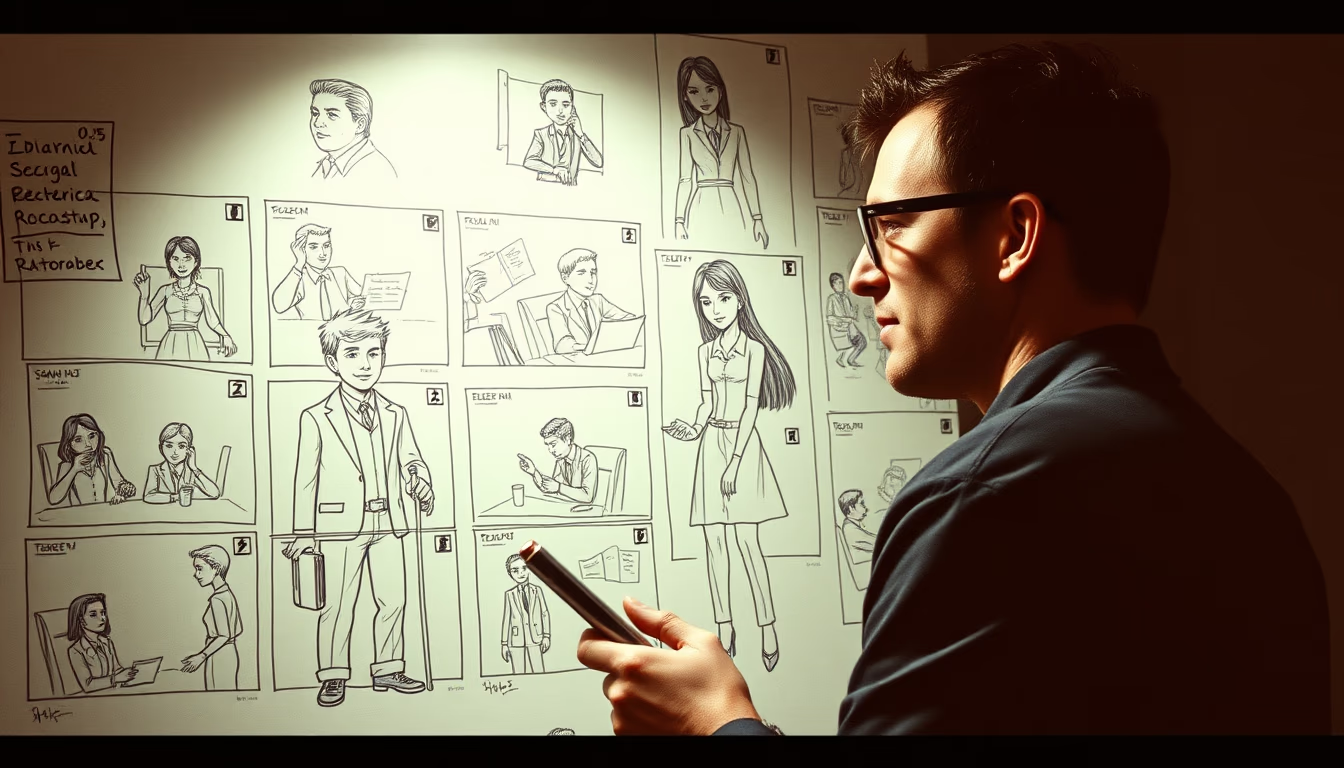
Cell animation paper
1344×768 · AVIF · CC BY 4.0

Cel animation paper, also known as acetate sheets, was the essential medium for classic cartoons, used by studios like Disney and Hanna-Barbera.
About this subject
Cel animation paper, actually composed of transparent acetate sheets, revolutionized cartoon production in the early 20th century. Before its adoption, each frame was drawn entirely on paper, requiring the background to be redrawn repeatedly. With acetate, animators could paint characters on a transparent sheet over a fixed background, saving time and allowing smoother motion. This technique was patented by Earl Hurd in 1914 and quickly became industry standard.
Each acetate sheet was punched with holes to align with registration pegs, ensuring perfect fit when photographed. Drawings were first made on animation paper with pencil, then transferred to acetate and hand-painted with opaque paint on the reverse side. Major studios like Disney and Warner Bros. employed hundreds of artists in this process, resulting in classics such as 'Snow White and the Seven Dwarfs' (1937) and 'Woody Woodpecker'.
Cel animation on paper endured until the 1990s, when digitization began replacing acetate. Films like 'The Lion King' (1994) still used traditional cels, but 'Toy Story' (1995) was fully digital. Today, original acetate sheets are collectibles, fetching thousands of dollars at auctions. The tilt-shift miniature effect applied to images of cels creates a model-like illusion, emphasizing the scale and handcrafted detail of these historical pieces.
Frequently Asked Questions
What is cel animation paper?
It is a transparent acetate sheet used in traditional animation, where characters are hand-painted over a fixed background, allowing different layers to move independently.
How were cel animations produced?
Animators drew with pencil on regular paper, then transferred the lines to acetate and painted with opaque paint on the reverse. The sheets were aligned with pegs and photographed frame by frame over the background.
Are original cels valuable to collectors?
Yes, original cels from studios like Disney can be worth hundreds to thousands of dollars, especially from classic films or iconic scenes.
Direct URL
https://pub-c7d6a6ea828543ac903a74a341ccb2e1.r2.dev/imagens/cell-animation-paper-tilt-shift-miniature-fresh1.avifHow to credit
Include a visible link back to UtilizAí. Copy one of the snippets below:
<a href="https://xn--utiliza-eza.com/en/midia/imagens/cell-animation-paper-tilt-shift-miniature-fresh1">Cell animation paper</a> by <a href="https://xn--utiliza-eza.com">UtilizAí</a>, licensed under <a href="https://creativecommons.org/licenses/by/4.0/">CC BY 4.0</a>.
[Cell animation paper](https://xn--utiliza-eza.com/en/midia/imagens/cell-animation-paper-tilt-shift-miniature-fresh1) by [UtilizAí](https://xn--utiliza-eza.com), CC BY 4.0
License: CC-BY-4.0