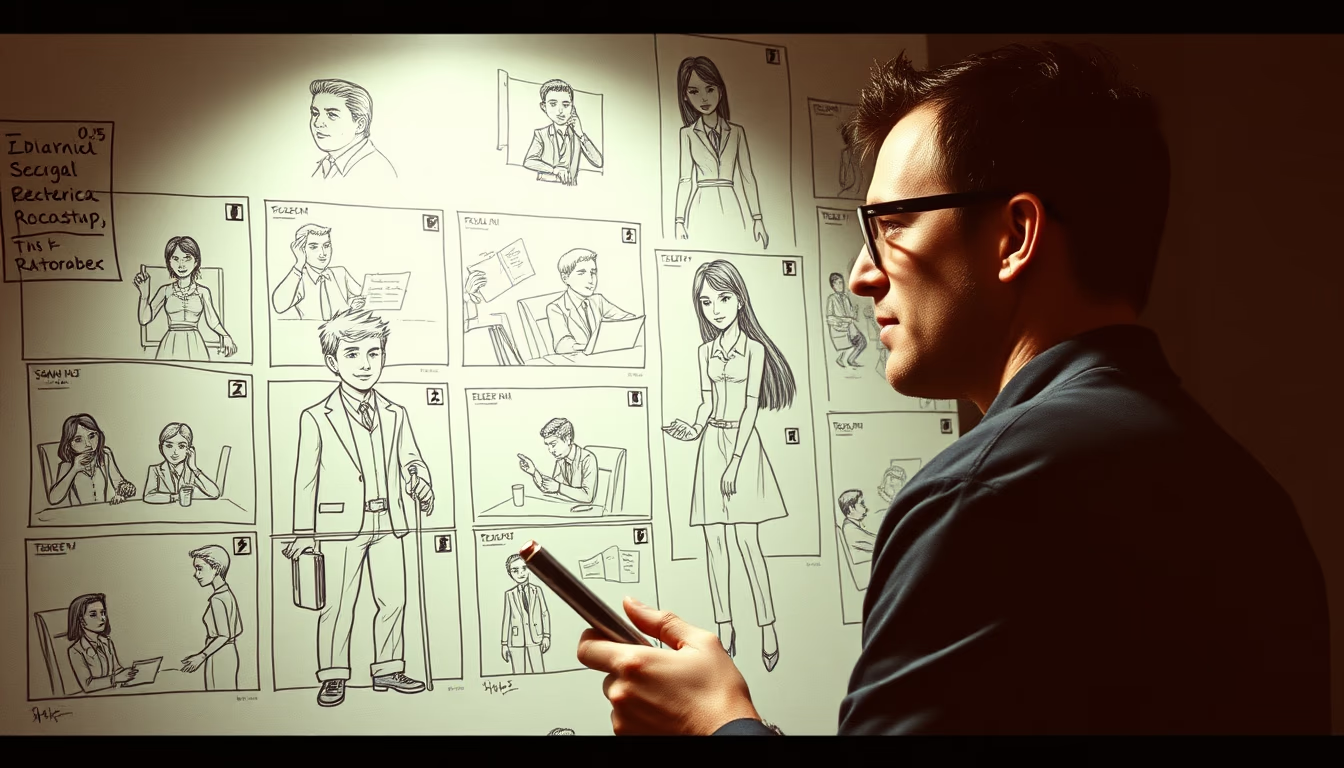
Cell animation paper
1344×768 · AVIF · CC BY 4.0

Cell animation paper, used in traditional cartoons, is a transparent material that allowed superimposing layers of movement.
About this subject
Cell animation paper, also known as acetate sheets or cels, was the primary physical medium of traditional animation throughout much of the 20th century. Originally made from cellulose nitrate or acetate, this transparent material allowed animators to draw characters and objects on separate sheets, stacking them over a fixed background. This technique, called cel animation, revolutionized the industry by eliminating the need to redraw backgrounds for every frame.
Major studios like Walt Disney, Warner Bros., and Hanna-Barbera used millions of these sheets to produce classics such as Snow White and the Seven Dwarfs (1937) and Looney Tunes episodes. Each sheet had registration holes to fit onto pegs, ensuring precise alignment between layers. Over time, acetate replaced the more flammable nitrate, making the process safer.
In the comic book and sequential art industry, cel paper also influenced layering and transparency techniques, though its use was more widespread in animation. Today, original cels are collector's items, preserved in archives and museums like the Museum of Animation in Seattle. The handmade process, involving calendering to achieve transparency, is a nearly lost skill, replaced by digital methods from the 1990s onwards.
Frequently Asked Questions
How was cell animation paper produced?
It was made from cellulose acetate, a transparent plastic material that went through calendering (pressing between heated rollers) to achieve uniform thickness and clarity. Then it was cut into sheets with registration holes to fit onto pegs.
What is the difference between cel animation and digital animation?
In cel animation, each frame was hand-drawn on stacked acetate sheets, requiring physical storage. In digital animation, the same layering principles are applied in software, eliminating physical materials and allowing instant corrections.
Why did cel paper become a collector's item?
With the end of large-scale traditional animation, original cels from famous productions became rare. They are valued for their historical and artistic significance, sometimes fetching high prices at auctions, such as Disney film cels.
Direct URL
https://pub-c7d6a6ea828543ac903a74a341ccb2e1.r2.dev/imagens/cell-animation-paper-aerial-drone-shot-fresh6.avifHow to credit
Include a visible link back to UtilizAí. Copy one of the snippets below:
<a href="https://xn--utiliza-eza.com/en/midia/imagens/cell-animation-paper-aerial-drone-shot-fresh6">Cell animation paper</a> by <a href="https://xn--utiliza-eza.com">UtilizAí</a>, licensed under <a href="https://creativecommons.org/licenses/by/4.0/">CC BY 4.0</a>.
[Cell animation paper](https://xn--utiliza-eza.com/en/midia/imagens/cell-animation-paper-aerial-drone-shot-fresh6) by [UtilizAí](https://xn--utiliza-eza.com), CC BY 4.0
License: CC-BY-4.0