Cave painting lascaux
1344×768 · AVIF · CC BY 4.0
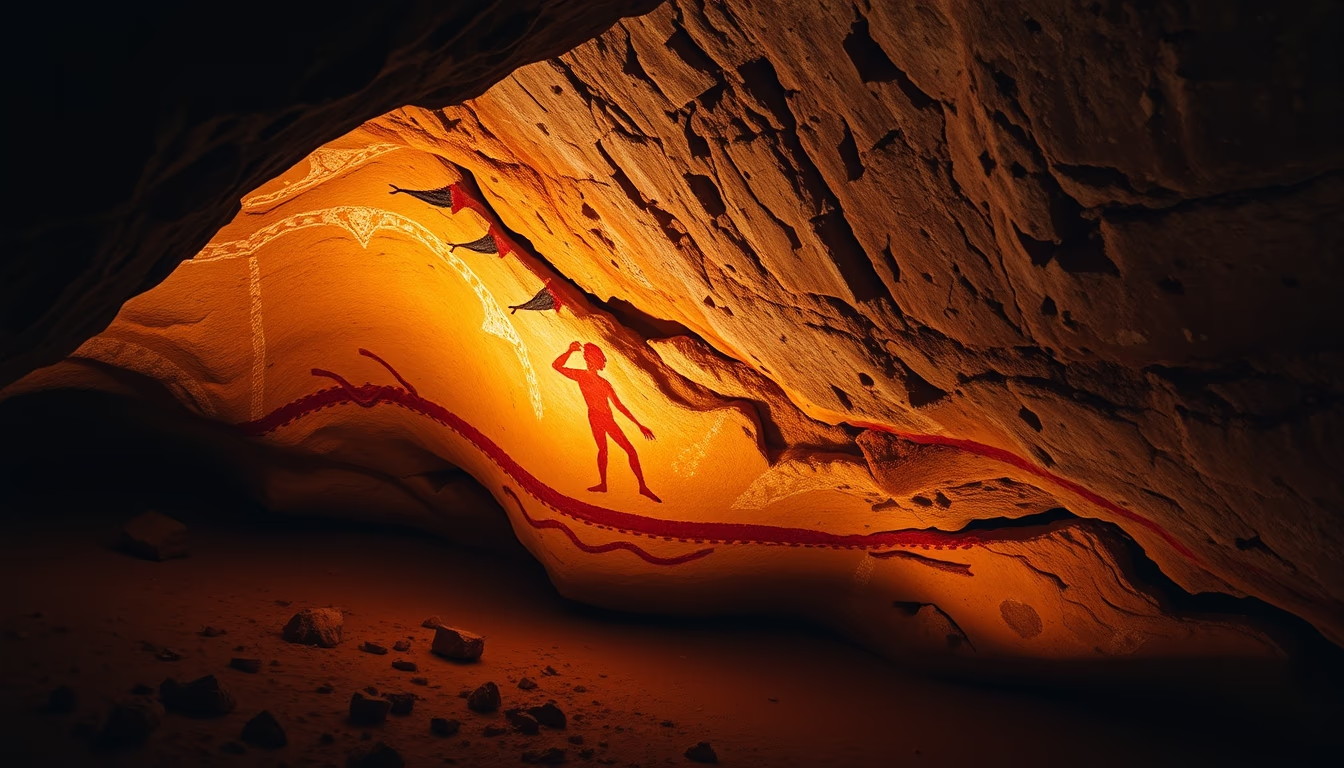
The Lascaux cave paintings in France are one of the most impressive records of prehistoric art, dating back about 17,000 years.
About this subject
The Lascaux Cave, located in southwestern France in the Dordogne region, was discovered on September 12, 1940, by four teenagers. The archaeological site contains over 600 parietal paintings, predominantly of animals such as horses, deer, bison, and aurochs, along with abstract signs. The images were created using mineral pigments like ochre and charcoal, applied through blowing techniques and primitive brushes, remarkable for their realism, movement, and use of natural rock contours.
Estimated to date from the Magdalenian period, between 15,000 and 17,000 years ago, Lascaux differs from other caves in that it lacks complete human figures, only hand stencils and lines, suggesting an animal-centered focus. The exact meaning is debated: they may have served hunting rituals, shamanic practices, or mythological records.
Due to deterioration from tourism (mold, carbon dioxide, and artificial light), the original cave was closed to the public in 1963. In 1983, Lascaux II, a partial replica of the Hall of Bulls and the Painted Gallery, opened. Today, projects like Lascaux IV (International Center for Cave Art) allow immersive experiences without damaging the original site.
Preservation remains challenging: fungi and bacteria continue to threaten the paintings. Conservation teams constantly monitor the cave's microclimate, employing biocides and light control. Lascaux has been a UNESCO World Heritage Site since 1979 and influenced modern artists such as Picasso, who allegedly said, 'We have learned nothing from Lascaux's art.'
Frequently Asked Questions
Where is the Lascaux Cave located?
The Lascaux Cave is in the commune of Montignac, in the Dordogne department, Nouvelle-Aquitaine region, southwestern France. It is near the Vézère Valley, famous for other prehistoric sites.
Why was the Lascaux Cave closed to the public?
It was closed in 1963 because mass tourism caused mold and algae growth and altered the microclimate. Visitors' breathing increased carbon dioxide and humidity, damaging the paintings.
What pigments were used in the Lascaux paintings?
The main pigments are ochre (red and yellow), charcoal (black), and manganese (black). They were ground and mixed with water, animal fat, or plant sap, sometimes applied by blowing through hollow bones.
Direct URL
https://pub-c7d6a6ea828543ac903a74a341ccb2e1.r2.dev/imagens/cave-painting-lascaux-magazine-editorial-p10.avifHow to credit
Include a visible link back to UtilizAí. Copy one of the snippets below:
<a href="https://xn--utiliza-eza.com/en/midia/imagens/cave-painting-lascaux-magazine-editorial-p10">Cave painting lascaux</a> by <a href="https://xn--utiliza-eza.com">UtilizAí</a>, licensed under <a href="https://creativecommons.org/licenses/by/4.0/">CC BY 4.0</a>.
[Cave painting lascaux](https://xn--utiliza-eza.com/en/midia/imagens/cave-painting-lascaux-magazine-editorial-p10) by [UtilizAí](https://xn--utiliza-eza.com), CC BY 4.0
License: CC-BY-4.0