Cassini saturn rings
1344×768 · AVIF · CC BY 4.0
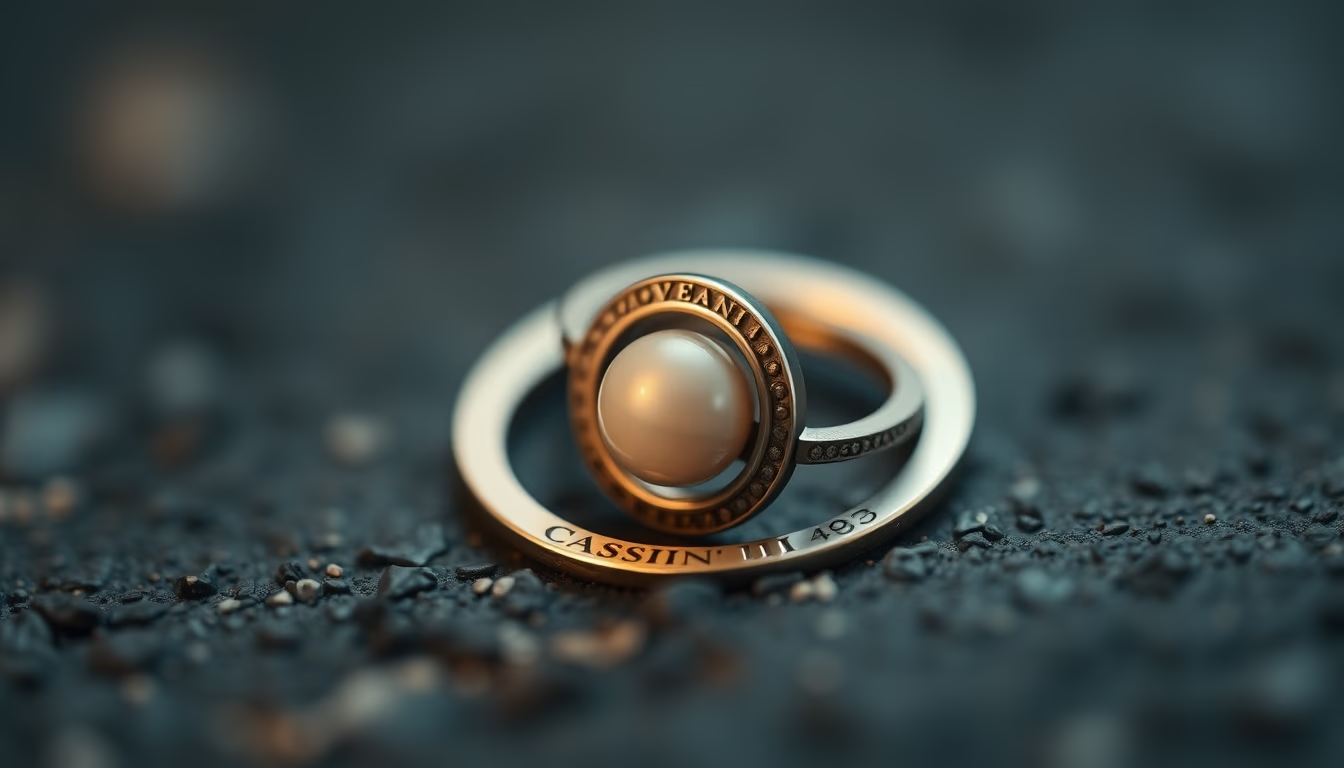
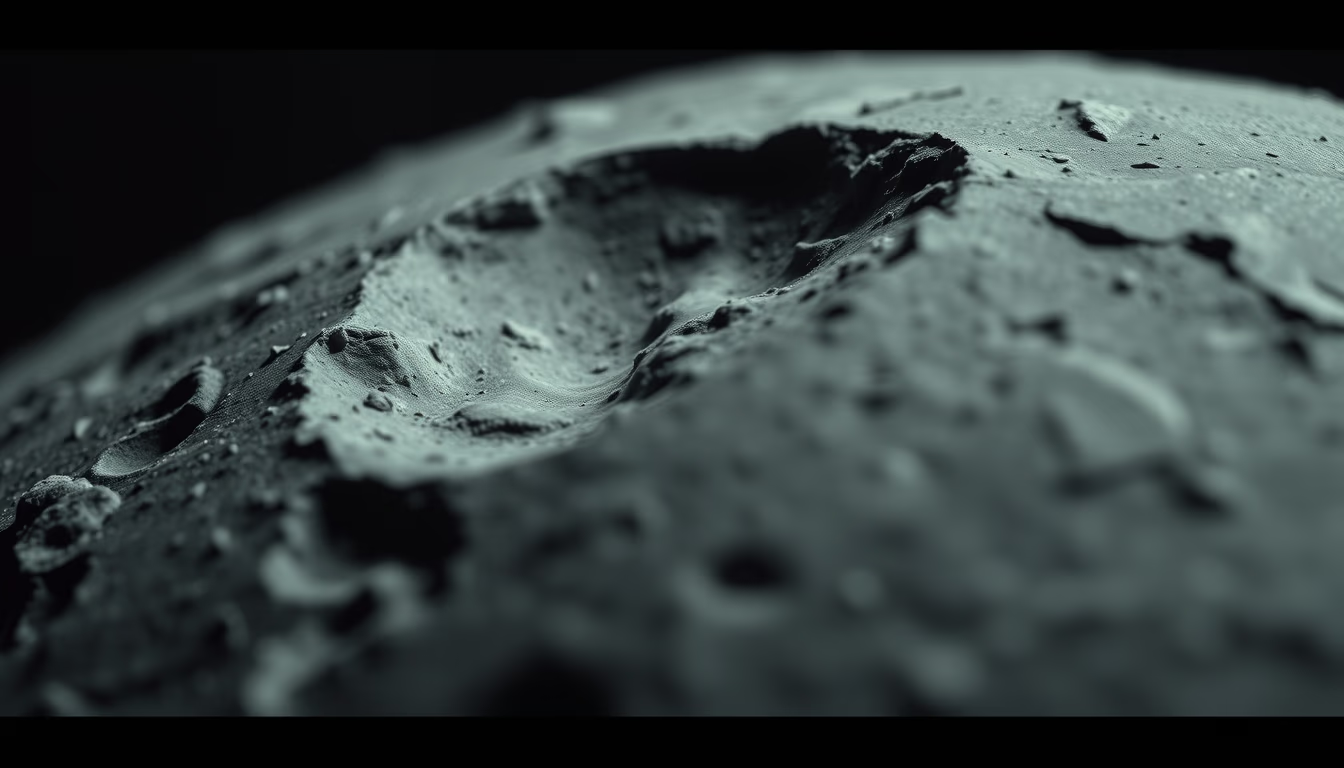
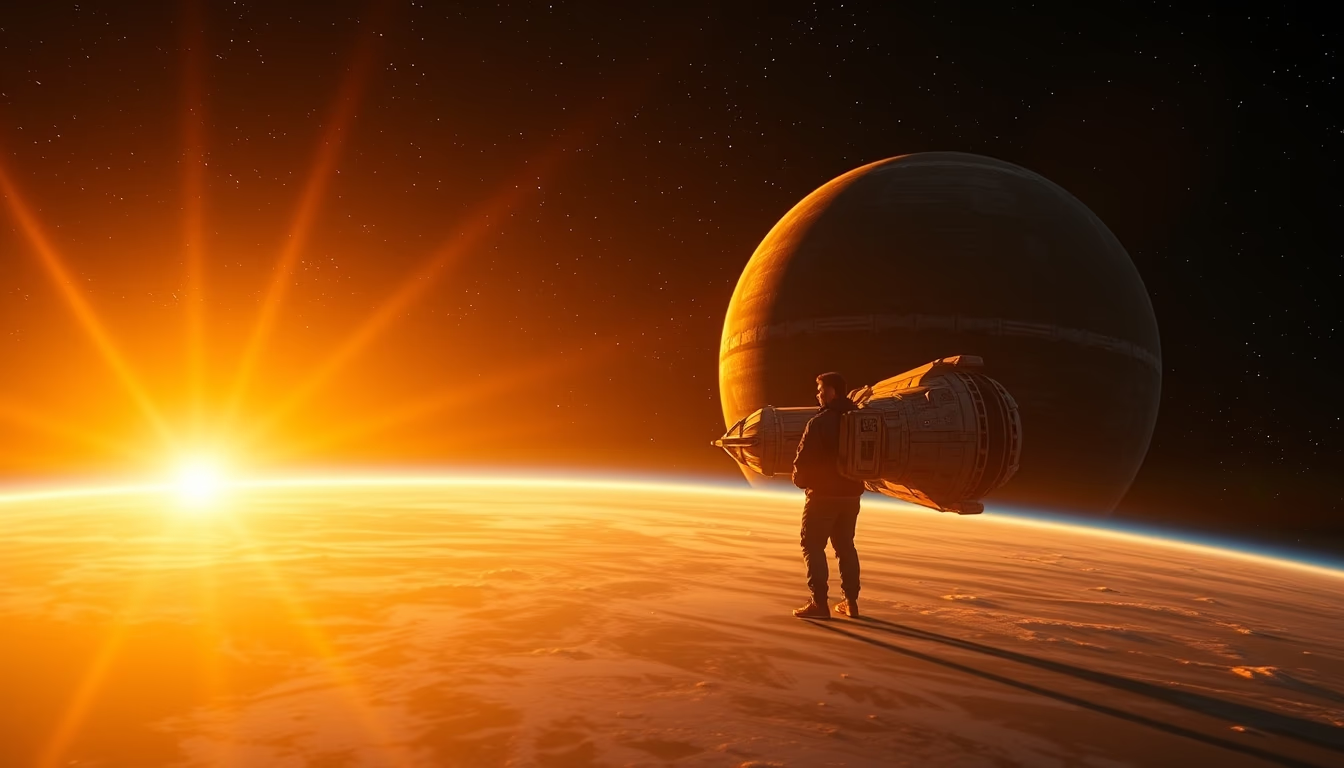
The Cassini spacecraft revealed unprecedented details of Saturn's rings, structures composed of billions of ice and rock particles orbiting the giant planet.
About this subject
The Cassini-Huygens mission, a collaboration between NASA, ESA, and ASI, was launched in 1997 and reached Saturn in 2004. Over 13 years, the spacecraft orbited the planet, making revolutionary discoveries about its rings, moons, and atmosphere. The probe carried Huygens, which landed on Titan in 2005. The mission ended in 2017 with the Grand Finale, when Cassini plunged into Saturn's atmosphere to avoid contaminating potentially habitable moons.
Saturn's rings are composed mainly of water ice, with a small fraction of dust and rocks. Particles range from microscopic grains to house-sized boulders. The main rings are designated A, B, and C, with the Cassini Division separating rings A and B. There are also fainter rings like D, E, F, and G. The rings' origin is debated: they may be remnants of a moon shattered by impact or primordial material that never formed a satellite.
Notable discoveries by Cassini include the rings' youth (estimated at less than 100 million years), the presence of wave structures like density and spiral waves, and mysterious 'spokes' that appear and disappear in the B ring. The probe also observed complex interactions with shepherd moons like Prometheus and Pandora, which confine the rings. The Grand Finale allowed unprecedented measurements of the rings' mass and structure, suggesting they may be even younger than thought.
Studying Saturn's rings provides valuable insights into the formation of planetary systems. Ring dynamics are analogous to protoplanetary disks, helping scientists understand how planets form from dust and gas disks. The Cassini mission, concluded spectacularly, left a legacy of data that continues to be analyzed, deepening our knowledge of the solar system.
Frequently Asked Questions
What are Saturn's rings made of?
They are composed of billions of ice and rock particles, ranging in size from micrometers to meters, orbiting the planet in an equatorial plane.
How many rings does Saturn have?
There are thousands of thin rings, but the main ones are A, B, C, D, E, F, and G, with the Cassini Division separating rings A and B.
Why was the Cassini mission important for studying the rings?
Cassini orbited Saturn for 13 years, gathering detailed data on the composition, structure, and dynamics of the rings, revolutionizing theories about their age and origin.
Direct URL
https://pub-c7d6a6ea828543ac903a74a341ccb2e1.r2.dev/imagens/cassini-saturn-rings-tilt-shift-miniature-fresh13.avifHow to credit
Include a visible link back to UtilizAí. Copy one of the snippets below:
<a href="https://xn--utiliza-eza.com/en/midia/imagens/cassini-saturn-rings-tilt-shift-miniature-fresh13">Cassini saturn rings</a> by <a href="https://xn--utiliza-eza.com">UtilizAí</a>, licensed under <a href="https://creativecommons.org/licenses/by/4.0/">CC BY 4.0</a>.
[Cassini saturn rings](https://xn--utiliza-eza.com/en/midia/imagens/cassini-saturn-rings-tilt-shift-miniature-fresh13) by [UtilizAí](https://xn--utiliza-eza.com), CC BY 4.0
License: CC-BY-4.0