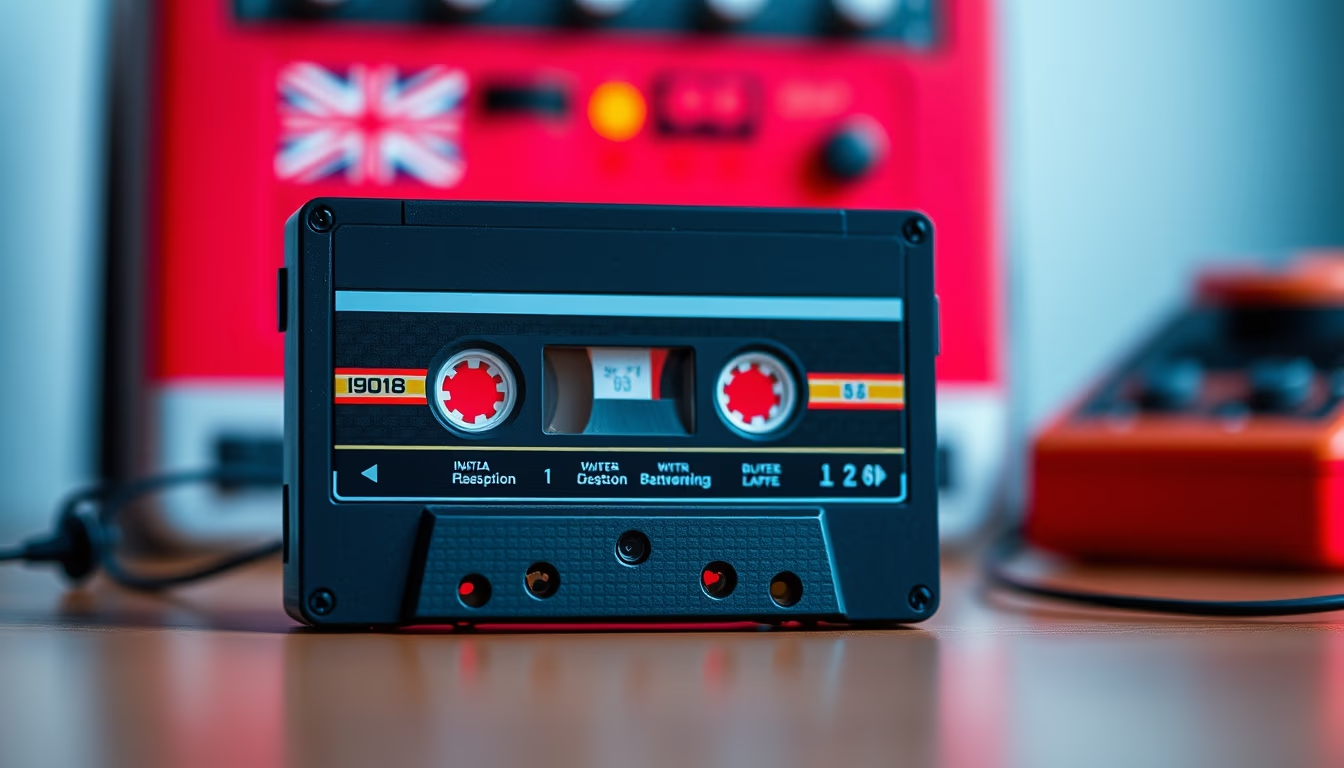
Cassette walkman 1980s
1344×768 · AVIF · CC BY 4.0
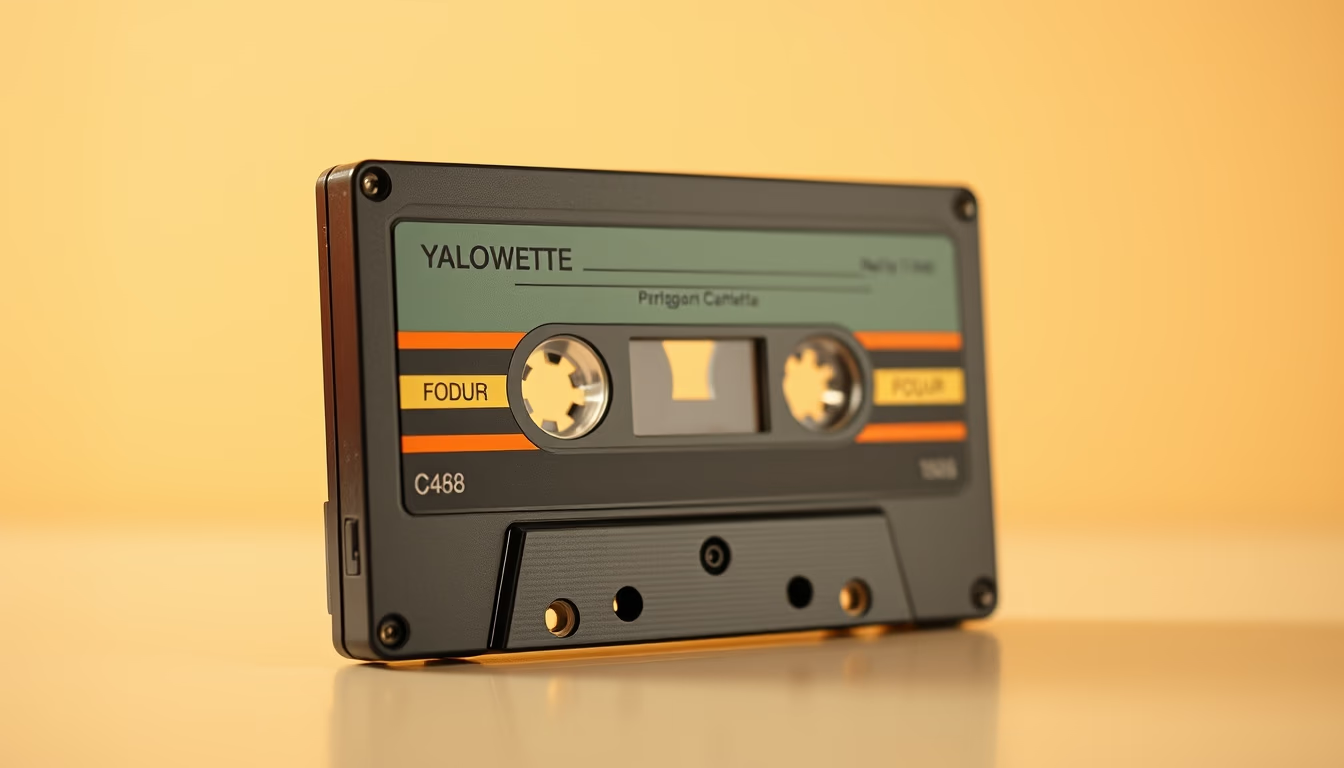
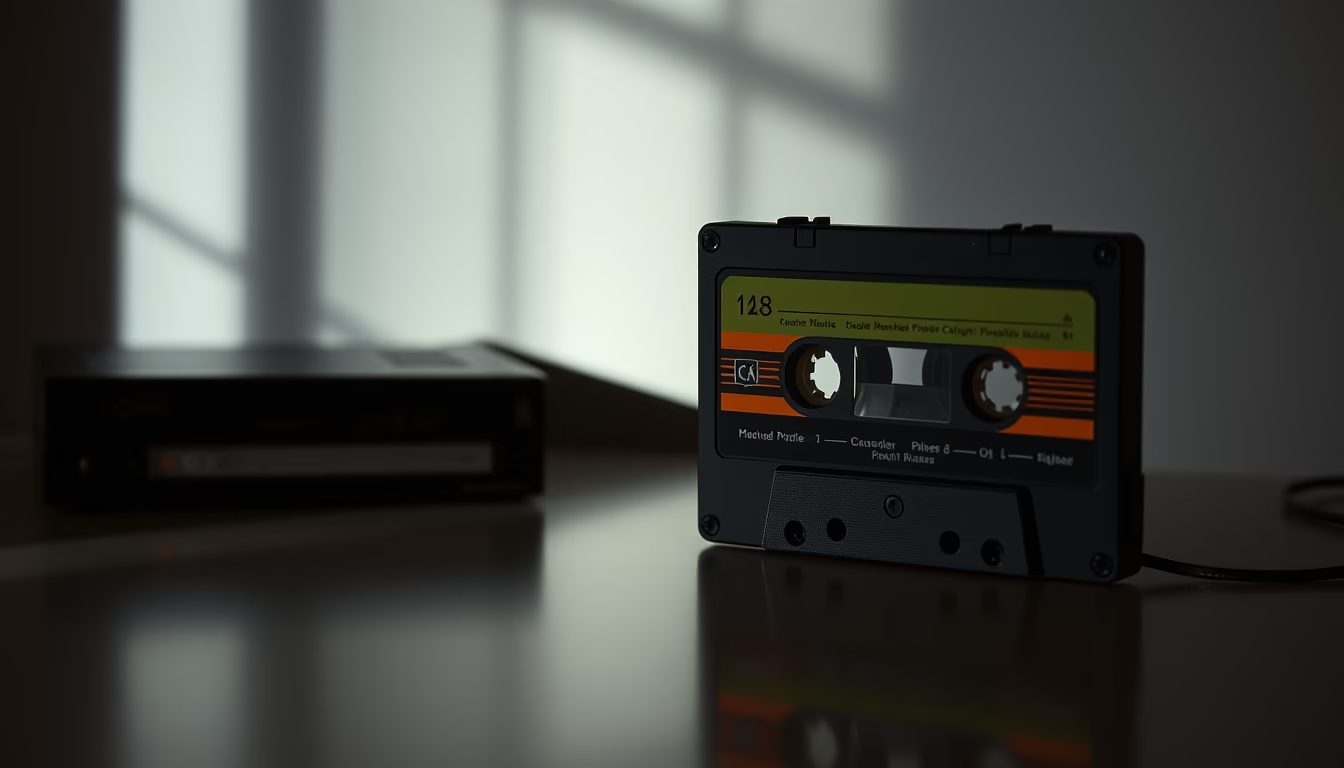
The 1980s cassette Walkman revolutionized music listening, making it portable and personal.
About this subject
The Walkman, launched by Sony in 1979 as the TPS-L2, became a cultural icon in the 1980s. It was a portable cassette tape player that allowed listening to music anywhere with lightweight headphones. Its name combined “walk” and “man,” symbolizing individual freedom. The device transformed music consumption: for the first time, people could create personal soundtracks for commutes, exercise, and leisure.
In the 80s, the Walkman gained global popularity. Manufacturers like Aiwa, Panasonic, and Toshiba launched competitors. Models evolved with features such as auto-reverse, equalization, and built-in FM radio. Cassette tapes, recordable and rewritable, enabled personalized compilations, the famous mixtapes. This influenced DJs and collectors, who used tapes for remixing and distributing music. Portability also boosted the headphone and accessories industry.
The Walkman's importance extends beyond audio. It changed social behavior: listening to music in public became common but also isolating. The Walkman generation preceded iPods and smartphones as personal entertainment devices. Today, there is a retro revival with nostalgic audiences and collectors. The cassette format has been reintroduced by indie labels, and the original Walkman is a cult item. Its simple technology, based on magnetic tape and precision motors, is still studied as a milestone of consumer engineering.
Trivia: the first Walkman TPS-L2 had two headphone jacks because Sony thought people would want to share music. In practice, few used it that way, and later models had only one. The name was adapted in several countries: Soundabout in the US, Stowaway in the UK, and Freestyle in Sweden. Cassette Walkman production was discontinued in the early 2000s, but its legacy remains essential in the history of portable music.
Frequently Asked Questions
What was the first Walkman model launched by Sony?
The first model was the TPS-L2, released on July 1, 1979 in Japan. It featured two headphone jacks and a blue and silver design.
How did cassette mixtapes influence music culture?
Mixtapes allowed anyone to compile their favorite songs, democratizing curation. They were used as gifts, to express feelings, and to spread rare or independent music, influencing DJs and the underground scene.
Is the Walkman still produced today?
Sony discontinued cassette Walkman models in the early 2000s but still manufactures digital versions under the Walkman name. The classic cassette model is only available on the second-hand market and through unofficial replicas.
Direct URL
https://pub-c7d6a6ea828543ac903a74a341ccb2e1.r2.dev/imagens/cassette-walkman-1980s-lo-fi-disposable-camera-fresh12.avifHow to credit
Include a visible link back to UtilizAí. Copy one of the snippets below:
<a href="https://xn--utiliza-eza.com/en/midia/imagens/cassette-walkman-1980s-lo-fi-disposable-camera-fresh12">Cassette walkman 1980s</a> by <a href="https://xn--utiliza-eza.com">UtilizAí</a>, licensed under <a href="https://creativecommons.org/licenses/by/4.0/">CC BY 4.0</a>.
[Cassette walkman 1980s](https://xn--utiliza-eza.com/en/midia/imagens/cassette-walkman-1980s-lo-fi-disposable-camera-fresh12) by [UtilizAí](https://xn--utiliza-eza.com), CC BY 4.0
License: CC-BY-4.0