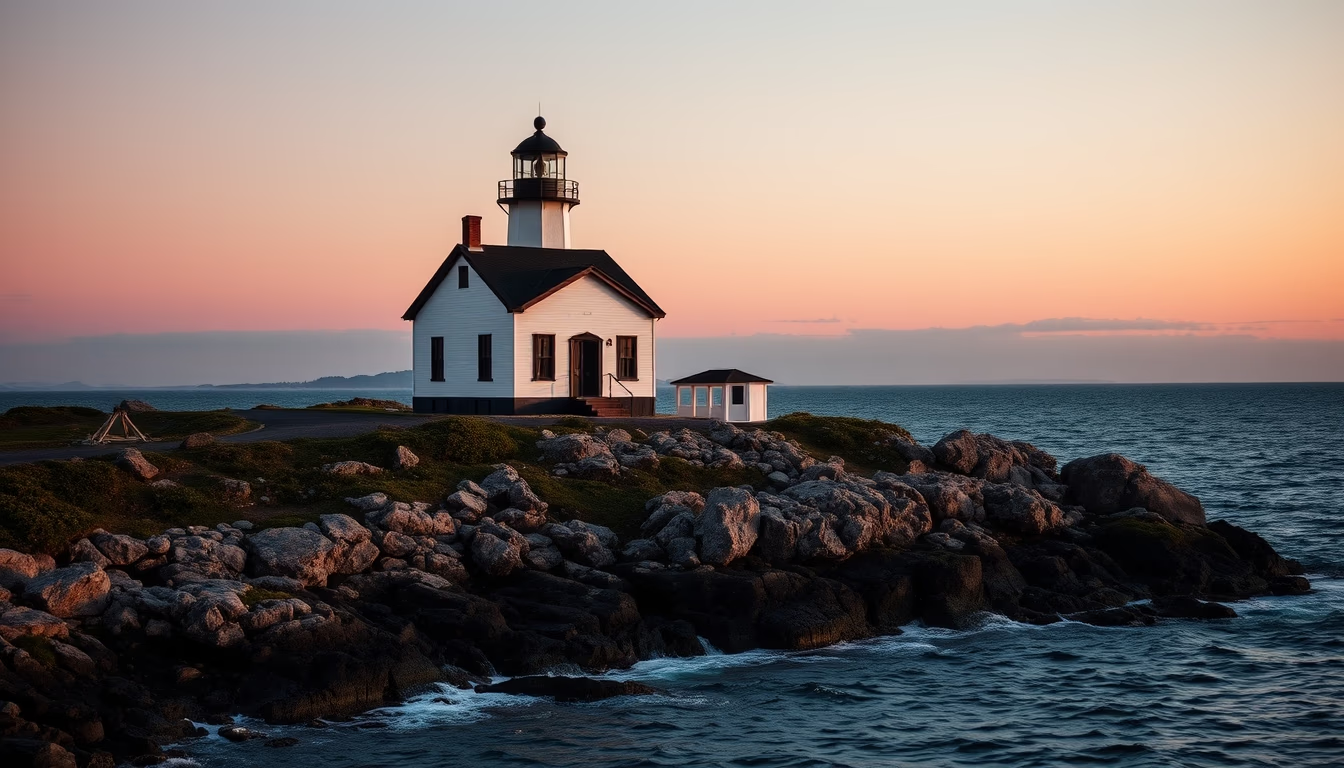
Cape hatteras lighthouse stripe
1344×768 · AVIF · CC BY 4.0

The Cape Hatteras Lighthouse in North Carolina is famous for its black and white diagonal stripes, an icon of maritime engineering and American history.
About this subject
The Cape Hatteras Lighthouse, located on Hatteras Island, North Carolina, is the tallest brick lighthouse in the United States, standing 63 meters high. Its construction was completed in 1870, replacing an earlier 1803 lighthouse deemed ineffective. The current tower features a distinctive black and white diagonal stripe pattern, which is not merely decorative: the contrasting colors help mariners identify the lighthouse during the day, serving as a unique visual landmark. It is one of the most visited attractions in the Cape Hatteras National Seashore, drawing thousands of tourists annually.
The lighthouse's history includes a remarkable engineering feat: between 1999 and 2000, the entire 4,800-ton structure was moved 880 meters inland due to coastal erosion threatening to topple it into the sea. The move, costing about $12 million, was carried out by a specialized company and is considered one of the largest historic building relocations ever performed. Today, the lighthouse is safe from erosion and continues to operate, having been automated since 1936.
The diagonal stripes are a classic example of a "daymark" in lighthouses. Unlike other lighthouses with horizontal or spiral stripes, Cape Hatteras's diagonal pattern is unique. Originally, the lighthouse had red and white stripes, but it was repainted black and white in 1873 for better contrast. The tower emits a light beam visible up to 46 kilometers away, with a flash pattern every 7.5 seconds, guiding ships through the dangerous Diamond Shoals, an area known as the "Graveyard of the Atlantic" due to numerous shipwrecks.
The lighthouse has been featured in various artworks and appears in films and TV shows, becoming a symbol of the North Carolina coast. Climbing to the top offers panoramic views of the ocean and dunes, but requires ascending 257 steps. The lighthouse is operated by the U.S. Coast Guard, while maintenance and tourism are managed by the National Park Service.
Frequently Asked Questions
Why does the Cape Hatteras Lighthouse have diagonal stripes?
The diagonal stripes are a daymark pattern to help mariners identify the lighthouse during the day, distinguishing it from other lighthouses. The black and white pattern was adopted in 1873 for better contrast.
When and why was the lighthouse moved inland?
The lighthouse was moved between 1999 and 2000 due to coastal erosion threatening its stability. The 4,800-ton structure was relocated 880 meters inland at a cost of about $12 million.
How many steps are in the Cape Hatteras Lighthouse?
There are 257 steps to the top. The climb offers panoramic views of the area but requires physical stamina due to the narrow and steep tower.
Direct URL
https://pub-c7d6a6ea828543ac903a74a341ccb2e1.r2.dev/imagens/cape-hatteras-lighthouse-stripe-high-fashion-editorial-fresh3.avifHow to credit
Include a visible link back to UtilizAí. Copy one of the snippets below:
<a href="https://xn--utiliza-eza.com/en/midia/imagens/cape-hatteras-lighthouse-stripe-high-fashion-editorial-fresh3">Cape hatteras lighthouse stripe</a> by <a href="https://xn--utiliza-eza.com">UtilizAí</a>, licensed under <a href="https://creativecommons.org/licenses/by/4.0/">CC BY 4.0</a>.
[Cape hatteras lighthouse stripe](https://xn--utiliza-eza.com/en/midia/imagens/cape-hatteras-lighthouse-stripe-high-fashion-editorial-fresh3) by [UtilizAí](https://xn--utiliza-eza.com), CC BY 4.0
License: CC-BY-4.0