Calligraphy ink brush
1344×768 · AVIF · CC BY 4.0
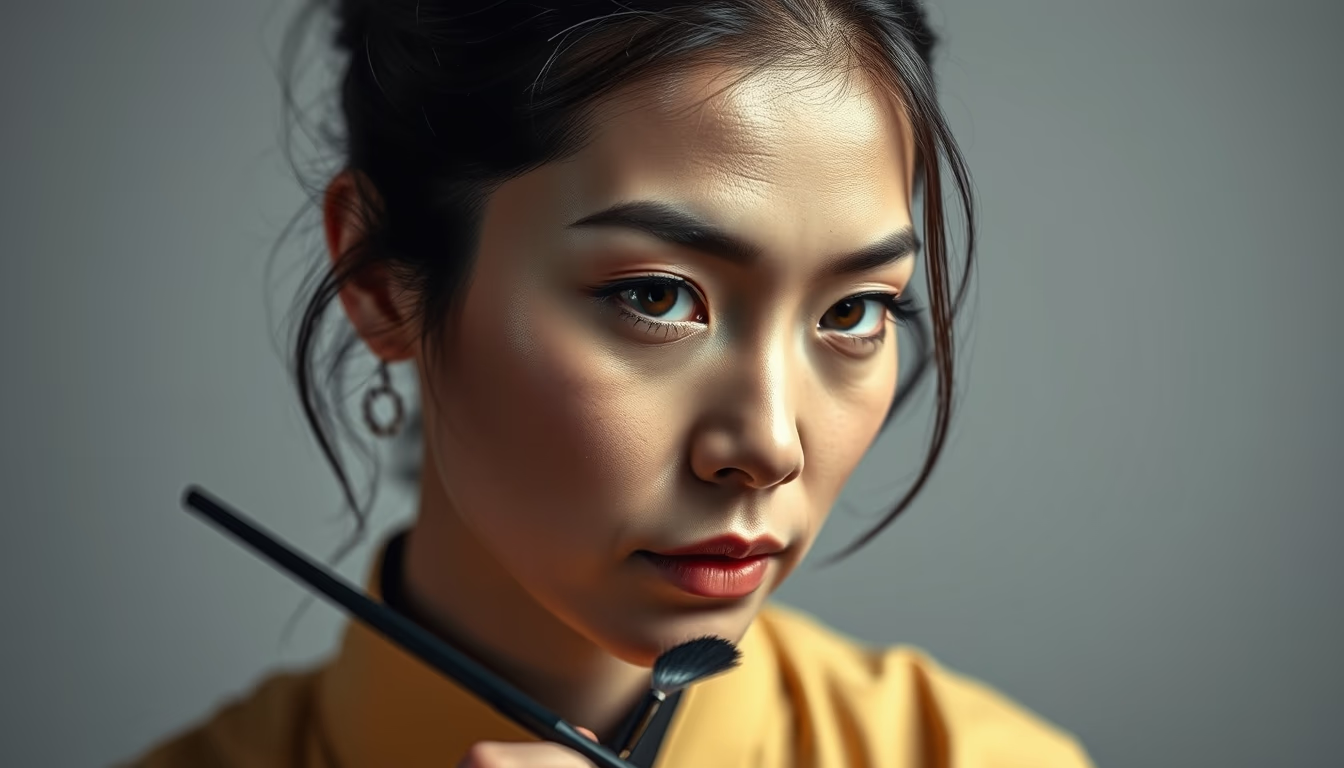
The calligraphy ink brush is an ancient tool essential to Chinese and Japanese calligraphy, renowned for its precision and versatility.
About this subject
The calligraphy ink brush, often referred to as a brush pen, has its origins in ancient China around the 3rd century BCE. Its invention is traditionally credited to the general Meng Tian during the Qin dynasty, though archaeological evidence suggests similar tools existed even earlier. The handle is typically made of bamboo or light wood, while the bristles are crafted from animal hair such as goat, wolf, weasel, or rabbit. Each type of hair provides different ink absorption and elasticity, directly affecting the stroke quality.
In Chinese calligraphy, brushes are categorized by size and shape: large ones (kotenseki) are used for big characters and painting, while smaller ones (hitsuke) are for fine details. In Japanese calligraphy (shodo), the brush (fude) follows similar principles, emphasizing a balance between fluidity and control. The technique of holding the brush vertically and varying pressure allows for thick and thin lines in a single stroke.
Handcrafted brush making is a tradition preserved in regions like Huzhou (China) and Kumano (Japan). Artisans select animal hairs by hand, combining different types to achieve the desired hardness. The process involves soaking the hairs in water, aligning them, fixing them with natural glue, and mounting them onto the handle. A high-quality brush can last for decades with proper care.
In modern culture, the calligraphy brush has transcended its original use, being employed in contemporary art, graphic design, and illustration. Its versatility and the organic quality of its strokes make it a valued tool for artists worldwide. Moreover, practicing calligraphy with a brush is considered a form of meditation, promoting focus and inner harmony.
Frequently Asked Questions
How do I choose the right calligraphy brush for beginners?
Beginners should choose a medium-sized brush (e.g., for 5-8 cm characters), with goat hair or mixed bristles that offer good ink retention and flexibility. Traditional brands like Huzhou are recommended.
What is the difference between Chinese and Japanese calligraphy brushes?
While similar, Japanese brushes (fude) typically have longer handles and softer bristles, favoring fluid strokes, while Chinese brushes are often firmer to allow more angular control.
How should I maintain a calligraphy brush to extend its lifespan?
Rinse the brush with clean water immediately after use, removing all ink. Gently reshape the bristles with your fingers and hang it tip down or lay it horizontally to dry.
Direct URL
https://pub-c7d6a6ea828543ac903a74a341ccb2e1.r2.dev/imagens/calligraphy-ink-brush-studio-editorial-portrait-p5.avifHow to credit
Include a visible link back to UtilizAí. Copy one of the snippets below:
<a href="https://xn--utiliza-eza.com/en/midia/imagens/calligraphy-ink-brush-studio-editorial-portrait-p5">Calligraphy ink brush</a> by <a href="https://xn--utiliza-eza.com">UtilizAí</a>, licensed under <a href="https://creativecommons.org/licenses/by/4.0/">CC BY 4.0</a>.
[Calligraphy ink brush](https://xn--utiliza-eza.com/en/midia/imagens/calligraphy-ink-brush-studio-editorial-portrait-p5) by [UtilizAí](https://xn--utiliza-eza.com), CC BY 4.0
License: CC-BY-4.0