Calligraphy ink brush
1344×768 · AVIF · CC BY 4.0
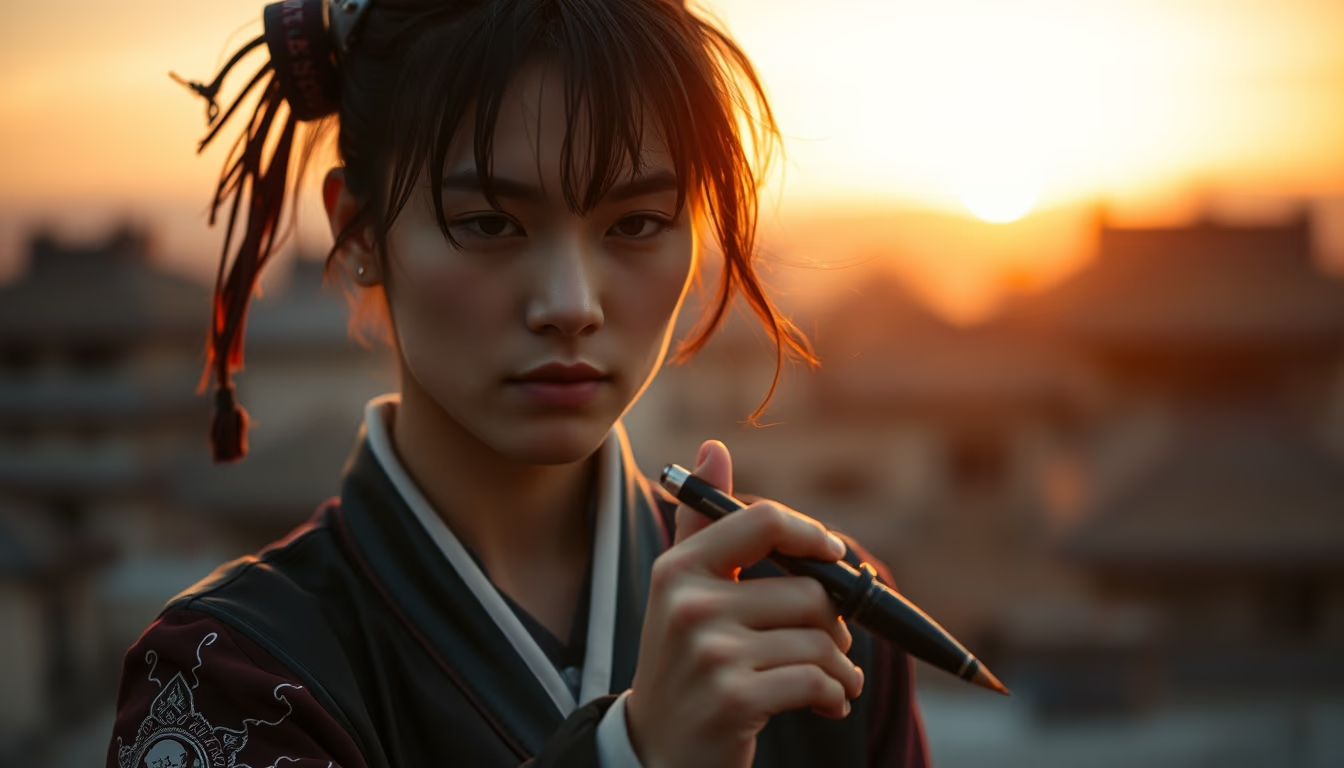
The calligraphy ink brush is an ancient tool, essential for the art of Chinese writing and other Eastern traditions.
About this subject
The calligraphy brush, known as '毛笔' (máo bǐ) in Chinese, is a classic instrument used in East Asian calligraphy and painting. Traditionally, the handle is made of bamboo, while the bristles are from animal hair such as goat, wolf, rabbit, or deer, each type giving different absorption and elasticity properties. Crafting a quality brush is an art: hairs are selected, aligned, and glued precisely to form a tip that can be fine or full.
The brush's history dates back over 2,000 years in China, with records from the Warring States period (475, 221 BC). The brush not only enabled calligraphy as a refined art but also influenced the evolution of Chinese characters. In calligraphy, varying pressure, angle, and speed create thick or thin strokes, and the brush is the main tool for this expressiveness. Beyond China, the brush is central in Japan (fude) and Korea (but), with regional variations.
Culturally, the brush is a symbol of scholarship and refinement. Along with paper, ink, and inkstone, it forms the 'Four Treasures of the Study' (文房四宝). Calligraphers care for their brushes meticulously, cleaning them after each use and storing them hanging to preserve the bristle shape. Modern brushes may use synthetic fibers, but traditional ones remain preferred by purists.
Interesting fact: brush sizes vary widely, from tiny ones for details to large floor brushes for monumental characters. The calligraphy brush is also used for ink wash painting, demonstrating its versatility.
Frequently Asked Questions
How to care for a calligraphy brush?
Rinse the brush with clean water after use, removing all ink. Shape the tip with your fingers and hang it to dry with bristles down to avoid deformation.
What is the difference between goat hair and wolf hair brushes?
Goat hair (soft) holds a lot of ink and produces smooth, full strokes, ideal for painting. Wolf hair (firmer) has elasticity and allows sharp, controlled strokes, preferred for calligraphy.
Can a calligraphy brush be used for watercolor?
Yes, especially Chinese brushes are excellent for watercolor and ink wash, as their absorption capacity creates unique gradient and texture effects.
Direct URL
https://pub-c7d6a6ea828543ac903a74a341ccb2e1.r2.dev/imagens/calligraphy-ink-brush-cinematic-wide-shot-p4.avifHow to credit
Include a visible link back to UtilizAí. Copy one of the snippets below:
<a href="https://xn--utiliza-eza.com/en/midia/imagens/calligraphy-ink-brush-cinematic-wide-shot-p4">Calligraphy ink brush</a> by <a href="https://xn--utiliza-eza.com">UtilizAí</a>, licensed under <a href="https://creativecommons.org/licenses/by/4.0/">CC BY 4.0</a>.
[Calligraphy ink brush](https://xn--utiliza-eza.com/en/midia/imagens/calligraphy-ink-brush-cinematic-wide-shot-p4) by [UtilizAí](https://xn--utiliza-eza.com), CC BY 4.0
License: CC-BY-4.0