Caliper vernier brass
1344×768 · AVIF · CC BY 4.0
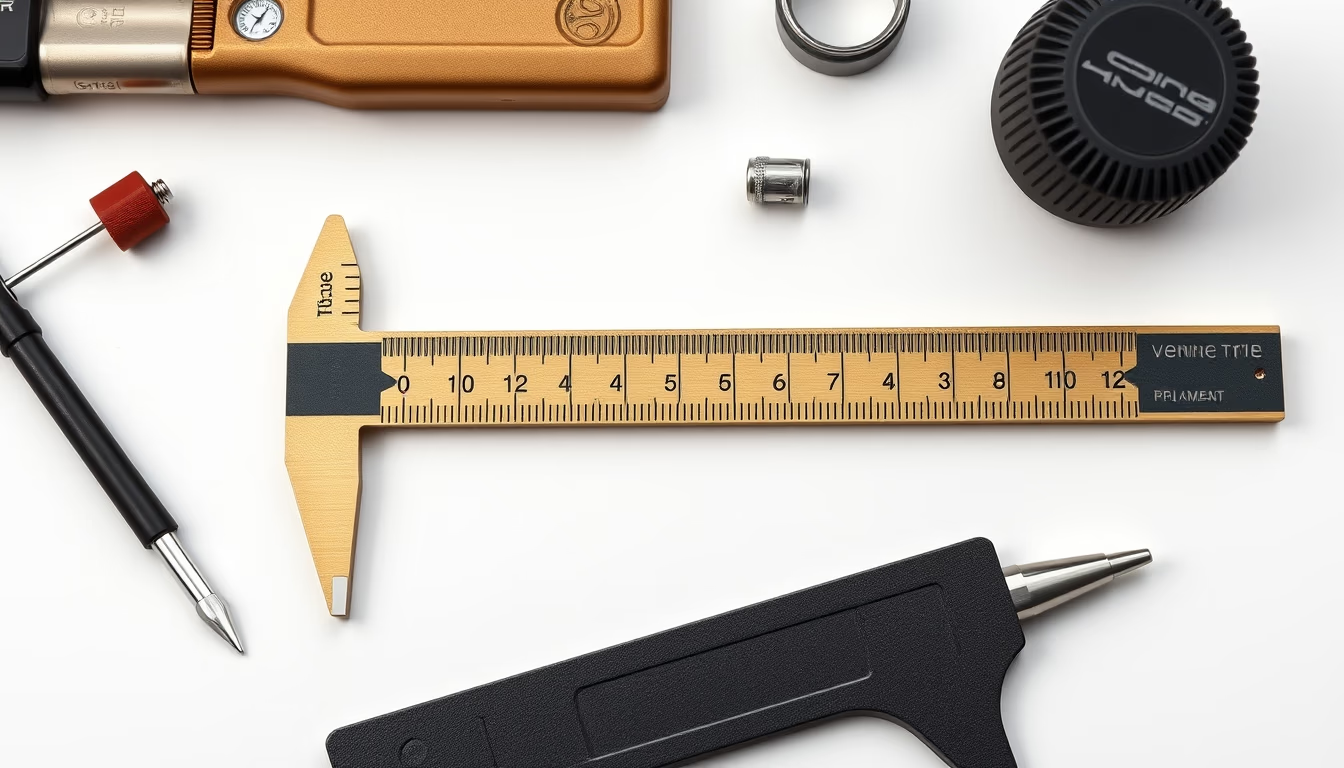
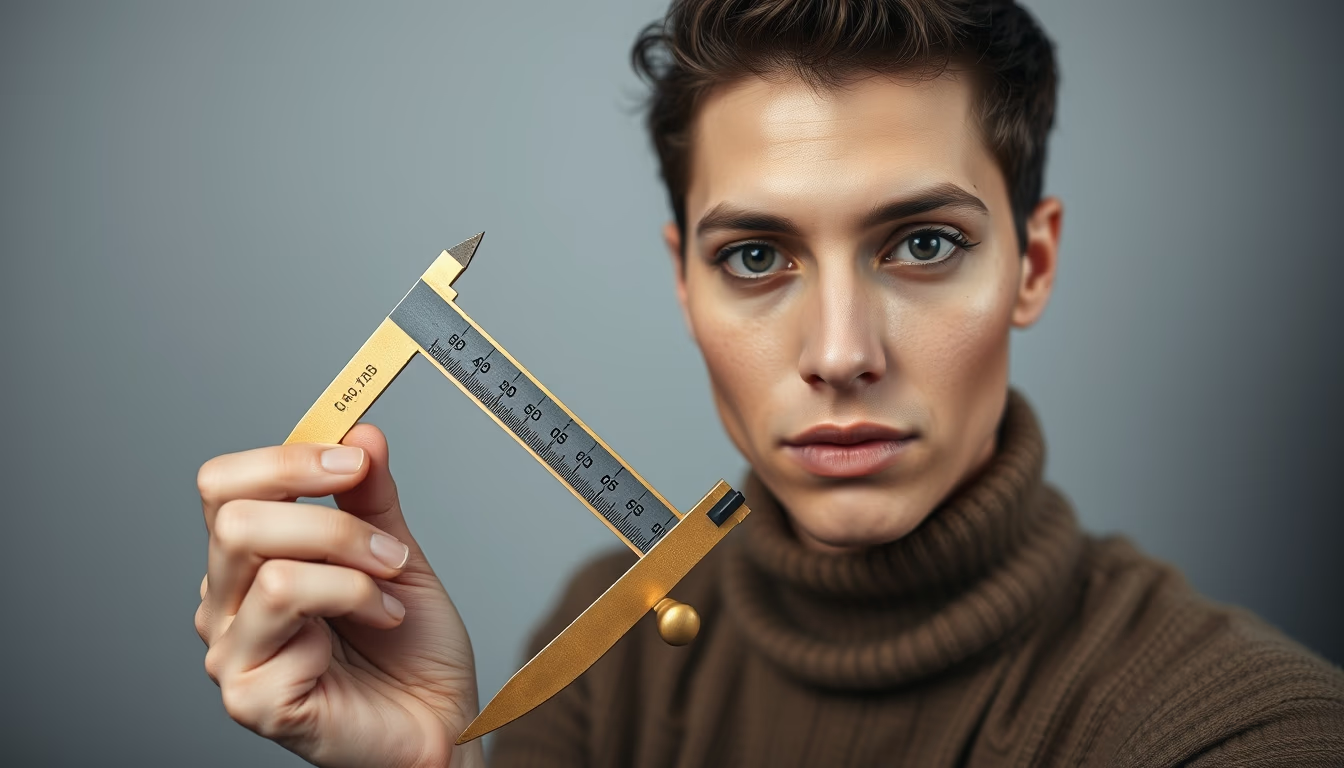
Brass vernier caliper: a precision instrument for internal, external, and depth measurements, invented by Pierre Vernier in the 17th century.
About this subject
The vernier caliper is a high-precision measuring instrument widely used in mechanics, metallurgy, and other technical fields. Its invention is credited to French mathematician and inventor Pierre Vernier (1580-1637), who described the vernier scale principle in 1631. This principle enables more accurate readings than ordinary rulers by using a sliding auxiliary scale that subdivides the main scale divisions. The brass model, like the one in the image, was common in earlier eras, before the popularization of stainless steel and plastics. Brass offers corrosion resistance and durability, making it a classic material for antique tools.
The vernier caliper operates by moving a cursor over a fixed scale. The main scale, usually in millimeters or inches, is complemented by the vernier scale, which has a slightly different number of divisions. By aligning one of the vernier scale marks with a main scale mark, the fraction of the smallest division is obtained. For example, a vernier with 20 divisions over 19 mm allows readings of 0.05 mm. This technique was essential for the Industrial Revolution, enabling the manufacture of interchangeable parts.
In the context of antique tools, the brass vernier caliper is a collector's item. Many specimens from the 19th and early 20th centuries feature handcrafted finishes, engravings, and decorative details. Unlike modern digital calipers, these instruments require user skill to interpret the scales and avoid parallax errors. Preserving such artifacts helps tell the story of metrology and engineering. In science and technology museums, they are displayed as witnesses to the evolution of measurement methods.
A curiosity: the vernier principle is also applied in other instruments such as micrometers, theodolites, and sextants. In Brazil, the vernier caliper is taught in technical and engineering courses as a fundamental tool for quality control. Despite digital technology, many professionals still prefer the analog vernier for its reliability and lack of batteries.
Frequently Asked Questions
How does the vernier scale of a caliper work?
The vernier scale is a sliding auxiliary scale with a slightly different number of divisions than the main scale. By aligning one of its marks with a main scale mark, the fraction of the smallest division is obtained, allowing precise readings (e.g., 0.05 mm).
Why is the brass caliper considered an antique tool?
Brass was a common material for precision tools before stainless steel and plastics. Brass calipers are typical of the 18th and 19th centuries, valued by collectors for their handcrafted finish and durability.
What is the difference between a vernier caliper and a digital caliper?
The vernier caliper is analog and requires visual interpretation of scales, while the digital caliper displays the reading on an electronic screen. The vernier needs no battery and is more robust, but requires operator skill; the digital is faster and easier to read.
Direct URL
https://pub-c7d6a6ea828543ac903a74a341ccb2e1.r2.dev/imagens/caliper-vernier-brass-isometric-flat-lay-fresh11.avifHow to credit
Include a visible link back to UtilizAí. Copy one of the snippets below:
<a href="https://xn--utiliza-eza.com/en/midia/imagens/caliper-vernier-brass-isometric-flat-lay-fresh11">Caliper vernier brass</a> by <a href="https://xn--utiliza-eza.com">UtilizAí</a>, licensed under <a href="https://creativecommons.org/licenses/by/4.0/">CC BY 4.0</a>.
[Caliper vernier brass](https://xn--utiliza-eza.com/en/midia/imagens/caliper-vernier-brass-isometric-flat-lay-fresh11) by [UtilizAí](https://xn--utiliza-eza.com), CC BY 4.0
License: CC-BY-4.0