Caliper vernier brass
1344×768 · AVIF · CC BY 4.0
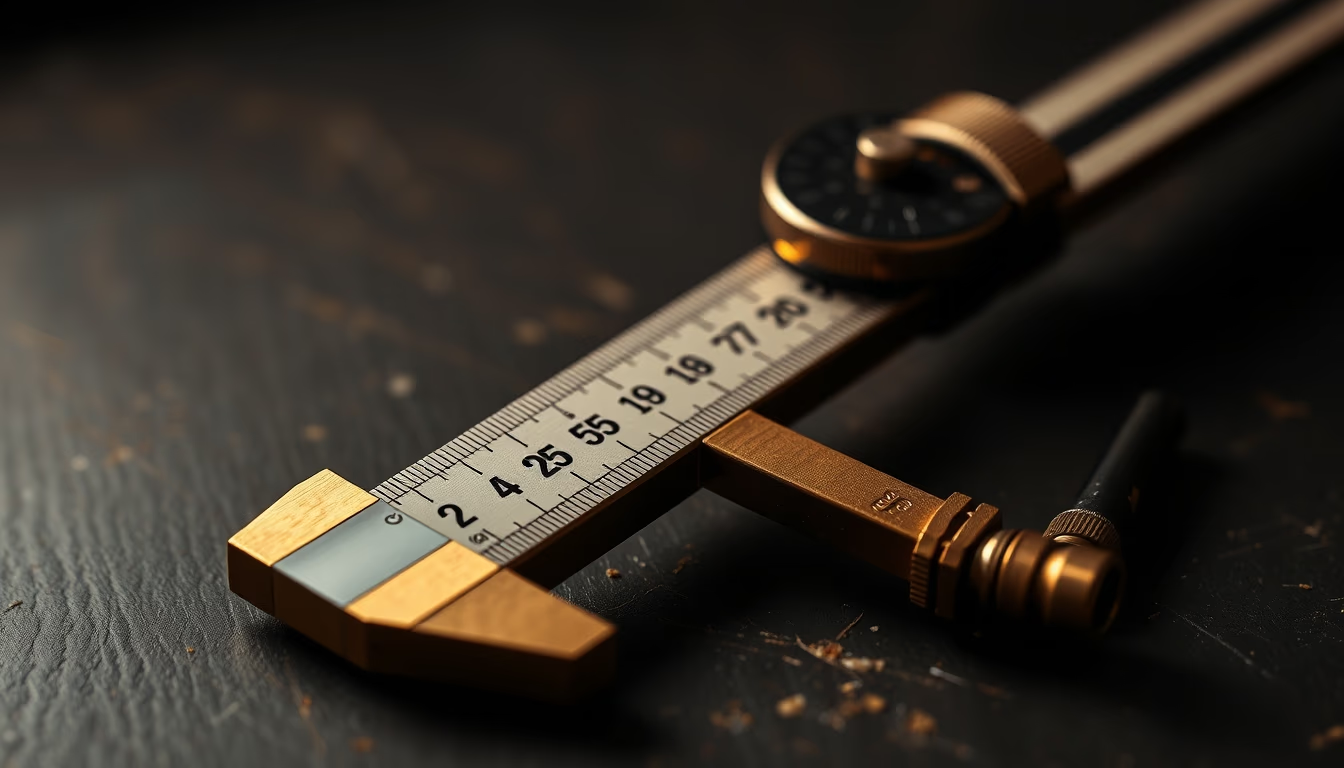
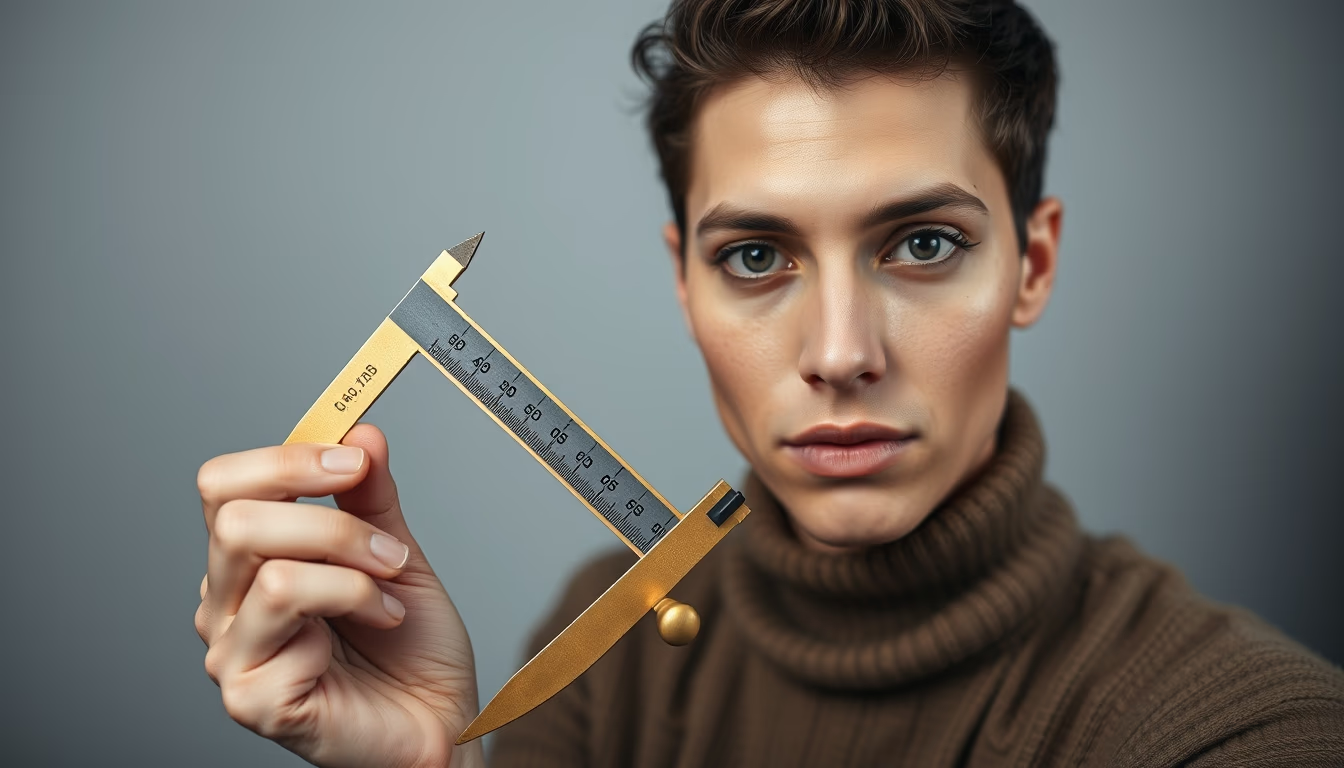
Brass vernier caliper, a precision measuring instrument from the 19th century, used in mechanics and engineering.
About this subject
The vernier caliper, invented by French mathematician Pierre Vernier in 1631, is a linear measuring instrument that allows precise readings of internal, external, and depth dimensions. The brass model, common between the 19th and 20th centuries, stands out for its durability, corrosion resistance, and non-magnetic properties, making it ideal for mechanical workshops and laboratories. Brass was the preferred material at the time due to its ease of machining and dimensional stability, enabling the production of highly accurate engraved scales.
During the Industrial Revolution, the vernier caliper became essential for standardizing parts in steam engines, locomotives, and textile machinery. While modern versions use stainless steel or plastic, antique brass calipers are now prized by collectors of scientific instruments and vintage tools. The vernier scale, consisting of a sliding secondary ruler with slightly smaller divisions than the main scale, allows measurements down to 0.02 mm or 0.001 inch.
Interestingly, the vernier principle is applied in other instruments such as theodolites and micrometers. The brass caliper, often housed in velvet-lined wooden cases, represents not just a functional tool but also an example of elegant industrial design. Restoring an antique caliper requires care, as brass can oxidize, but cleaning with mild polishes and lubrication can preserve its functionality for centuries.
Frequently Asked Questions
How does a vernier caliper work?
A vernier caliper has a fixed main scale and a sliding vernier scale that allows reading fractions of the smallest division. By closing the jaws on the object, align the vernier zero with the main scale and find which vernier mark aligns with a main scale mark, adding the corresponding value.
What is the precision of a brass vernier caliper?
Brass vernier calipers typically have a precision of 0.05 mm or 0.02 mm (approximately 0.002 or 0.001 inches), depending on the number of divisions on the vernier. Professional models can achieve 0.02 mm.
Why were old calipers made of brass?
Brass was used for its corrosion resistance, ease of machining, and dimensional stability. It is also non-magnetic, essential in applications where magnetic fields could interfere. Additionally, brass was widely available and allowed for the production of highly accurate engraved scales.
Direct URL
https://pub-c7d6a6ea828543ac903a74a341ccb2e1.r2.dev/imagens/caliper-vernier-brass-fine-art-photography-fresh1.avifHow to credit
Include a visible link back to UtilizAí. Copy one of the snippets below:
<a href="https://xn--utiliza-eza.com/en/midia/imagens/caliper-vernier-brass-fine-art-photography-fresh1">Caliper vernier brass</a> by <a href="https://xn--utiliza-eza.com">UtilizAí</a>, licensed under <a href="https://creativecommons.org/licenses/by/4.0/">CC BY 4.0</a>.
[Caliper vernier brass](https://xn--utiliza-eza.com/en/midia/imagens/caliper-vernier-brass-fine-art-photography-fresh1) by [UtilizAí](https://xn--utiliza-eza.com), CC BY 4.0
License: CC-BY-4.0